








Why Is Share Market Rising Today? The benchmark indices Sensex and Nifty extended gains in Wednesday’s trade on hopes of a US-Iran ceasefire after US President Donald Trump said that Washington was making
progress toward negotiating an end to the war.
Sensex jumped 1,403 points to 75,475, while Nifty 50 gained 450 points to 23,363, at 10.15 am. The sharp gains added more than Rs 9 lakh crore to the total market capitalisation of all companies listed on BSE, pulling it up to Rs 432 lakh crore.
Eternal, Bajaj Finance, Mahindra & Mahindra (M&M), UltraTech Cement, Adani Ports and Bajaj Finserv were among the top gainers on the Sensex, rising 2–3%. In contrast, IT stocks were the only laggards, with Tech Mahindra, HCLTech and Infosys falling up to 3%.
Sectorally, all NSE indices were trading in the green except Nifty IT. Nifty Realty led the gains with a jump of around 3.5%, followed by Nifty Consumer Durables, Metal, Auto and Media. Market breadth remained strong, with around 2,347 stocks advancing, 217 declining and 49 unchanged.
Strong global cues drive rally
Global cues remained supportive, with Asian equities rising about 1.4% and crude oil slipping below $100 per barrel on hopes that a potential ceasefire could ease supply disruptions.
Dalal Street tracked gains in Asian peers. Japan’s Nikkei rose nearly 3%, South Korea’s Kospi gained around 2%, and Taiwan’s weighted index surged close to 3%.
However, US markets ended lower overnight, with the Nasdaq falling nearly 1% and the S&P 500 declining about 0.4%. European markets were mixed, with the UK’s FTSE up over 0.7%, while France’s CAC and Germany’s DAX were largely flat.
Ceasefire hopes lift sentiment
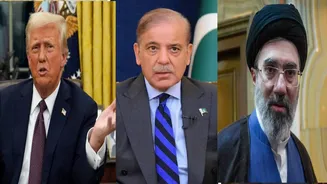
Investor optimism was fuelled by expectations that tensions in the Middle East may ease. Reports suggest that the US has proposed a 15-point plan and a month-long ceasefire to Iran, with the proposal reportedly conveyed via Pakistan, according to The New York Times.
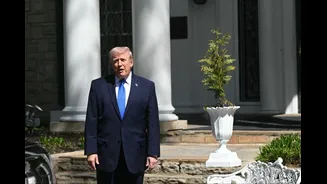
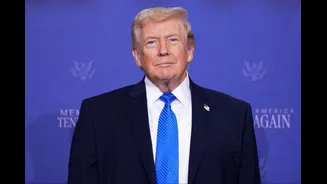
US President Donald Trump indicated that Iran may be open to negotiations, stating that Tehran had agreed it would “never have a nuclear weapon,” while highlighting ongoing communication between the two sides.
He also described signals from Iran related to the Strait of Hormuz as a positive development, suggesting progress in diplomatic engagement.
However, Iran has denied that any formal negotiations are underway, keeping uncertainty around the situation intact.
Here’s a tighter, more polished rewrite with improved structure and flow:
Oil slips below $100 per barrel
Crude oil prices dropped sharply below the key $100 per barrel mark amid rising expectations of a possible end to the conflict. Brent crude futures fell nearly 5% to around $99 per barrel on Wednesday morning, as hopes grew that normal traffic through the Strait of Hormuz could resume if ceasefire efforts materialise.
Earlier this month, a sharp rally in oil prices—triggered after Iran effectively shut the Strait of Hormuz and threatened vessels passing through—had led to a sell-off in global equities.
Rupee remains under pressure
Despite improving global sentiment, the rupee opened slightly weaker at 93.95 against the US dollar, compared with its previous close of 93.8650.
“Despite some positive signals on de-escalation, the currency remains under pressure amid persistent global uncertainty. The rupee is expected to trade in the 93.25–94.25 range, with a downside bias likely to continue until there is clear progress in Iran peace talks,” said Jateen Trivedi, VP Research Analyst – Commodity and Currency at LKP Securities.
FII outflows continue to weigh
Foreign institutional investor (FII) selling remains a key concern for the market. FIIs have been net sellers for 18 consecutive sessions, offloading shares worth nearly Rs 8,010 crore on Tuesday, according to NSE data.
While this does not reflect current-day activity, sustained outflows in recent sessions have continued to weigh on overall sentiment.
Technical outlook
Anand James, Chief Market Strategist at Geojit Investments, said the market structure remains supportive of further upside.
“The presence of continuation patterns encourages us to extend the upside objective to the 23,350–23,800 range. However, consolidation is likely in the near term, with 23,000 acting as a cap. Dips towards 22,880 may attract buying, but a break below this level could signal a loss of momentum. That said, the broader upside view remains intact as long as the index holds above 22,640,” he said.