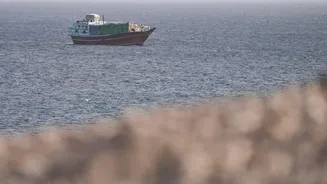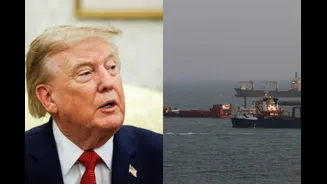






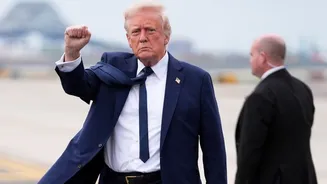
Hormuz Crisis: US President Donald Trump has once again emphasised on his idea of declaring the strategic Strait of Hormuz a US territory, claiming that Washington has “total control” over the waterway
amid ongoing tensions with Iran.
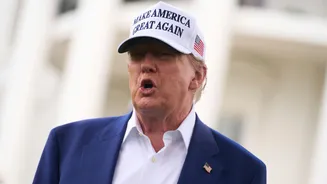
While speaking to reporters, Trump defended the US naval blockade of Iran and said the operation had been effective. He also claimed that the Strait of Hormuz remains open and that oil prices are falling. He added that Iran is in big trouble, noting, “they have 300 per cent inflation, the country’s a mess, and their military is totally defeated.”
“I think it’s a great idea. I mean, we control it with the blockade. I like the idea of declaring it a territory. We have total control over the Strait. Now, they can be a nuisance; they can put a mine in the water, and people don’t like having mines hit their billion-dollar ships. But the blockade has been very effective,” the US President said.
Trump, however, acknowledged that Iran could still pose a threat to shipping by placing mines in the waterway.
“The Strait is open, and the oil prices are coming down, and they will continue to come down unless we decide to do something far more drastic than what we’re doing,” he said.
Earlier on Friday, the US President raised the idea saying he would “soon” declare the Strait of Hormuz a US territory after what he described as the defeat of Iran.
“After we finish defeating Iran, which is being very badly defeated — pretty soon I’ll be declaring the Hormuz Strait a territory of the United States,” Trump said at a Republican rally in New York state.
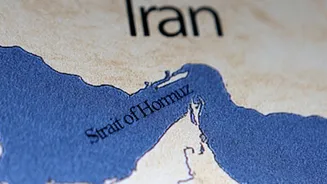
The remarks have escalated the rhetoric surrounding the strategically important waterway, which lies between Iran and Oman and serves as a major route for global oil and gas shipments.
Why Strait Of Hormuz Matters?
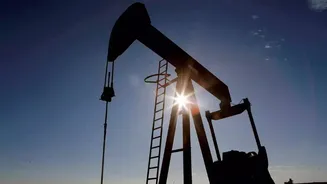
The Strait of Hormuz is the world’s most critical energy chokepoint, handling roughly 20 per cent of global petroleum supply and vast quantities of liquefied natural gas.
Months of heightened tension and transit disruptions have severely impacted international energy markets, sending global crude prices flaring and triggering steep war-risk insurance premiums for commercial fleet operators.
The reduced traffic has raised concerns over disruptions to global energy supplies and the potential impact on oil prices.
Trump has repeatedly claimed that the US has “total control” of the Strait of Hormuz and has said the waterway would remain open under US protection.
US Defence Secretary Pete Hegseth has also said Washington could maintain its naval blockade of Iranian ports indefinitely by rotating ships in and out of the region.
“Indefinitely the United States Navy can maintain a blockade like that because we’ll rotate ships in and out,” Hegseth said during a visit to Panama.
Iran Rejects Trump’s Claims
Iran has rejected Trump’s statements about control over the Strait and his calls for Tehran to surrender.
Ebrahim Rezaei, spokesperson for Iran’s Parliament’s National Security Commission, said Iran would not surrender and criticised Trump’s remarks
In an X post, Rezaei, while referring to Trump’s remarks, stated that Iran will not “surrender,” adding that the people who should surrender are those “who flee in shame and humiliation in a food truck,” taking aim at the US.
“Trump has once again spoken of Iran surrendering. Great Iran is not one to surrender; the one who should surrender is the one who flees in shame and humiliation in a food truck,” Rezaei wrote on X.
Iran-Oman Shipping Deal
Meanwhile, Iran and Oman have reached an agreement to establish designated shipping routes through the Strait of Hormuz, according to reports.
Under the proposed framework, Iran would oversee inbound commercial traffic while Oman would manage outbound vessels. The arrangement is aimed at creating dedicated shipping lanes to facilitate safer commercial movement while maintaining the two countries’ sovereignty.
However, Trump warned Muscat against getting involved in a deal with Tehran over control of the Strait of Hormuz, saying the United States would “bomb the s*** out of them” if Muscat interferes with Washington’s position on the strategic waterway.
(With inputs from agencies)