






Delhi News: The Supreme Court has allowed residents of Delhi and the National Capital Region (NCR) to burst approved green firecrackers for two days around Diwali, but the relaxation comes with strict
conditions on timings, locations and the products that can be used.
Under the order, fireworks can be burst only between 6 am and 7 am and 8 pm and 10 pm on November 7 and 8. The complete ban on firecrackers across Delhi-NCR will return from November 9.
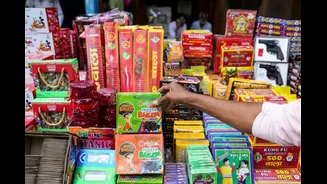
The permission applies only to green crackers certified by the Council of Scientific and Industrial Research-National Environmental Engineering Research Institute (CSIR-NEERI) and the Petroleum and Explosives Safety Organisation (PESO). Conventional, unauthorised and barium-containing crackers remain prohibited.
So, what exactly makes a firecracker green? Does it mean the product is pollution-free? Where are crackers prohibited, and how can buyers identify genuine approved products? Here is what residents need to know before celebrating Diwali.
What Are Green Crackers And What Makes Them Different?
Green crackers are fireworks developed with modified chemical formulations and manufacturing methods to reduce certain emissions compared with conventional firecrackers. The programme was developed by CSIR laboratories, with NEERI coordinating the research and testing. The products were introduced in 2019 as a lower-emission alternative to traditional fireworks.
According to the criteria described by NEERI, qualifying formulations include products that achieve at least a 30% reduction in particulate matter emissions compared with conventional crackers of the same category. Another route involves a reduction of at least 20% in particulate matter, along with a further reduction in gaseous emissions.
Particulate matter refers to tiny solid particles and liquid droplets suspended in the air. These pollutants can enter the respiratory system and affect human health.
The comparison is based on the emissions of a particular product against its conventional equivalent. Therefore, the word ‘green’ on a packet does not, by itself, prove that the firecracker has been tested or approved.
How Do Green Crackers Reduce Pollution?
Green crackers use modified ingredients and manufacturing techniques to reduce the pollutants released during combustion. The changes can involve using smaller shells, reducing the quantity of raw materials, eliminating ash-producing components and incorporating substances that help suppress particulate emissions.
Some formulations use materials that release water during combustion, helping capture particles. Others use iron oxide to improve combustion efficiency or zeolite-based materials to reduce the use of aluminium. Zeolites are porous materials used in different industrial and scientific applications.
These methods are intended to reduce emissions while retaining the visual or sound effects associated with fireworks. However, the formulations differ, and not every green cracker uses the same technology.
Are Green Crackers Pollution-Free? What Does 30% Less Emission Mean?
No. Green crackers are designed to emit lower quantities of specified pollutants than conventional products, but they are not pollution-free.
A claim of 30% lower particulate matter emissions does not mean that Delhi’s overall air pollution will fall by 30%. The figure refers to the difference between a tested firecracker and its conventional equivalent under specified conditions. It cannot be directly translated into a reduction in the city’s Air Quality Index (AQI).
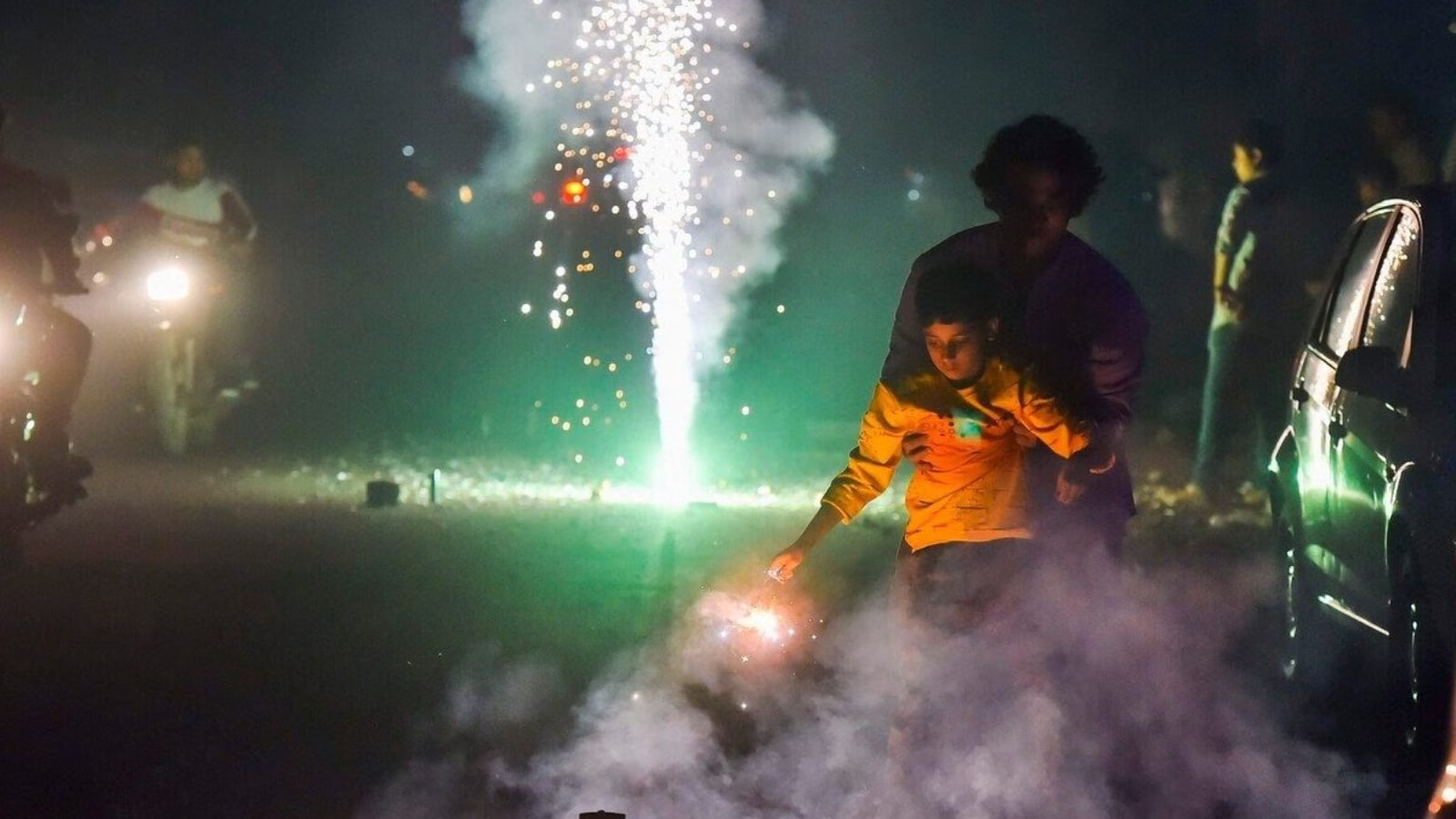
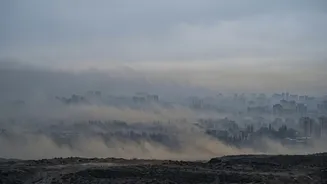
The pollution people breathe depends on several factors, including the number and type of crackers used, the total quantity of emissions, weather conditions and pollution from other sources such as vehicles, industries and construction activity.
Even approved green crackers release pollutants when burnt. A lower-emission product can therefore still contribute to poor air quality, particularly when large quantities are used in a short period.
When Can You Burst Green Crackers In Delhi-NCR?
The Supreme Court has permitted firecrackers only during two fixed windows on both November 7 and November 8:
- Morning: 6 am to 7 am
- Evening: 8 pm to 10 pm
#WATCH | Delhi: DCP North Niharika Bhatt says, “The Supreme Court has issued guidelines regarding crackers during Diwali. In this, only green crackers are permitted, and among those, only certified green crackers. There must be a QR code on the box so that you can see the certifications and batch numbers. Apart from this, the selling time has been designated only on November 4, 5, and 6. Green crackers can only be sold on these days. Bursting them is permitted only on November 7 and 8, and within that, the time is designated from 6:00 a.m. to 7:00 a.m. in the morning and from 8:00 p.m. to 10:00 p.m. at night. Only on these days and at these times is the burning of green crackers permitted.”
— ANI (@ANI) November 2, 2026
Bursting fireworks outside these hours will not be permitted under the temporary relaxation. The order applies to Delhi and the National Capital Region, not to the entire country.
The complete firecracker ban will be restored across Delhi-NCR from November 9. The relaxation is therefore limited to the two specified days and cannot be treated as permission for unrestricted fireworks throughout the Diwali period.
Where Are Firecrackers Prohibited? Check Delhi-NCR’s No-Cracker Zones
Even during the permitted hours, residents cannot burst fireworks everywhere. The Supreme Court has prohibited firecrackers within a 300-metre radius of the following locations:
- Hospitals and nursing homes
- Primary and district health centres
- Old-age homes
- Notified silence zones
- Educational institutions
These locations are to be declared No-Cracker Zones, marked on the ground and publicised by the authorities. The restriction around educational institutions is intended to protect students and others who may be affected by noise and air pollution.
The court has stressed that the restrictions must be enforced to avoid causing distress or inconvenience to patients, elderly people and others in sensitive areas. Residents should check local administration and police announcements to identify designated restricted areas before using fireworks.
Which Green Crackers Are Allowed And Which Are Banned?
The court’s permission covers only products approved by CSIR-NEERI and manufactured by producers holding the required certifications, including PESO approval. Manufacturers with valid certifications have been permitted to produce only those green crackers listed on the CSIR-NEERI website during the authorised manufacturing window from November 2 to 6.
The court has reiterated that the following products are not allowed:
- Firecrackers containing barium.
- Products that have not been approved by CSIR-NEERI as green crackers.
- Firecrackers joined in series, commonly known as ladis or garlands.
- Conventional and unauthorised firecrackers.
The restrictions also apply to the manufacture and sale of prohibited products. Authorities have been directed to prevent illegal and conventional crackers from entering the market.
How Can Buyers Identify Genuine Green Crackers?
Buyers should not rely only on a green-coloured logo, an environmental claim or the appearance of the packaging. The court has directed that approved products be sold in sealed boxes carrying product- and batch-specific QR codes.
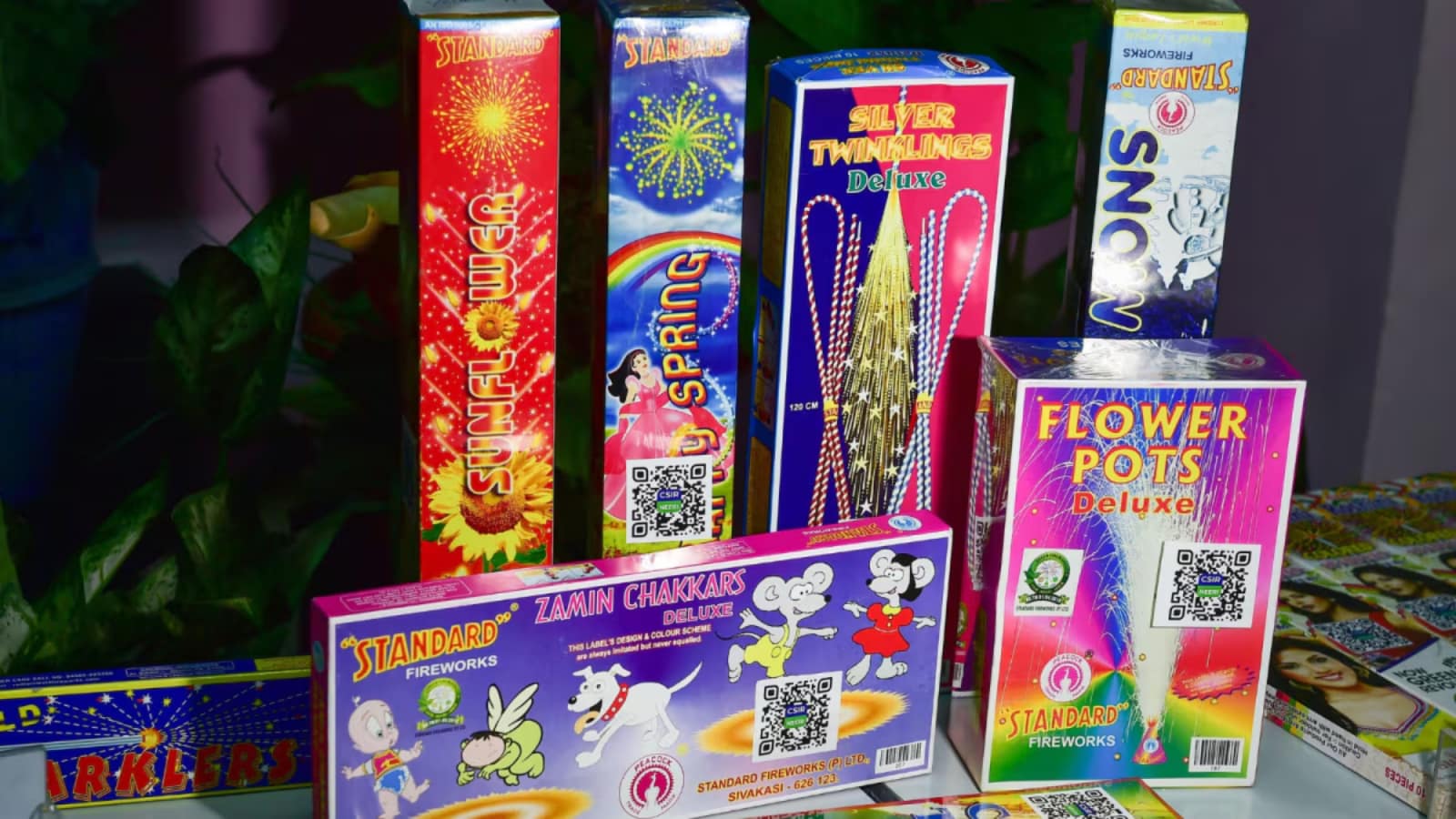
The QR code must provide details such as the manufacturer’s identity, registration, licence, formulation and test certificate. It must be specific to theproduct and batch and cannot be transferred or sold separately.
Only licensed traders can sell approved green crackers, and sales are restricted to locations designated by the district administration. Online sales and purchases are prohibited. Authorities have also been directed to check vehicles entering Delhi-NCR to prevent the supply of illegal firecrackers.
Police patrol teams will inspect designated sales locations, verify product QR codes, take samples where necessary and confiscate unauthorised products. Manufacturers and traders found violating the directions may face prosecution and cancellation of their registrations or licences.
The court has also directed authorities to require manufacturers and traders to furnish monetary security, which can be forfeited in the event of violations.
Why Has The Supreme Court Allowed Green Crackers Despite The Earlier Ban?
The Supreme Court’s decision follows concerns that a complete prohibition was not adequately preventing the sale and use of conventional firecrackers. The Bench noted that authorities had not provided sufficient data to establish the effectiveness of the earlier ban or assess the impact of the previous year’s trial relaxation.
It also expressed concern that conventional crackers were continuing to be sold under green labels, even when they were not approved. The court observed that the prohibition was facilitating illegal sales while preventing consumers from purchasing legitimate green crackers that had undergone testing at recognised facilities.
The Bench acknowledged that Diwali has religious, social, psychological and emotional significance, bringing people together in a spirit of hope and prosperity. At the same time, it stressed that celebrations should not undermine the environment or create health hazards for people and other living beings.
The court has therefore opted for a temporary, regulated relaxation rather than unrestricted use of fireworks.
What Monitoring Measures Will Be In Place During Diwali?
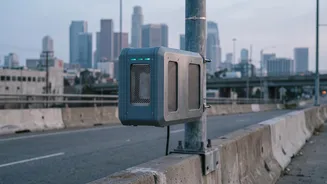
The Supreme Court has directed the Central Pollution Control Board (CPCB) and the respective State Pollution Control Boards to monitor air quality across Delhi-NCR and prepare reports covering three periods: November 2 to 6, November 7 and 8, and November 9 to 30.
Authorities have also been asked to collect sand and water samples to enable comparative analysis. Monitoring stations that are not functioning properly must be repaired immediately.
The court has sought affidavits from the authorities detailing how they have implemented the safeguards, including security deposits, designated sales arrangements, vehicle checks and police patrolling. Officials must also report action taken against violators, pollution-monitoring findings and any increase in hospital admissions linked to firecracker pollution across Delhi-NCR up to November 30.
The court has further directed authorities to ensure that waste generated during the celebrations is cleared and disposed of properly, with additional cleaning measures in highly polluted areas.
Will The Green Crackers Permission Apply Outside Delhi-NCR?
No. The Supreme Court’s temporary relaxation applies only to Delhi and the National Capital Region. Residents in other parts of India must follow the firecracker rules and restrictions issued by their respective state governments and local authorities.
For Delhi-NCR residents, the key conditions are straightforward: use only certified green crackers, buy them from authorised sellers, stay away from No-Cracker Zones and follow the permitted morning and evening hours on November 7 and 8. The complete ban returns on November 9.