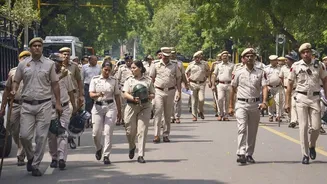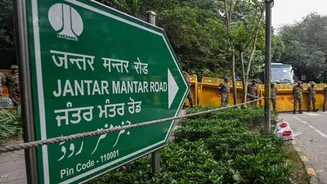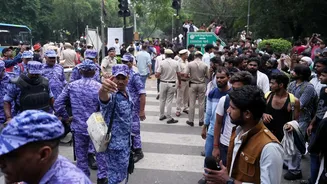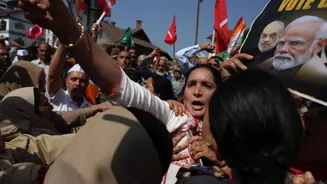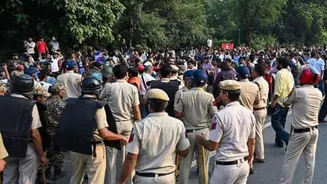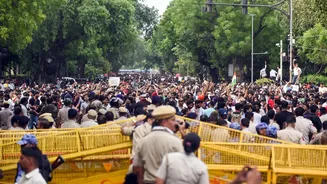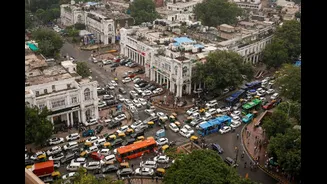





The Supreme Court on Friday said it would exercise its powers to grant compensation if the shutdown of Delhi’s Connaught Place over the Cockroach Janata Party’s (CJP) proposed Tiranga protest is found
to have caused unlawful business losses.
A bench comprising Chief Justice of India Surya Kant and Justice Joymalya Bagchi made the oral observations while hearing a request for the listing of a petition filed by the Delhi Kirana Committee and the Delhi Iron and Hardware Merchant Association. The court said it would examine whether the restrictions imposed by the New Delhi Municipal Council (NDMC) were disproportionate.
The petition was mentioned by advocate Jai Anant Dehadrai, who told the court that the proposed protest at Central Park in Connaught Place could disrupt trade worth Rs 200 crore a day. He also submitted that the NDMC had issued a notice the previous night shutting down the area.
The bench noted that the Delhi High Court was already hearing a similar matter. When Dehadrai argued that the petition before the Supreme Court was different, Justice Bagchi said the issues were related.
“It is not different. They are all related. Someone wants to protest, someone wants to sell moongfali, someone wants to law and order, all are related,” Justice Bagchi said.
Dehadrai submitted that the disruption could cause significant business losses, particularly with the festive season approaching.
CJI Surya Kant said the court could list the matter only after the Dussehra vacation, adding that restrictions affecting trade could have consequences for the livelihoods of small shopkeepers and their families.
“We hope better sense will prevail on everyone… We know that all small shopkeepers, they earn their livelihood during these days. We know the hardship and difficulty entire families will face,” the CJI said.
When the counsel pressed for an earlier hearing, Justice Bagchi said the court could consider compensation if it found that the restrictions had unlawfully affected the traders’ businesses.
“If there is a loss of business, and we hold that it is unlawful to your clients, we will exercise our powers under constitutional tort jurisdiction. Let’s cross that bridge when it comes,” he said.
The judge reiterated that the court would act if it found the NDMC’s restrictions disproportionate, referring to the Supreme Court’s powers to grant compensation under public law.
“If we feel that the NDMC’s order is a disproportionate restriction, we told you, there is ample jurisdiction evolved by this Court under compensation and public law. We will act,” Justice Bagchi said.
The court agreed to list the matter on October 26, after the Dussehra break.