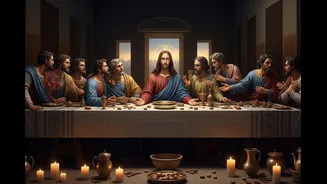






Maundy Thursday is a significant day in the Christian liturgical calendar, as it commemorates the Last Supper, the final meal that Jesus Christ shared with his disciples before his crucifixion. This meal marks
the institution of the sacrament of Holy Communion (Eucharist), a core practice in Christian worship. The day is observed on Thursday ahead of Easter Sunday.
The Last Supper: A Moment of Reflection
The Last Supper took place in an upper room in Jerusalem, where Jesus gathered with his twelve disciples.
According to Christian tradition, during this meal, Jesus broke bread and shared wine with his disciples, telling them that the bread symbolized his body and the wine his blood. This was the moment he instituted what would later become one of the most important rituals in Christianity: the Eucharist.
The Last Supper is also notable for Jesus’ actions that displayed humility and service. In a powerful act of love, he washed the feet of his disciples, teaching them the importance of servitude and love for one another.
This act is remembered in the foot-washing ceremony, which many Christian communities continue to observe on Maundy Thursday. It’s not just about remembering the past; it is also a call to live out the principles of love, humility, and service that Jesus exemplified.
Maundy Thursday: Meaning and Significance
Maundy Thursday, observed on the Thursday before Easter, marks the beginning of the Paschal Triduum, which includes Good Friday and Easter Sunday.
The term “Maundy” comes from the Latin word mandatum, meaning “commandment.” This refers to Jesus’ command to love one another, a message central to the teachings of Christianity.
Maundy Thursday is a day for reflection, as Christians remember Jesus’ final teachings, his sacrificial love, and the institution of the Eucharist.
Traditions and Practices of Maundy Thursday
On Maundy Thursday, Christian denominations around the world observe various traditions. These include:
- Holy Communion: Participants receive the body and blood of Christ through the bread and wine.
- Foot Washing: A symbolic act of humility and service, where leaders wash the feet of members of the congregation.
- Evening Services: Special church services often feature the stripping of the altar to signify the abandonment of Jesus before his crucifixion.