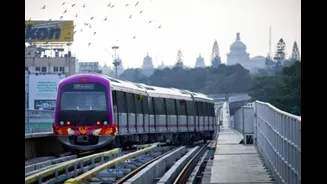

Every morning at Yelachenahalli Metro station in Bengaluru, banker Anjali Rao stands in the same line. Not for coffee or office entry, but for a travel pass. Some days the queue moves fast, other days it
doesn’t. But the routine never changes.
After the fare hike, she tells herself the wait feels even longer, because now every rupee and every minute seems heavier. That daily scene may finally change.
The Bangalore Metro Rail Corporation Limited is rolling out a new plan that could quietly reshape how thousands of commuters begin their day. From January 15, Namma Metro will introduce a mobile QR code based unlimited travel pass, allowing passengers to buy short-term passes directly on their phones instead of at station counters.
Unlimited travel, now in your pocket
Until now, commuters who wanted unlimited passes had to buy them only at Metro stations and pay a Rs 50 refundable deposit for the smart card. Under the new system, this deposit is being removed for digital QR passes, making the process both cheaper and quicker.
Passengers can now choose from 1 day, 3 days and 5 days unlimited travel passes through their mobile phones. Those who continue to buy passes at stations will still need to pay the Rs 50 deposit.
For many daily riders, the shift feels overdue. “Some days I lose ten minutes just standing in line,” Anjali says. “If I can get my pass on my phone while walking to the station, that itself saves me stress before work even begins.”
What commuters will pay
Under the new plan, the prices for digital unlimited passes are set at
Rs 250 for a 1 day pass
Rs 550 for a 3 day pass
Rs 850 for a 5 day pass
Passengers purchasing these passes at Metro stations will pay Rs 50 extra, as the smart card deposit continues for offline purchases. For students and young professionals, even this small saving matters.
“The fare hike really pinched,” said Karthik S, a college student who travels thrice a week from Whitefield to Indiranagar for CA coaching classes. “Saving Rs 50 may not sound big, but when you travel regularly, it adds up by the end of the month.”
More than savings, it is about ease
Metro officials say the new QR based system is also about easing congestion at ticket counters, especially during peak hours. With fewer people lining up for passes, station entries are expected to move faster, reducing crowding during the morning and evening rush.
For frequent commuter Ramesh Gowda, who travels between Peenya and Majestic, the change feels practical. “The Metro is already the most reliable part of my day,” he said. “If ticketing becomes simpler too, half my tension is gone before I even reach office. Of course, I travel daily, so this short-term passes may not be directly useful to commuters like me since we already have our smart cards. But nonetheless, it is useful for many.”
A small relief after a big hike
While the new digital passes will not erase the impact of higher fares, they signal a shift in how Namma Metro is thinking about its riders. Digital first, queue free and a little lighter on the pocket.
For a city that depends heavily on the Metro to keep moving, that combination feels less like a bonus and more like a necessity.
At Yelachenahalli station, Anjali checks her phone as she walks in. Soon, she will not have to look for the end of a queue. Just a QR code on her screen, a quick scan, and she is on her way.
For thousands of commuters like her, this small change could quietly turn one of the most frustrating parts of daily travel into the easiest.
And sometimes, in a city like Bengaluru, that is exactly the kind of progress people notice the most.