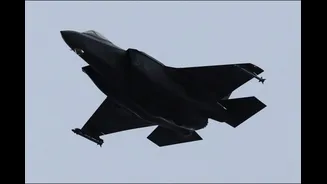








F-35, F-16, F-15, drones and much more – the American military hardware, some of it among the most advanced in the world, have taken hits in the war with Iran that began on February 28 when the US and Israel
struck Iran. Reports suggest that billions of dollars worth of US military equipment has already been damaged or destroyed since the war began. From fighter jets and refuelling aircraft to drones and high-end radar systems, the losses cut across categories that are central to how the US projects power globally. In some cases, the damage has come from Iranian missile and drone strikes. In others, from accidents and the chaos of a rapidly expanding conflict.
Unlike past conflicts where the US operated with air and technological superiority, the US’s assets are being actively contested, and, at times, successfully targeted. Not just equipment, the US in this war has also suffered hits to its infrastructure in Gulf countries.
When US President Donald Trump was asked about one of these damages, he downplayed them as “a little bit of mishap”. “We shot down three planes with our missiles. They happened to be our planes,” Trump said when asked about Kuwait mistakenly shooting down three F-15E aircraft, each costing approximately $90 million. “Can you imagine the pilots making it,” he added.
According to the WSJ report, the damage so far to US military assets costs about $2.9 billion, according to Elaine McCusker, a Pentagon budget official during the first Trump administration. Here’s looking at the losses and damages so far to US assets in the war that began on February 28:
Aircraft And Drones Lost
Reports suggest that around 16 US military aircraft have been destroyed since February 28, including some of its most advanced platforms such as the F-35 Lightning II and F-16 Fighting Falcon as well as support platforms like the KC-135 Stratotanker. The stratotanker crash also led to the death of six American pilots. The tally also includes three F-15E Strike Eagle jets lost in a friendly fire incident in Kuwait, underscoring that not all losses have come from direct enemy action.
Unmanned systems have taken a sustained hit as well. Around a dozen MQ-9 Reaper drones are believed to have been destroyed, either through direct interception or strikes on their operating bases. Given their role in surveillance and precision targeting, these losses point to disruption to US intelligence-gathering and battlefield visibility.
Naval Assets
At sea, the USS Gerald R Ford, one of the US Navy’s most advanced carriers, was damaged not by enemy fire but due to an onboard incident during deployment. While not a combat loss, the incident highlights the strain and operational risks that accompany sustained military engagement in a high-intensity war.
Air Defence And Detection Systems
The US military capability has also been affected through damage to critical systems. Advanced radar and air defence components were reportedly degraded in Iranian strikes, particularly those linked to base protection and early warning networks. These systems are essential for detecting incoming threats, and their disruption can leave larger assets more exposed.
Iran’s strikes have also targeted some of the United States’ most critical and expensive detection systems across the region. In Jordan, an AN/TPY-2 radar, a key component of the THAAD missile defense system, was hit. The extent of the damage is unknown. Similar attacks have been reported across multiple Gulf countries, including Qatar, the UAE, Bahrain, Kuwait and Saudi Arabia, where radar, communication and air defence networks have come under fire. Among the most significant is damage to the AN/FPS-132 early-warning radar at Al Udeid Air Base, a high-powered system capable of tracking multiple threats simultaneously.
Military Infrastructure
Much of the damage has been concentrated on fixed infrastructure. Facilities such as Ali Al Salem Air Base and Kuwait International Airport, along with other US-linked installations across the Gulf, have been targeted with missiles. These strikes have damaged runways, logistics hubs, and support infrastructure, indicating a broader strategy to weaken the US military’s ability to operate effectively from the region rather than just destroying individual assets.