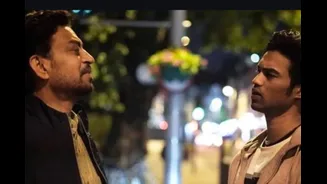










Irrfan Khan, the late actor, is renowned as one of Indian cinema’s most revered performers, known for his sensitive, realistic, and dramatic representations. Born on January 7, 1967, he would have been
59 today. On the special day, his son Babil Khan shared a childhood picture with his father recalling some memories from those years gone by.
In the picture, both Irrfan and a young Babil could be seen lying around on a mat. While the picture was a bit hazy, the candid moment between the father- son was beautifully captured. The second picture showed Babil as an adult deeply engrossed in a conversation with his father. In the caption, he wrote, “Pictures of you.Pictures of me. (I used to say “sofa mode activated” before I jumped on him and fell asleep on his back)”
View this post on Instagram
Fans were overwhelmed to see the snaps. One of them wrote, “Pictures of us ..you should say always,” while another said, “Remembering the Man who gave Indian Cinema the best moments.”
Babil Khan On Father’s Death Affecting Him
Babil Khan’s ascend in the film industry has been fuelled by his talent, but the shadow of his late father, famed actor Irrfan Khan, remains large. In an emotional interview with The Lallantop last year. “Some people said I was using my father’s death to launch my acting career. If that were true, I wouldn’t still be giving auditions today. I was sharing love because we were flooded with it from everyone. I had to honour that.”
Meanwhile, Irrfan has starred in approximately 98 films throughout his career, including both Indian and international movies. He made his cinematic debut in Mira Nair’s Salaam Bombay! (1988) and quickly rose to stardom due to his exceptional ability to provide depth to every part. Some of his best-known films include The Lunchbox, Life of Pi, Slumdog Millionaire, Karwaan, Piku, Hindi Medium, and Angrezi Medium. His passing in 2020 left a void in the hearts of moviegoers around the world. Even years after his death, Irrfan’s performances continue to transcend time, language, and boundaries, leaving behind a collection of work that speaks to the human experience.