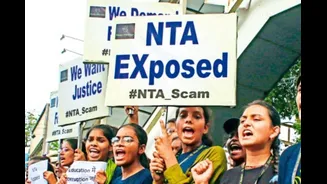








The Central Bureau of Investigation (CBI), which is probing the NEET-UG 2026 paper leak to identify a network of conspirators, has told a Delhi court that it has not found evidence of institutional corruption
within the National Testing Agency (NTA).
Instead, the agency is understood to have concluded that the leak was made possible by serious procedural lapses and negligence, rather than a criminal conspiracy involving NTA officials.
According to sources, the CBI examined the NTA’s functioning “with a fine-tooth comb” to determine whether any officials had received money or other benefits in exchange for leaking the paper. Investigators, however, found no evidence of financial corruption or quid pro quo involving NTA personnel.
“While there is no evidence of institutionalised corruption, the sheer negligence displayed is unacceptable,” a source familiar with the investigation said.
The agency is expected to recommend strict departmental action against officials found negligent, along with a comprehensive overhaul of the NTA’s Standard Operating Procedures (SOPs) to plug vulnerabilities in the examination process.
CBI Uncovers Multi-State Leak Network
Even as it ruled out institutional corruption within the NTA, the CBI says it has uncovered a sophisticated paper leak network operating across multiple states.
According to sources, the chargesheet will name several accused who allegedly conspired to obtain and circulate the leaked Chemistry paper days before the examination.
Among the key accused is PV Kulkarni, a retired professor, translator and former member associated with the NTA.
According to the investigation, Kulkarni allegedly dictated Chemistry questions during special coaching sessions conducted for select students after receiving around Rs 5 lakh. The material was allegedly circulated as a “guess paper”, but investigators found it matched nearly 90 per cent of the actual Chemistry questions asked in the examination.
The CBI also alleges that the batches were organised with the help of co-accused Manisha Waghmare, who allegedly worked as an education consultant.
Coaching Operator, Doctor Among Key Accused
The agency is also expected to name Shivraj Motegaonkar, owner of Renukai Chemistry Classes in Latur, Maharashtra, as one of the principal conspirators.
According to the CBI, Motegaonkar allegedly paid Rs 5 lakh to obtain the leaked questions and used the help of co-accused Dr Manoj Shirur, a paediatrician, to access the paper.
The agency has told the court that Motegaonkar allegedly received the questions on April 23, 2026, at Siddhivinayak Hospital in Latur, well before the examination. Investigators also allege that he attempted to destroy evidence after the exam.
His son, Aditya Motegaonkar, is also under the scanner. According to investigators, he attended Kulkarni’s special classes, took handwritten notes and allegedly helped circulate PDFs of the leaked questions through Telegram.
Digital Trail Across Multiple States
The CBI’s case relies heavily on digital and forensic evidence recovered during the investigation.
According to sources, forensic analysis of seized devices traced the circulation of leaked PDFs through Telegram across Pune, Latur, Nashik, Kota and Gurugram.
Investigators recovered 36 images, including five duplicates, from Shivraj Motegaonkar’s phone. These images allegedly contained 132 handwritten Chemistry questions, photographed on April 23, nearly a week before the NEET examination.
111 Questions Matched NTA’s Master Paper
According to the CBI’s submissions before the court, forensic analysis found that 111 of the leaked questions matched the NTA’s master question sets for NEET-UG 2026.
“Prima facie, it was found that approximately 111 of these questions match with questions in the NTA master question sets prepared for NEET UG 2026,” the agency said while opposing Motegaonkar’s bail.
The CBI has also relied on handwriting experts to establish that the handwritten notes originated from Kulkarni, sources said.
With the chargesheet expected shortly, the investigation is likely to provide the most comprehensive account yet of how one of India’s biggest entrance examinations was allegedly compromised while simultaneously raising fresh concerns about the safeguards within the country’s premier testing agency.