




India has strongly rejected reported remarks by Dutch Prime Minister Rob Jetten regarding media freedom and minority rights in the country, saying such concerns arise from a “lack of understanding” about
India’s history, democracy and cultural diversity.
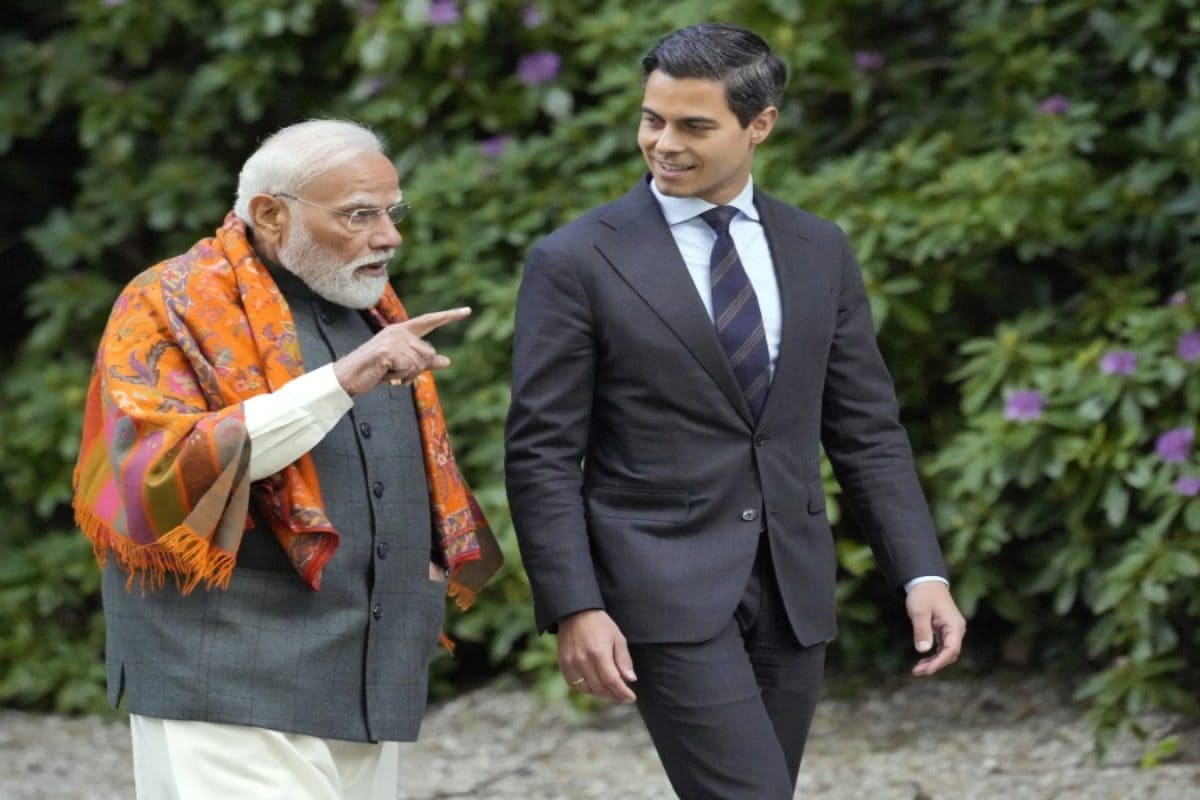
The response came during PM Narendra Modi’s visit to the Netherlands, where Ministry of External Affairs Secretary (West) Sibi George addressed questions raised by a Dutch journalist during a media interaction.
‘Lack of understanding of India’
Ambassador Sibi George said India is a vibrant democracy with deep civilisational roots and a long history of religious coexistence.
“These questions show a lack of understanding about India,” George said while responding to concerns regarding press freedom and the condition of minorities in the country.
He described India as a civilisation more than 5,000 years old and highlighted its diversity in language, religion, food and culture.
“India is a country of 1.4 billion people, the largest populated country in the world. It is a diverse country in terms of culture, languages, food and religion,” he said.
George also said India is unique because four major religions – Hinduism, Buddhism, Jainism and Sikhism – originated in the country and continue to flourish there.
The diplomat pointed to the long presence of different religious communities in India while defending the country’s record on religious freedom.
“Jewish religion was in India for more than 2,500 years. India is perhaps one of the very few countries where the Jewish population never faced persecution,” he said.
George also said Christianity reached India soon after the resurrection of Jesus Christ and has continued to grow in the country.
“Christianity came to India even before it came to Europe. There are 30 million Christians today,” he added.
He further said Islam also came to India during the time of Prophet Muhammad and flourished in the country.
“Attacked minorities have always come here,” George said during the interaction.
Dutch journalist’s question
The exchange took place after a Dutch journalist questioned why there was no joint press interaction during PM Modi’s two-day visit to the Netherlands.
The journalist also raised concerns regarding press freedom and the rights of Muslim and smaller minority communities in India.
Responding to the remarks, George referred to India’s recent elections and called the country a “vibrant democracy”.
“Recently, we had elections. More than 90 per cent of the electorate voted. This is the beauty of India,” he said, highlighting peaceful transfer of power as an important democratic feature.
‘India achieved growth through democracy’
George also said India achieved economic progress without compromising democratic principles.
“We did not go for violence to eliminate poverty. We went through the democratic process to eliminate poverty,” he said.
The diplomat added that India represents one-sixth of the world’s population but not one-sixth of the world’s problems.
“When we became independent, the minority population in India was 11 per cent. Now it is more than 20 per cent. Name a country where the population of minorities has gone up,” he said.
He asked critics to understand India better before making judgments.
“I would request you to learn more about India so that you will have more appreciation of what India is and how it is progressing,” George said.
What the Dutch PM reportedly said?
It is not immediately clear whether Dutch Prime Minister Rob Jetten directly made the remarks.
However, according to Dutch newspaper De Volkskrant, Jetten had reportedly said before meeting PM Modi that the Dutch government had concerns regarding developments in India, including press freedom and minority rights.
The report said Jetten claimed these concerns were regularly raised with the Indian government.
At the same time, Jetten also said in a social media post that both India and the Netherlands value democracy, good governance and a rules-based global order.
He also referred to a long-running child custody dispute that has figured in previous diplomatic discussions between the two countries.