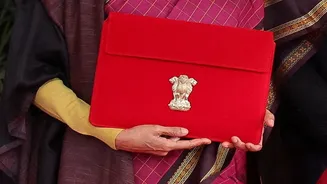

In a significant shift in the way corporate payouts are taxed, the Union Budget 2026-27 has proposed a complete overhaul of the buyback taxation framework. Finance Minister Nirmala Sitharaman announced
that from April 1, share buybacks will be taxed as capital gains in the hands of shareholders, replacing the existing company-level buyback tax. The move is aimed at protecting minority shareholders and curbing the use of buybacks as a tax-arbitrage tool by promoters.
“It is proposed to provide that consideration received by a shareholder on buy-back shall be chargeable to tax under the head “Capital Gains” instead of being treated as dividend income. It is also proposed to provide for a differential rate for promoters wherein the effective rate on gains in buyback will be 22% for promoters which are domestic companies and 30% for promoters other than domestic companies,” FM Sitharaman said in her Budget Speech 2026-27.
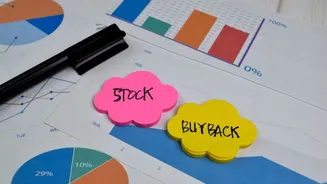
What is a share buyback?
A share buyback is a corporate action where a company repurchases its own shares from existing shareholders, usually at a premium to the market price. Buybacks are often used as a way to return surplus cash to shareholders, improve earnings per share, and signal management’s confidence in the business. Until now, buybacks also offered a tax-efficient route for promoters and large shareholders compared to dividends.
What was the earlier tax regime?
Under the existing framework, companies paid a buyback tax (around 20 per cent plus surcharge and cess) on the distributed income. Shareholders, including promoters, received buyback proceeds largely tax-free. This made buybacks far more attractive than dividends, especially for promoters, and led to what the government termed “improper use of the buyback route”.
What changes from April 1?
From April 1, buyback proceeds will be treated as capital gains in the hands of shareholders, similar to selling shares in the market. This means individual investors will pay tax based on the holding period of the shares. Short-term capital gains will be taxed at 20 per cent, while long-term capital gains will attract a 12.5 per cent tax.
At the same time, to discourage tax arbitrage, promoters will face an additional buyback tax. The effective tax rate on buybacks for corporate promoters will rise to 22 per cent, while non-corporate promoters will face a higher rate of 30 per cent.
Explaining the rationale, Sitharaman said, “Change in taxation of buyback was brought in to address the improper use of buyback route by promoters.”
What does it mean for retail investors?
For individual shareholders, especially non-promoters, the change is largely positive. Earlier, investors in the highest income tax slab effectively bore a 30 per cent tax burden on dividends, while buybacks were tax-free. Now, buybacks will be taxed at capital gains rates, which are lower for most investors.
Market participants point out that this reduces the tax outgo for retail investors and brings parity between different modes of shareholder returns.
“Revamp of buyback tax framework, and the rise in STT (Securities Transaction tax)on futures and options will influence investor behaviour and short-term sentiments,” Parizad Sirwalla, Partner and Head, Global Mobility Services- Tax, KPMG in India, said.
What does it mean for promoters and companies?
The higher tax burden on promoters reduces the attractiveness of buybacks as a tool for returning cash. Experts believe this could push companies to rethink their capital allocation strategies. Roop Bhootra, Whole-time Director at Anand Rathi Share and Stock Brokers, said the move is positive for individual shareholders but negative for corporates, as it discourages buybacks and may encourage companies to deploy surplus cash towards capital expenditure or research and development instead.
Dividend versus buyback: will the balance change?
With the tax advantage of buybacks narrowing, companies may increasingly favour dividends to distribute profits. This could lead to more predictable cash flows for investors but may also reduce the flexibility companies enjoyed through buybacks. Tax experts also note that the revamped buyback tax framework, combined with a higher securities transaction tax on futures and options, could influence short-term market sentiment and investor behaviour.