



What if one planet had a surface hot enough to melt rocks, while another planet orbiting the same star had temperatures that looked surprisingly comfortable by cosmic standards?
That is what makes the discovery
of two newly confirmed exoplanets by Spanish astronomers particularly interesting. The two worlds, TOI-1752 b and TOI-1752 c, orbit the same star but appear to be dramatically different from each other.
One is an extremely hot world that could have molten rock on its surface. The other is located in a region around its star where temperatures could, under the right conditions, allow liquid water — one of the key ingredients scientists look for when assessing whether a planet could potentially support life.
The study was led by researchers at the Institute of Astrophysics of Andalusia (IAA-CSIC), with contributions from the Institute of Astrophysics of the Canary Islands (IAC). The IAC team used observations from the Teide Observatory, where the MuSCAT2 instrument is mounted on the Carlos Sánchez Telescope.
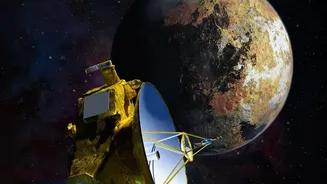
Both planets were initially identified as possible exoplanets by NASA’s Transiting Exoplanet Survey Satellite (TESS). The spacecraft searches for planets outside our solar system by looking for tiny, repeated dips in a star’s brightness as a planet passes in front of it.
One Planet Could Be Hot Enough To Melt Rock
Let’s start with TOI-1752 b — the more extreme of the two.
This planet orbits very close to its star, completing one revolution in less than 24 hours. For comparison, Earth takes 365 days to complete one orbit around the Sun.
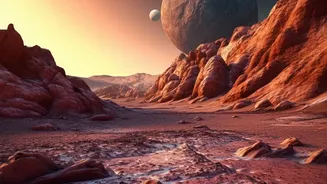
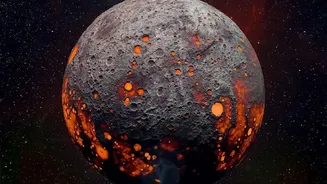
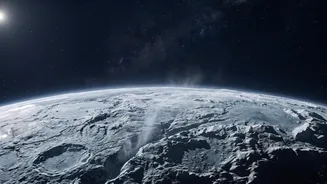
Because TOI-1752 b is so close to its star, it receives enormous amounts of radiation and is exposed to intense heat. Scientists believe the side permanently facing its star could be hot enough for rocks on the surface to melt, potentially making it a lava-covered world.
Earth, by contrast, sits at a much greater distance from the Sun, allowing temperatures suitable for liquid water to exist across large parts of its surface.
The extreme conditions on TOI-1752 b could also make the planet particularly interesting to scientists. Researchers suggest that material released from its molten surface could contribute to the formation of a secondary atmosphere.
In other words, this may be a world where the planet itself helps create the atmosphere surrounding it.
The Other Planet Is Much More Earth-Like — At Least In Temperature
Then there is TOI-1752 c.
This planet is considerably more intriguing from the perspective of habitability. It is larger than Earth but smaller than Neptune and orbits its star within what scientists describe as an “optimistic” habitable zone.
So, does that mean it is another Earth?
Not quite.
The habitable zone simply refers to the region around a star where temperatures could potentially allow liquid water to exist on a planet’s surface. Being in this zone does not automatically mean that a planet has water, an atmosphere suitable for life, or life itself.
Still, TOI-1752 c has some characteristics that make it worth a closer look.
Its estimated equilibrium temperature is around 20°C — roughly comparable to a mild day on Earth. It also receives approximately the same amount of energy from its star that Earth receives from the Sun.
But there is an important difference: TOI-1752 c is larger than Earth and falls between Earth and Neptune in size. Scientists therefore need to understand its atmosphere and composition before they can determine how similar, or different, it really is from our planet.
TOI-1752 c vs Earth: How Similar Are They?
At first glance, the comparison is exciting because both planets receive a broadly similar amount of stellar energy.
Earth orbits the Sun once every 365 days, while TOI-1752 c has a much shorter orbit around its own star. The two planets also differ significantly in size, meaning similar temperatures do not necessarily translate into similar environments.
Earth has a nitrogen-rich atmosphere, abundant surface water and conditions that support life as we know it. Scientists do not yet know whether TOI-1752 c has a comparable atmosphere or even whether liquid water exists on its surface.
That is why researchers are interested in studying it further.