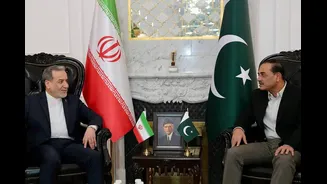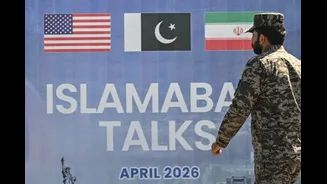






Islamabad is making a renewed push to bring the United States and Iran back to the negotiating table, with Pakistan positioning itself as a key mediator amid ongoing regional tensions. According to top
security sources, Pakistan is hopeful that another round of US-Iran peace talks could soon be held in its capital.
Sources said Iran is currently working on a fresh proposal document, which is likely to be submitted through Pakistan as part of efforts to revive stalled negotiations. The revised proposal is expected to cover all key issues and outline a phased mechanism on how talks could proceed.
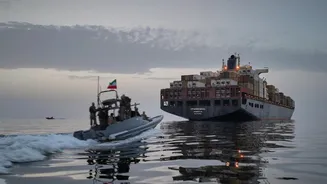
In the initial phase, discussions are likely to focus on reopening the Strait of Hormuz and the unfreezing of Iranian assets, sources indicated. These steps are being seen as confidence-building measures to ease tensions and pave the way for broader negotiations.
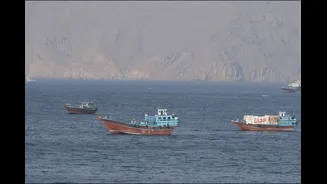
The urgency around reopening the Strait of Hormuz has intensified, particularly as Gulf Cooperation Council (GCC) countries—many of them key US allies—face significant economic strain due to disruptions in maritime traffic. During a special GCC meeting held in Saudi Arabia on Tuesday, Gulf Arab states called for ensuring security and freedom of navigation in the strait.
Sources further claimed that a possible breakthrough could involve the United States easing its naval blockade, which could prompt Iran to reopen the crucial shipping route. Both Washington and Tehran are under increasing pressure, making the reopening of the strait a potential starting point for renewed engagement.
Pakistan is also working to build broader support for the proposal, with friendly neighbouring countries expected to act as guarantors and back efforts for a wider peace framework, sources added.
Despite the fragile situation, the ceasefire between the United States and Iran remains in place, with Pakistan’s mediation playing a role in sustaining it, according to sources.
At the centre of these efforts is Pakistan’s Field Marshal Asim Munir, who is said to be in continuous contact with Iran’s top military leadership, including the chief of the Islamic Revolutionary Guard Corps (IRGC), as well as other key stakeholders.
Senior IRGC commanders are also likely to meet Munir soon, sources said. He is reportedly trying to convince Iran’s leadership, including the Supreme Leader, to consider a “win-win” proposal that could break the current deadlock.
Pakistan’s civil-military leadership, often described as a hybrid regime, is continuing its efforts to bring both the United States and Iran back to structured negotiations, even as tensions remain high in the region.
Meanwhile, Iran’s Islamic Revolutionary Guard Corps (IRGC) has issued a fresh and sharply worded warning to the US, threatening retaliation against American naval assets and signalling a broader regional response if Washington undertakes any new military action.
A senior political official from the IRGC Navy said Tehran would mobilise the wider “Resistance Front” — a network of Iran-aligned groups across West Asia — in the event of renewed US aggression, underlining the risk of a multi-front escalation.
“We will employ the capabilities of the Resistance Front in the event Washington commits a new act of aggression,” the official said.
The warning escalated further with a direct threat aimed at US maritime forces. “If America miscalculates again, we will burn its giant ships at sea,” the IRGC Navy’s political deputy said, adding that any response would involve “surprises and new capabilities”.