



Ganesh Chaturthi Bhog: Ganesh Chaturthi is a festival of devotion, celebration and family traditions, with food playing an important role in welcoming Lord Ganesha. This year it will be celebrated on September
14. Devotees prepare a variety of bhog, sweets, fruits and other traditional offerings before performing the Ganpati puja.
Among them, modak holds a special place and is widely associated with Ganesha worship. Durva grass, coconut, jaggery, bananas and other sattvic offerings are also commonly included in the puja.
Read More: When Is Ganesh Chaturthi 2026? Date, Muhurat, Rituals, Story And Wishes
Whether you are preparing a simple home puja or an elaborate festive spread, here is a practical guide to traditional Ganpati bhog and prasad.
What is offered to Lord Ganesha?
Food offered to a Hindu deity during puja is generally referred to as naivedya. Once it has been ceremonially offered, it is commonly distributed among devotees as prasad.
For Ganpati worship, households may prepare a range of traditional sweets, fruits and vegetarian preparations. Practices differ by region and family tradition, so there is no single mandatory menu for every Ganesh Chaturthi celebration.
The most recognisable offering associated with Lord Ganesha is modak.
Modak: The most popular Ganpati offering
Modak is traditionally considered one of Lord Ganesha’s favourite offerings and is closely associated with Ganesh Chaturthi.
Read More: 7 Easy Modak Recipes For Ganesh Chaturthi 2026
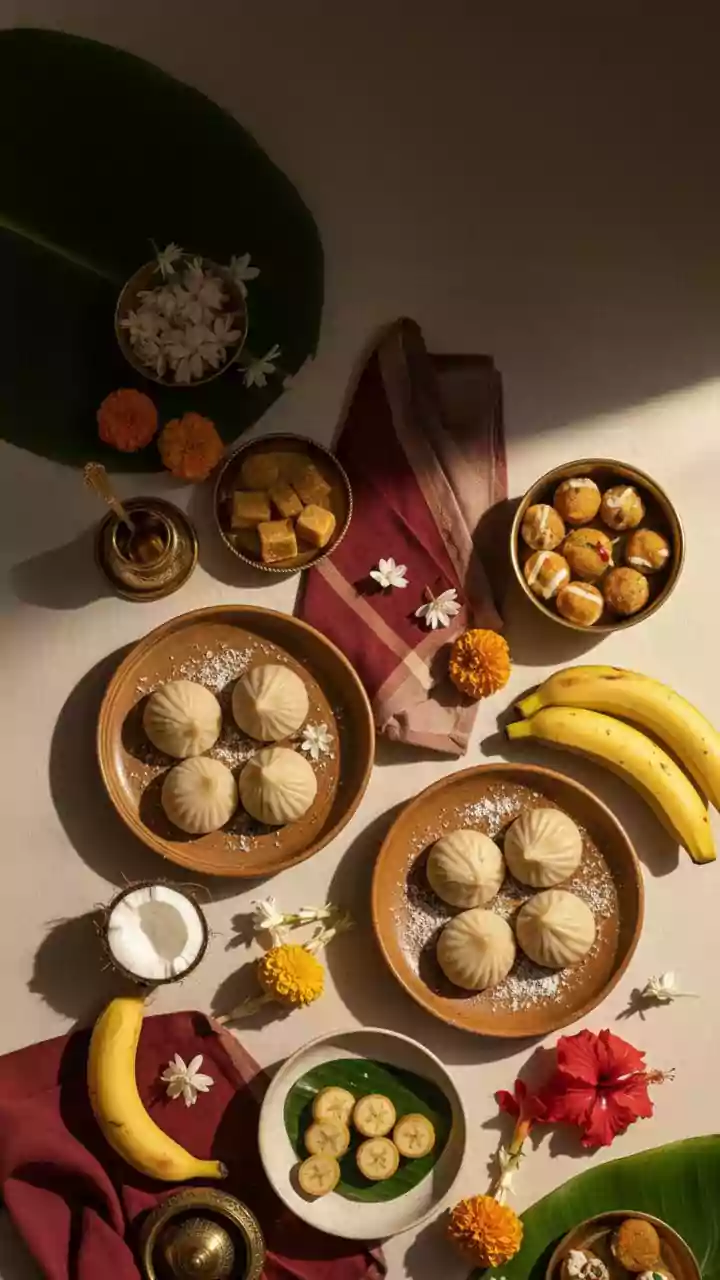
There are several varieties of modak, including:
- Ukadiche modak: A steamed rice-flour dumpling filled with coconut and jaggery.
- Fried modak: A crisp version prepared with a sweet coconut-jaggery filling.
- Mawa modak: Made using khoya or mawa and commonly flavoured with cardamom.
- Coconut modak: A simpler preparation centred on coconut and jaggery.
- Chocolate modak: A modern variation that has become popular in contemporary celebrations. varies according to family and regional custom. There is no need to treat
For a traditional Ganpati bhog, ukadiche modak is particularly associated with Maharashtrian Ganesh Chaturthi celebrations.
The number of modaks offered varies according to family and regional custom. There is no need to treat a particular number as universally compulsory.
Read More: Ukadiche Modak Recipe For Ganesh Chaturthi 2026: Easy Step-By-Step Guide
Durva Grass
Durva, a type of sacred grass, is one of the most distinctive offerings made to Lord Ganesha.
Devotees commonly offer bunches of fresh durva during Ganpati puja. Some traditions specifically use is a ritual offering rather than food, but it is an important part of the traditional 21 blades or strands, while practices can differ between households.
Durva is a ritual offering rather than food, but it is an important part of the traditional Ganpati puja thali.
Red hibiscus flowers
Fresh flowers are offered during Ganesh puja, with red hibiscus traditionally holding a special place in Ganesha worship.
The flowers can be offered at the deity’s feet or placed around the idol as part of the puja decoration.
As with other offerings, cleanliness and devotion are generally considered more important than elaborate presentation.
Read More: Ganesh Chaturthi 2026 Wishes In Different Indian Languages: Messages, Greetings And Quotes
Coconut
Coconut is a common offering in Hindu puja and can also form part of Ganpati bhog arrangements.
A whole coconut may be used during the ritual, while coconut is also an ingredient in several traditional sweets, including modaks.
Coconut can an important part of the filling of classic modaks, be offered alongside fruits and other naivedya items.
Read More: Hartalika Teej And Ganesh Chaturthi 2026: 4 Rare Coincidences, 3 Auspicious Yogas, Puja Time
Jaggery
Gur or jaggery is frequently used in traditional Ganpati preparations.
It forms an important part of the filling of classic modaks, particularly when combined with fresh coconut.
Jaggery can also be offered separately as a simple naivedya item.
Bananas and other fruits
Fresh fruits are a simple and widely used offering. For bhog, devotees can include:
- Bananas
- Apples
- Pomegranates
- Guavas
- Oranges
- Seasonal fruits
- Coconut
There is no requirement to offer every type of fruit. A small selection of fresh, clean seasonal fruit is sufficient for a simple home puja.
Read More: Ganesh Chaturthi 2026: Famous Pandals To Visit In Mumbai And Pune | Photos
Ladoos
Ladoos are another popular sweet associated with Lord Ganesha.
Different regions and families may prepare different varieties, including:
- Besan ladoo
- Motichoor ladoo
- Coconut ladoo
- Rava ladoo
- Sesame ladoo
Panchamrit
Panchamrit is traditionally prepared from five ingredients, although recipes vary. Milk, curd, ghee, honey and sugar are commonly used.
It may be used during certain puja rituals and can also be part of the devotional offering.
Because preparation customs vary, devotees should follow the method traditionally used by their family or priest.
Read More: Ganesh Chaturthi 2026: 10 Things To Buy Before Welcoming Ganpati Bappa Home
Milk and dairy offerings
Milk and other dairy products can form part of traditional Hindu offerings.
Depending on the household’s custom, devotees may include:
- Milk
- Curd
- Ghee
- Mawa
- Homemade sweets
These ingredients are also widely used in the preparation of festive bhog.
Betel leaves and areca nut
Paan or betel leaves and supari (areca nut) are traditionally included in several Hindu puja rituals. They may be placed alongside the other offerings as part of the ceremonial arrangement.
Panchkhadya and traditional regional offerings
Ganesh Chaturthi food traditions vary considerably across India.
In Maharashtra, for example, households may prepare several festive dishes alongside modaks.
Other regions have their own traditional sweets and preparations associated with Ganpati worship.
This regional diversity is one of the strengths of Ganesh Chaturthi cuisine: the central devotional practice remains the offering of food to Ganesha, while the actual menu reflects local culinary traditions.
Read More: Ganesh Chaturthi 2026: How Maharashtra, Goa, Karnataka, Andhra Pradesh And Tamil Nadu Celebrate Differently
What is Lord Ganesha’s favourite food?
Modak is traditionally regarded as one of Lord Ganesha’s favourite foods.
The association is particularly strong in Ganesh Chaturthi celebrations, where modaks are offered to Ganesha and subsequently distributed as prasad.
Why are 21 modaks offered to Lord Ganesha?
You will often see references to 21 modaks being offered to Ganesha.
The number 21 has significance in several Hindu ritual traditions, and some families specifically offer 21 modaks during Ganpati puja.
Why is durva offered to Lord Ganesha?
Durva is considered a sacred offering in Ganesha worship.
A traditional story connects durva with an episode in which Lord Ganesha consumed a powerful being or energy associated with intense heat and durva helped cool him.
Different versions of the story exist in Hindu tradition.
For devotees, the important point is that fresh durva has become an established part of Ganpati worship and is offered during puja along with flowers and other naivedya.
Can fruits be offered to Lord Ganesha?
Yes. Fresh fruits are commonly included in Ganpati naivedya.
Bananas are particularly common in Hindu puja, but devotees can offer whichever clean and fresh seasonal fruits are customary in their household.
Can homemade food be offered as Ganpati bhog?
Yes. Homemade vegetarian food and sweets are commonly prepared as bhog.
The emphasis is generally on cleanliness, freshness and devotion.
Depending on family tradition, the bhog may include sweets, fruits and savoury vegetarian preparations.
If the household follows specific dietary rules for naivedya, those rules should take precedence.
Ganesh Chaturthi 2026: When should the bhog be offered?
Ganesh Chaturthi will be observed on Monday, September 14, 2026. The Chaturthi Tithi begins at 7:06 AM on September 14 and ends at 7:44 AM on September 15.
The Madhyahna Ganesha Puja Muhurat is 11:02 AM to 1:31 PM. The main bhog can be offered as part of the Ganpati puja during the chosen worship period.
How to offer bhog to Lord Ganesha
Once the idol has been installed and the puja has begun, the bhog can be arranged neatly on a clean plate or thali.
A simple sequence can be:
- Place the prepared naivedya before Lord Ganesha.
- Offer flowers and durva according to the family’s ritual.
- Light the diya and incense.
- Recite the relevant Ganesha mantras or prayers.
- Offer the bhog with a devotional prayer.
- Allow the offering to remain before the deity for the customary period.
- Conclude the puja and aarti.
- Distribute the food as prasad.
Families following a priest-led or specific traditional puja should follow that ritual sequence.
What should not be offered to Lord Ganesha?
There is no single food restriction that applies identically to every Hindu household. However, naivedya is generally prepared as sattvic vegetarian food in many traditions.
Ganpati Bhog: Traditional Vs Modern Offerings
Modern celebrations have expanded the range of Ganesha-themed sweets.
Alongside traditional modaks and ladoos, devotees may encounter:
- Chocolate modaks
- Dry-fruit modaks
- Mawa modaks
- Mango modaks
- Pista modaks
- Kaju modaks
- Baked modaks
These contemporary variations can be included where they fit the household’s tradition.
For a more traditional Ganpati bhog, however, steamed ukadiche modak, coconut-jaggery preparations, fruits and traditional sweets remain among the most recognisable choices.
How to prepare a simple Ganpati Prasad Thali
You do not need a large spread to prepare a meaningful bhog.
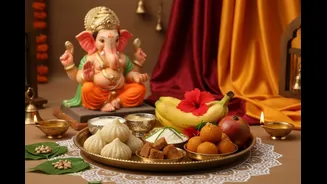
A simple thali can contain:
One main sweet: Ukadiche modak or another traditional modak.
One additional sweet: Ladoo or another homemade festive sweet.
Fruit: Banana and one or two seasonal fruits.
Traditional offerings: Coconut and jaggery.
Puja items: Durva, red flowers, betel leaves and other items required by your family’s ritual.
This provides a balanced and manageable offering without unnecessary excess.
Ganpati Prasad: What happens after the offering?
Once the naivedya has been offered according to the puja tradition, it is commonly treated as prasad and distributed among family members and devotees.
Modaks, fruits and sweets can be shared after the ceremony.
During large community celebrations, bhog may be distributed to many devotees.
The concept of prasad emphasises receiving food as a sacred blessing after it has been offered to the deity.
Ganesh Chaturthi 2026: The importance of simplicity
Ganesh Chaturthi can involve elaborate decorations, large community celebrations and extensive food preparations. But a home Ganpati celebration does not need to be elaborate to be meaningful.
A few fresh fruits, homemade modaks, durva and flowers can make up a traditional offering. What matters most is observing the ritual according to one’s family tradition and offering the food with sincerity.