






Petroleum and natural gas minister Hardeep Singh Puri on Tuesday said India’s energy imports are continuing to flow from “different sources and routes”, amid the ongoing West Asia conflict that has triggered
a massive energy crisis the world over.
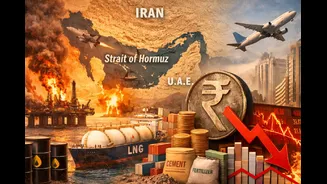
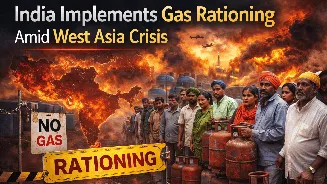
With oil and gas prices soaring and the Strait of Hormuz – a vital artery that transports 20 percent of the world’s petroleum and natural gas – effectively under the control of Iran’s Revolutionary Guards, one-third of India’s natural gas imports have been disrupted.
According to Puri, however, the Centre is taking measures to ensure 100 percent supply of CNG (compressed natural gas) and piped natural gas (PNG) to domestic consumers.
“We are committed to ensure uninterrupted supply of affordable energy to our domestic consumers,” Puri said during an interaction with reporters.
He said there is “no reason to panic” as the central government is monitoring the situation on a minute-to-minute basis.
India is the world’s fourth-largest buyer of LNG (liquefied natural gas) and the second-largest importer of LPG (liquefied petroleum gas). But, where and how exactly does the country fulfil its energy requirements, and what are these multiple sources mentioned by the Union minister?
Here’s all you need to know:
INDIA AND THE ‘HORMUZ TRAP’
To understand how India is surviving what is being called the “Hormuz trap”, it would be best to redraw the energy import map.
Traditionally, the Strait of Hormuz carried roughly 50 percent of India’s crude oil and more than 60 percent of its LNG and LPG. With this route now effectively disrupted, it has been forced to pivot toward “non-Strait” sources to keep from running dry.
So, how is India doing it?
- Russia: Once again the “swing supplier”, Russia has returned as India’s top crude source providing over 1.04 million barrels per day (bpd), or roughly 20 percent of total imports. To stabilise global prices, the US Treasury even issued a 30-day waiver (valid until April 5) to allow Indian refiners to take delivery of Russian oil already at sea.
- Iraq and Saudi Arabia: These remain India’s bedrock partners, consistently providing between 17 and 20 percent of crude imports each.
- United States: A rapidly growing source, the US now accounts for roughly 8 percent of India’s oil basket. India has also leaned heavily on US LNG exports to fill the gap left by disruptions in the Gulf.
- West Africa and Latin America: Countries such as Nigeria, Angola, and Brazil have become strategically vital because their shipping routes entirely bypass West Asia.
- Qatar: Historically the backbone of India’s gas economy (supplying nearly 50 percent of LNG), Qatar declared force majeure on March 4 after its plants were targeted in the conflict, leading to a massive supply gap.
To manage energy shocks, India relies on a multi-layered “safety net” that provides a total emergency buffer of approximately 74 days. This includes roughly 9.5 days of crude stored in underground strategic petroleum reserves (SPR) at Visakhapatnam, Mangaluru, and Padur, complemented by 65 days of commercial stock held by oil public sector undertakings (PSU).
But the shift to avoid the Persian Gulf comes at a steep price. Tankers from the US, Europe, and West Africa are now frequently rerouted around the Cape of Good Hope. This journey adds 10 to 15 days to the travel time – turning a four-day trip from the Gulf into a 25-day trip. It significantly increases freight costs and insurance premiums.
Economically, the stakes are high: every $10 per barrel increase in global crude prices typically widens India’s current account deficit by roughly $9 billion. “Spot” gas prices have doubled to $25 per unit as India desperately seeks to fill the 40 percent supply gap left by disrupted contracts in West Asia.
(With agency inputs)