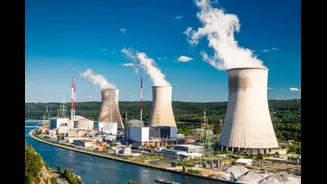








India is considering placing a third bulk order for locally designed nuclear reactors as it looks to scale up atomic power capacity while keeping costs manageable, according to Bloomberg.
The government
may seek bids to build up to 10 pressurised heavy water reactors (PHWRs) of 700 megawatts each, people familiar with the matter told Bloomberg. Ordering reactors in bulk is expected to strengthen the government’s negotiating position and help bring down costs.
The move follows a key policy shift in December, when India opened its nuclear sector to private companies. The change is aimed at supporting the country’s goal of building 100 gigawatts of nuclear capacity by 2047, the year India aims to achieve developed-nation status. That would represent an eleven-fold increase from current levels and would require an estimated Rs 19.3 trillion ($211 billion) in investment, according to a government report cited by Bloomberg.
The December law also eases supplier liability rules that had previously exposed equipment makers to potentially unlimited damage claims. It allows private companies to generate nuclear power in India, a space that was earlier restricted to government entities.
India’s nuclear push comes amid a global revival of atomic energy as countries seek cleaner power sources to meet rising electricity demand, including from data centres and artificial intelligence, Bloomberg reported. Japan has begun restarting reactors, while countries such as China, South Korea, Bangladesh and France are expanding capacity.
Global nuclear power capacity could more than double to 860 gigawatts by 2050, attracting nearly $2.2 trillion in investment across the value chain, according to Morgan Stanley Research cited by Bloomberg.
Currently, the only foreign-built reactors operating in India are Russian units at Kudankulam. With regulatory hurdles easing, discussions between suppliers and developers — both public and private — have picked up pace. However, analysts caution that high construction costs and project delays could pose challenges in India’s price-sensitive electricity market.