






Mumbai is gearing up for a major shift in how people move within the city’s busiest business districts. With the launch of its first pod taxi project in Bandra Kurla Complex (BKC), the city is stepping
into a future of driverless, tech-driven urban mobility, something already seen in global hubs like London and Dubai.
The project, led by the Mumbai Metropolitan Region Development Authority (MMRDA), aims to solve one of Mumbai’s biggest challenges, which is last-mile connectivity.
What Is A Pod Taxi?
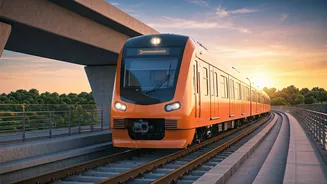
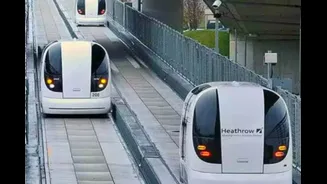
Pod taxis, also known as Personal Rapid Transit (PRT) or Automated Rapid Transit Systems, are small, driverless vehicles designed for short-distance, point-to-point travel. These pods operate autonomously and are built to provide seamless connectivity with minimal waiting time. They function on dedicated tracks and transport passengers directly to selected stations instead of making multiple stops like buses or trains.
Pod taxis typically run 5-10 metres above ground and are considered one of the most advanced and eco-friendly transport systems globally.
Why Mumbai Needs Pod Taxis
Mumbai’s transport network is already under pressure, especially in commercial hubs like BKC. With upcoming infrastructure projects, including the bullet train and new office spaces, the number of daily commuters is expected to rise sharply.
The Hindu reports that pod taxis were selected after a Techno-Economic Feasibility Study identified them as the most suitable solution for BKC’s high-density, low-road-space conditions.
The system is expected to reduce dependence on autos, taxis and buses for short distances, cutting congestion and improving travel efficiency.
Mumbai Pod Taxi Route And Stations
The first phase of the project will cover a 3.36-km stretch connecting Kurla and Bandra East. According to The Times of India, the route will pass through key locations such as:
- LBS Marg
- MMRDA Pay and Park (G Block)
- BDB Gate 11
- Kalanagar
- Old MMRDA building
- Excise department
In the long run, the network will expand to around 8.85 km with 22 stations, improving connectivity across BKC, Kurla and Bandra East.
How Will Pod Taxis Work?
The system is designed to be fast, efficient and largely on-demand. As per TOI,
- Pods will be driverless, battery-operated and AI-powered
- Each pod will have around 6 seats
- They will run at speeds of up to 40 kmph
- Pods will arrive every 15 seconds
- They will stop only at stations selected by passengers
This “hop-on, hop-off” style system ensures quicker travel, as commuters won’t need to stop at every station along the route.
Integration With Metro And Other Transport
One of the biggest advantages of the pod taxi system is its integration with Mumbai’s existing transport network. The system will connect with:
- Metro Line 3 at BKC
- Metro Line 2B near ITO and IL&FS
This means a commuter stepping out of a metro or suburban train can directly access a pod taxi without needing autos or buses for the final stretch.
Fare And Cost Details
The fare is expected to be Rs 21 per km, based on commuter surveys.
- Prices may increase by 4% annually to account for inflation
- Final fare structure will be officially notified later
The total project cost is estimated at around Rs 1,017 crore, and it will be implemented through a public-private partnership model.
Timeline And Project Status
The groundwork for the project has already begun. As per TOI, Maharashtra Chief Minister Devendra Fadnavis performed the bhoomi pujan for Phase I, which is expected to be completed within 20 months. Deputy Chief Ministers Eknath Shinde and Sunetra Pawar were also present at the ceremony.
Dr Sanjay Mukherjee, Metropolitan Commissioner of MMRDA, said the project will significantly improve mobility in BKC. “The Pod Taxi project in BKC marks a significant step towards enhancing urban mobility in one of Mumbai’s busiest business districts. This system will not only improve last-mile connectivity but also reduce congestion and provide a modern, efficient mode of transportation for daily commuters,” The Hindu quoted him as saying.
Maharashtra CM Devendra Fadnavis also highlighted its convenience for commuters. “A person alighting either from the metro or a suburban train will not be required to use another mode of public transport thereafter. He can reach within a distance of 100 to 150 metres by this pod taxi,” he said.
Globally, pod taxi systems are already operational in places like Heathrow Airport in London, and cities in Europe are increasingly adopting similar solutions. Mumbai’s move signals a push towards smarter, greener transport. The system is not only eco-friendly but also designed to reduce travel time and congestion in dense urban environments.
With an expected ridership of over 1 lakh daily commuters in the coming years, the pod taxi project could redefine how Mumbaikars navigate short distances in crowded business districts.