
I begin with what Union Minister Nitin Gadkari said on 24 December: “…Look at our situation. I stay in Delhi for two days and develop a throat infection. Delhi is troubled by pollution. I am the Road Transport
Minister, and around 40 per cent of pollution is linked to our sector.”
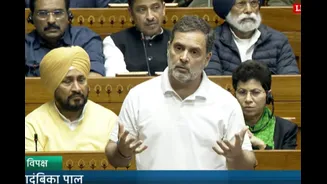
Earlier, on 18 December, the Minister of State for Environment and Climate Change, Kirti Vardhan Singh, told the Rajya Sabha the following: “There is no direct correlation between higher Air Quality Index (AQI) levels and lung diseases, with no ‘conclusive data’ to establish such a link.”
Also, on 9 December, Union Minister of State for Health Prataprao Jadhav said in a written reply to Parliament: “There is no conclusive data available to establish a direct correlation of death or disease exclusively due to air pollution. Air pollution is just one of the triggering factors for respiratory ailments and associated diseases.”
Plain Lies
I say with all the humility at my command that what Mr Gadkari said reflected the true and fair picture of the consequences of Delhi’s killer air pollution. I also state with conviction that the two statements given by the Ministers of State for Environment and Health to Parliament are plain lies, not even half-truths.
This flip-flop by ministers reminds me of what John Lubbock, the leading mathematician, scientist and author, once famously said: “What we see depends mainly on what we are looking for.” Period.
The Fundamental Right
The right to a clean environment, including clean air, is not explicitly enshrined in the Constitution of India. But the Supreme Court, through landmark judgments, has expanded the reach of Article 21 to include the right to clean air. Here are the key judgments:
- Subhash Kumar v. State of Bihar (1991): Declared that the right to life includes the right to enjoy pollution-free water and air for the full enjoyment of life.
- C. Mehta Cases: A series of public interest litigations (PILs) that expanded Article 21 to include environmental protection, adding duties on the State and citizens (under Article 51A(g)) to safeguard nature.
- Arjun Gopal v. Union of India (Firecracker Ban): Affirmed that the right to clean air is intrinsic to Article 21, linking it directly to health hazards caused by pollution.
- Ranjitsinh v. Union of India (2024): Further linked clean air and climate resilience to human dignity, recognising the right to a healthy environment as a fundamental human right against climate-change impacts.
Believe It Or Not
Air pollution directly accounts for many severe and chronic illnesses. Fine particulate matter — PM2.5 and PM10 — penetrates deep into the lungs and then enters the bloodstream, affecting all major organs. Exposure to dangerous particulate matter damages both the cardiovascular and respiratory systems, leading to strokes, lung cancer and chronic obstructive pulmonary disease (COPD). I humbly submit that my COPD Stage II is a direct gift of Delhi’s air pollution. And this is not all.
Recent research has directly linked prenatal exposure to elevated levels of air pollution with developmental delay at age three, as well as psychological and behavioural problems, including symptoms of attention deficit hyperactivity disorder (ADHD), anxiety and depression.
Pollution Kills, And Kills Violently
Air pollution is the biggest environmental threat, causing serious health issues and consequential deaths among Bharatiyas. According to the World Health Organization (WHO), seven million premature deaths occur every year globally due to the combined effects of outdoor and household air pollution.
So what? As the Union Ministers say, there is no direct evidence of air pollution causing deaths and diseases in Bharat.
The contrary is the truth. I posit: put mildly, pollution annually kills Bharatiyas in droves.
It was estimated way back in the Global Burden of Disease Study 2010, published in the reputed medical journal The Lancet in December 2012, that 1.5 million Bharatiyas died annually — one-sixth of all deaths — due to the combined effect of ambient and indoor air pollution.
Fast forward to 2015. The World Health Organization (WHO) estimated that India accounted for the world’s highest death rate from chronic respiratory diseases, and more deaths from asthma than any other nation. Air pollution also contributes to both chronic and acute heart disease, the leading cause of death in India.
According to the Institute for Health Metrics and Evaluation (IHME)/Global Burden of Disease 2021–2024 (latest data summaries), the number of annual deaths of Bharatiyas due to air pollution has spiked to 2.3 million.
The Capital Punishment
According to a World Bank report dated 5 June 2024, the entire population of over 1.4 billion Bharatiyas is exposed to unhealthy levels of PM2.5 — the most harmful pollutant.
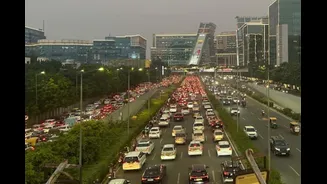
But the worst fate is reserved for Bhartiyas living in the National Capital Territory (NCT) of Delhi and the wider National Capital Region (NCR). For them, the year-long assault of severe air pollution is nothing short of “the Capital Punishment.”
Why do I say so? As per the Swiss IQAir 2024 State of the Air report, Delhi was the most polluted capital city in the world in 2024, with an average PM2.5 concentration of 91.8 µg/m³ (against the WHO guideline limit of 5.0 µg/m³). If that is not enough, New Delhi was ranked the most polluted capital city in the world for the seventh consecutive year.
The Jigsaw Puzzle
What about 2025? I say it is worse than ever.
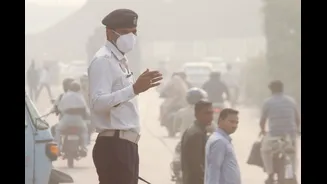
Although the recent spell of toxic air began a week before Diwali and has proved to be an unmitigated disaster, the entire year has been devastating for Delhi’s residents, who have inhaled substantially higher levels of PM2.5 than considered safe by the WHO.
For the past three months at a stretch, air pollution levels have remained dangerously high, with AQI readings between 200 and 500. For the uninitiated, the country does not record AQI levels above 500, for the strange reason that doing so would “create panic.”
Make no mistake: Delhi is not going to witness any respite from chronic, severe air pollution in the foreseeable future. It will continue to swing between poor, very poor, severe and severe+ in the days, months and years ahead. As I close the piece, air pollution in Delhi on December 28 morning returned tantalisingly close to “severe” (AQI-391) and, as per Swiss IQ Air “, hazardous” (AQI-400+).
Ignored
Governments since 1985 have blatantly ignored the Supreme Court’s landmark judgements on cleaning Delhi’s air. Here are the key milestones and orders in brief:
- 1985: PIL filed by M.C. Mehta highlighting vehicular pollution in Delhi, invoking Article 21 rights.
- 23 September 1986: Supreme Court issues first order directing the Delhi Administration to report on pollution-control measures for vehicles.
- 14 March 1991: Court orders closure of polluting industries in Delhi and emphasises vehicular emission checks.
- 28 July 1998: Mandates augmentation of public buses to 10,000, phase-out of leaded petrol by 1 September 1998, and CNG conversion for commercial vehicles.
- 16 April 1999: Further directions on diesel emissions and CNG conversion for public transport amid compliance delays.
- 4 October 2001: Landmark order enforcing CNG for all buses, taxis and three-wheelers in Delhi by April 2002.
- 5 April 2002: Upholds Bhure Lal Committee recommendations for cleaner fuels nationwide.
- 2018–2025: Ongoing hearings on smog towers, GRAP compliance and truck bans during winter pollution spikes.
The Supreme Court’s writ petition, M.C. Mehta v. Union of India, established foundational principles such as polluter pays and sustainable development, influencing CNG adoption and emission norms across the country. The matter continues to remain active, with extensions into 2025 for monitoring compliance in Delhi and other polluted cities.
Despite continued Supreme Court oversight, Delhi’s air quality has plummeted sharply since the 1980s and continues to worsen rapidly. PM2.5, PM10 and other pollutants have caused widespread serious health conditions — including respiratory diseases (such as incurable lung cancer and COPD), heart disease, brain strokes and more. Consequential violent deaths due to air pollution continue to rise, despite complete denial by Honourable Union Ministers in Parliament, the sacred temple of democracy of Bharat.
The Root Cause Analysis
When I was called upon in 2009 to frame the Delhi Industrial Policy (2010–2021), the very first sentence I wrote in the policy preamble was: “Delhi will have no industry.” I meant that Delhi would be made free of the types of polluting industries it housed at the time.
Unsurprisingly, Sheila Dikshit wrote the following in the foreword to the Industrial Policy for Delhi (2010–2021): “Delhi is predominantly a metropolitan urban area without much hinterland, and the needs of an ever-growing population have to be balanced with the responsibility of keeping the national capital a clean, modern city with a healthy environment and a proper ecological balance.
The endeavour of the Government of NCT of Delhi is to make Delhi a hub of pollution-free, high-technology and knowledge-based industrial activities.”
I am dismayed to say that the policy — and its profound vision — remains unimplemented, while worsening air pollution continues to send a chill down the marrow each passing day.
Industrial pollution, combined with a cocktail of other pollutants — vehicular emissions, road dust, construction dust and emissions from power plants — is the root cause of Delhi’s deteriorating air quality.
But governments of the day wrongfully ascribe the problem to transboundary pollutants (stubble burning) and geographical factors (Delhi’s location in the Indo-Gangetic Plain basin), treating these as if they were the primary causes.
The Band-Aid
The current framework to combat air pollution in Delhi-NCR revolves around GRAP (Graded Response Action Plan), a set of emergency measures implemented by the Commission for Air Quality Management (CAQM). As air quality worsens, the corresponding restrictions come into force. I call this an ineffective band-aid solution for a festering wound.
- Stage I: Poor (AQI 201–300) – strict enforcement against over-aged vehicles; dust control; ban on open garbage burning.
- Stage II: Very Poor (AQI 301–400) – ban on coal/petroleum use in industries; 50 per cent work-from-home for industrial workers; stricter checks on diesel vehicles.
- Stage III: Severe (AQI 401–450) – ban on non-essential diesel trucks; halt on construction and mining; 50–60 per cent of private vehicles off the roads via odd-even or bans.
- Stage IV: Severe+ (AQI 451–500) – complete ban on diesel trucks except for essentials; online classes for schools; NCR entry bans for polluting vehicles; potential factory shutdowns.
Ineffective
GRAP is cumulative. When Stage IV restrictions come in, they operate in addition to the measures under Stages I, II and III. I posit that GRAP has been ineffective in combating Delhi-NCR’s pollution. All it ultimately achieves is bringing Delhi-NCR to a complete standstill by the time Stage IV is imposed.
What Delhi-NCR needs is a long-term fix. But what should these measures be?
The Long-Term Fix
At the time of the 2010 Summer Olympics, Beijing was the global air-pollution capital. Today, Beijing has exited the list of the world’s 100 most polluted cities. Recently, Yu Jing, spokesperson for the Chinese Embassy, offered to help fix Delhi’s air pollution. I submit that the government should politely decline the offer. Instead, it is time for Bharat to fast-track long-term solutions to combat air pollution in Delhi-NCR and the rest of the country by inventing Bharat’s own “Next Practices” — a phrase borrowed from the now-classic address India@75 by the late management guru Coimbatore Krishnarao (C.K.) Prahalad.
Here are a few nostrums I suggest:
Airshed Approach
Cities and towns have borders, but air pollution is borderless. The correct approach is an airshed strategy that treats a large geographical area (an airshed) as a single system, recognising that pollutants move across city and state boundaries. This requires collaborative, region-wide strategies rather than isolated local efforts.
It involves defining areas using topography, meteorology and emission data, followed by coordinated pollution-control measures across the entire region to achieve meaningful and shared improvements in air quality. (Timeframe to formulate and launch an airshed plan: 365 days.)
Collapse Delhi-NCR Into One Unit
To combat air pollution effectively, Delhi and the contiguous NCR (Gurgaon, Noida, Greater Noida, Ghaziabad, Faridabad, etc.) should be treated as one compact administrative and planning unit. If necessary, these could be reorganised into a single entity. Delhi+NCR is now the most populous urban agglomeration in the world and has left Tokyo far behind. (Timeframe: 180 days.)
Close Down All Polluting Industries In Delhi-NCR
In 1996, the Supreme Court ordered the shutdown of hazardous, noxious, heavy and large industries in Delhi. It also directed the closure of hot-mix plants and brick kilns. These directives were reiterated in the Industrial Policy for Delhi (2010–2021). Yet, the situation has worsened. It is time to shut down all polluting industries — not only in Delhi but also in NCR. (Implementation timeframe: 90 days.)
Implement Best-Practices For Construction-Dust Reduction
Global best practices for reducing construction dust rely on integrated approaches such as water suppression, chemical additives, physical barriers (screens, covers), use of vacuum systems instead of brooms, minimal soil disturbance, and proper worker training. Strategies must be tailored to site conditions to manage dust both at the source and in the air. (Implementation timeframe, with strict punitive measures for violators: 180 days.)
Make City Roads NMT-Friendly
Delhi has around 30,000 km of roads, the vast majority of which are allocated to automobiles. Non-motorised transport (NMT) facilities are sparse, poorly designed, or encroached upon. Pedestrians, cyclists and e-rickshaw users are severely handicapped. It is time to convert Delhi-NCR into a paradise for NMT traffic. (Implementation timeframe: 730 days.)
Massive Upgradation Of Public Transport
- 20,000 Non-Polluting Electric/Hydrogen Buses –Twenty-five years ago, in another era, the Supreme Court mandated 10,000 less-polluting CNG buses for Delhi. That mandate remains unmet. It is time to raise the ambition. Delhi must immediately put 20,000 non-polluting electric or hydrogen buses into operation. The Chinese city of Shenzhen, with a population of 13 million (less than one-third of Delhi-NCR), runs 16,000 electric buses. (Implementation timeframe: 1,095 days.)
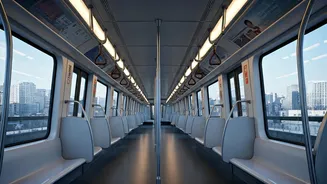
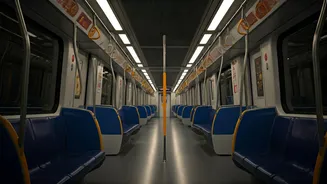
- 1,000 km of Metro Rail – Delhi-NCR currently has about 400 km of operational metro rail, which carries 6–6.5 million commuters daily. Without the Delhi Metro, the city would have collapsed much earlier under its own weight. It is now time to “bite the bullet” and expand the network to 1,000 km, with world-class first- and last-mile connectivity, affordable pricing and Transit Oriented Development (TOD) to change the city from “horizontal and radial sprawl” to “compact mixed use city”.
Delhi Metro must surpass the Beijing Metro — the world’s largest at 870 km in 2025, carrying more than 10 million passengers daily. Make no mistake: the Beijing Metro is a major reason behind Beijing’s rapid decline in air pollution. (Implementation timeframe: 5 years to reach 750 km; 10 years to reach 1,000 km.)
Beyond Infrastructure: Demand Management And Policy Reform
The above measures are necessary but not sufficient. Alongside supply-side reforms, Bharat needs strong demand-management strategies and a comprehensive set of policies to prevent air pollution.
While we understand much about the causes and effects of air pollution, prevention still lags far behind. The only way to bring down pollution drastically is to adopt wide-ranging policies regulating all polluting sectors — from energy production to transportation and agriculture — and to consider broader systemic solutions such as carbon-tax frameworks. Equally important is inculcating behavioural change and shifts in lifestyle.
The author is a multidisciplinary thought leader with Action Bias, India-based international impact consultant, and keen watcher of changing national and international scenarios. He works as president, advisory services of consulting company BARSYL. Views expressed in the above piece are personal and solely those of the author. They do not necessarily reflect News18’s views.