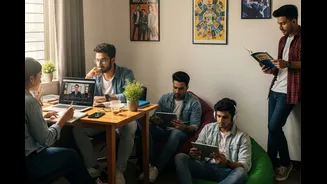









Since the COVID-19 pandemic, people worldwide have become accustomed to working and studying from home. A new generation of students now believes that any degree can be earned with just a laptop and a fast
internet connection. Online course promotions suggest you can even learn rocket science from your bedroom – but is that truly realistic? Would you be comfortable being treated by a doctor who studied only via YouTube? Or living in a building designed by an engineer who has never handled a single brick or stone?
The truth is that education can never be entirely digital. In many fields, hand-eye coordination, physical presence in a laboratory, and real-world practice matter more than textbooks. For some courses, students cannot even gain the basics from home or solely through YouTube videos. After 12th, those who want to pursue higher education without attending a traditional college and still build a successful career, they must understand these nuances. Students need to know which courses cannot be done online and why hands-on training is indispensable. Regulatory authorities like the UGC too have laid down specific rules for online education.
1. Medicine and Allied Health Sciences
It is unimaginable to pursue programmes like MBBS, BDS, or nursing entirely online. These courses demand a deep understanding of the human body, feeling a patient’s pulse, and conducting complex laboratory procedures. The National Medical Commission (NMC) does not recognise online medical degrees. Practical, clinical exposure is the backbone of these fields.
2. Engineering
Although certain aspects of computer science can be learned online, disciplines such as mechanical, civil, or electrical engineering require workshops and direct work with heavy machinery. Learning how bridges are constructed or how engines operate must happen on-site, not just through an app. In engineering education, practical sessions and project work are mandatory components.
3. Architecture and Design
In courses like B.Arch, sketching, model making, and site visits are crucial. Architecture is more than drawing; it involves experiencing spaces and materials first-hand. According to the Council of Architecture’s regulations, physical attendance is necessary. Without it, students cannot truly understand the finer details of a structure.
4. Performing Arts
In dance, acting, or classical music, the guru-shishya tradition and in-person learning cannot be fully recreated on a Zoom call. A mentor’s physical presence is vital for polishing body language and stage performance. They can watch you closely and correct your mistakes directly, which is not possible in the same way online.
5. Lab-Based Pure Sciences
Students doing a B.Sc. in subjects such as chemistry, physics, or biotechnology spend extensive time in laboratories working with chemicals and microorganisms. Online classes can teach the theory, but techniques like titration or cell culture cannot be mastered without hands-on lab practice.