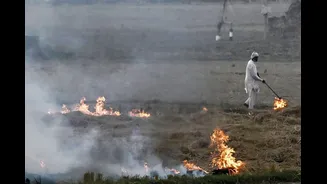




Even as Delhi woke up to a thick blanket of smog on the morning after Diwali, neighbouring Punjab recorded an alarming spike in stubble-burning incidents, with 1,152 farm fires reported in a single day
on November 8—the highest single-day count on Diwali in the past three years.
The spike, recorded on the day of the festival, pushed Punjab’s cumulative stubble-burning incidents this season to 4,459, underlining the continuing challenge of containing crop-residue burning despite enforcement measures and repeated warnings from authorities.
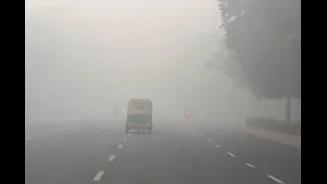
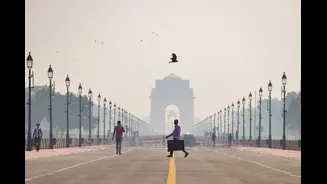
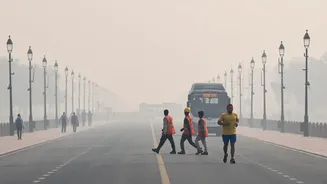
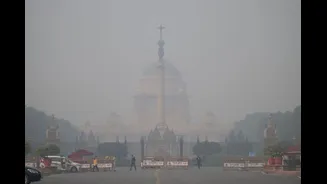
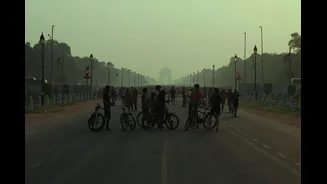
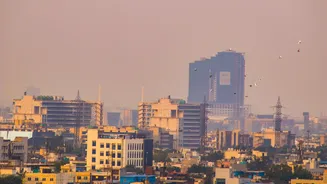
The surge also coincided with a sharp deterioration in Delhi’s air quality. The national capital’s Air Quality Index (AQI) touched 483 at 8.10am on Monday, placing it in the ‘severe’ category, according to Central Pollution Control Board (CPCB) data. At least 15 monitoring stations across the city recorded AQI readings above 400, as a thick haze reduced visibility across several neighbourhoods and roads.
The latest developments have once again brought the relationship between stubble burning in neighbouring states and Delhi’s seasonal pollution crisis into focus, even as experts point out that the capital’s deteriorating air quality is driven by several sources, including vehicular emissions, construction dust, industrial pollution and firecrackers.
PUNJAB SEES SHARPEST DIWALI-DAY SPIKE IN STUBBLE BURNING IN THREE YEARS
According to data from the Punjab Remote Sensing Centre (PRSC), 1,152 active stubble-burning incidents were detected through satellite monitoring on November 8. This was a significant jump from the previous day, when 163 incidents were reported, according to the figures cited by Sandesh. For comparison, Punjab recorded 730 incidents on November 8 in 2024 and 238 on the same date in 2025.
The 2026 figure is therefore the highest Diwali-day count in the three-year period.
Sangrur emerged as the worst-affected district on Diwali, with 194 incidents reported in a single day. Rupnagar recorded the lowest number, with just one incident.
The spike is particularly concerning as the paddy harvesting season is nearing its end. Around 91 per cent of Punjab’s paddy area had already been harvested, yet farm fires continued to be reported across several districts.
4,459 FARM FIRES THIS SEASON: WHAT THE CAQM DATA SHOWS
The Commission for Air Quality Management’s (CAQM) report, covering the period up to November 8, puts the total number of stubble-burning incidents reported in Punjab this season at 4,459. Of these, physical inspections have been carried out at 2,998 locations, with evidence of stubble burning confirmed at 1,310 sites, according to the latest figures shared by ANI.
The authorities have imposed environmental compensation in 1,228 cases, with fines amounting to Rs 62.55 lakh. Of this, Rs 32.60 lakh has been recovered so far.
Enforcement action has also included:
• 884 FIRs registered under Section 223 of the Bharatiya Nyaya Sanhita (BNS).
• 1,017 red entries made in the land records of farms where violations were detected.
• 18 nodal officers facing prosecution proceedings under Section 14 of the CAQM Act.
The district-wise figures show that Tarn Taran has recorded the highest number of incidents this season, with 654 cases, followed by Ferozepur with 592, Sangrur with 488, Bathinda with 406 and Patiala with 288. Physical verification has confirmed stubble burning at 306 locations in Tarn Taran and 247 in Ferozepur.
The figures also highlight the gap between penalties imposed and money recovered, with just over half of the Rs 62.55 lakh compensation levied having been collected so far.
DELHI’S AQI SOARS AFTER DIWALI
The deterioration in Delhi’s air quality was particularly visible on Monday morning, with several parts of the capital reporting hazardous pollution levels.
Among the worst-affected locations were:
Monitoring station AQI
Jahangirpuri 433–442
Rohini 430–438
Delhi Technological University 430–434
North Campus 433
Bawana 427
Ghazipur 418
Mundka 417
Punjabi Bagh 408–409
NIH Narela 407
The CPCB’s overall reading was reported at 483 at 8.10am. Subsequent readings were lower: Reuters reported an AQI of 370 at 9 am, still in the ‘very poor’ category, while several individual neighbourhoods continued to record severe pollution.
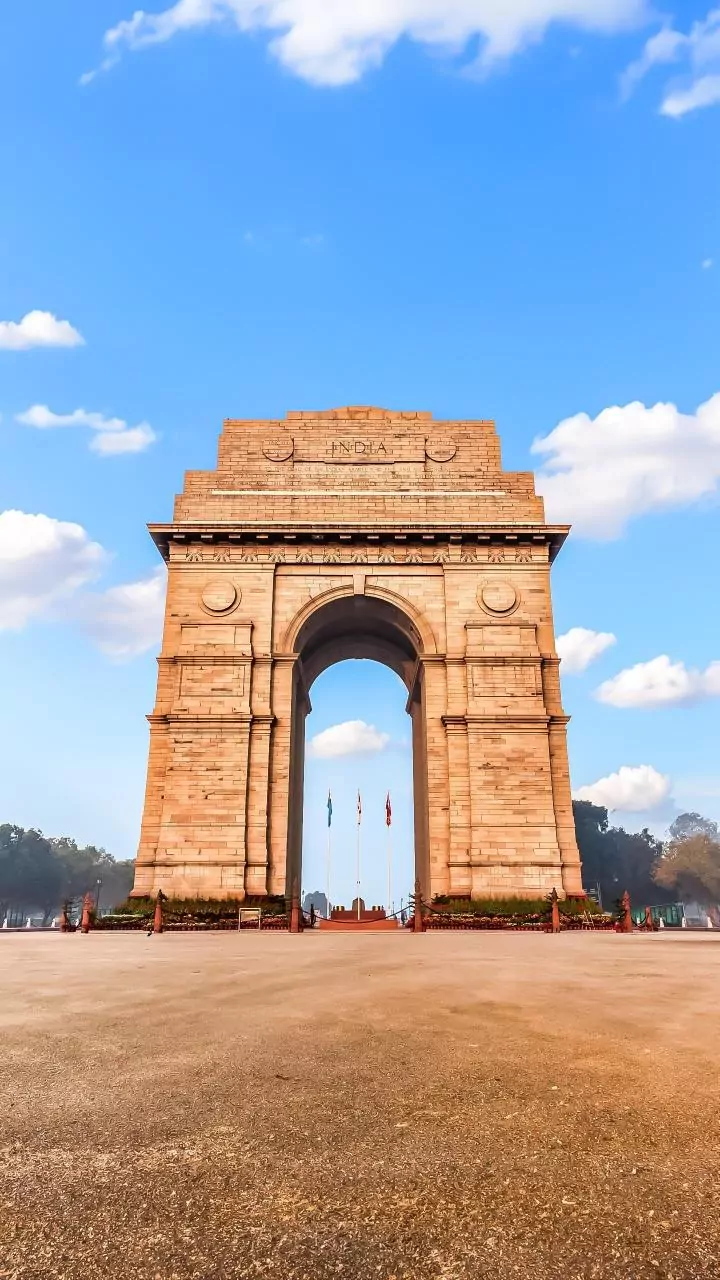
The pollution has also affected visibility, with a thick layer of smog enveloping several parts of the capital. Landmarks, including Akshardham temple, were reportedly obscured by haze. The situation is especially concerning because Delhi had already been experiencing poor air quality in the days leading up to Diwali.
GRAP STAGE III RESTRICTIONS IN FORCE, BUT AIR QUALITY WORSENS
The deterioration has come despite the Commission for Air Quality Management (CAQM) invoking Stage III of the Graded Response Action Plan (GRAP) across Delhi-NCR from November 6. Stage III restrictions are imposed when air quality reaches the severe range or is forecast to deteriorate to that level.
The measures include restrictions on non-essential construction and demolition activities, tighter controls on polluting vehicles and steps to reduce emissions from other sources. Hybrid or online classes are also part of the prescribed measures for younger schoolchildren.
The restrictions were brought into force ahead of Diwali, with authorities anticipating a deterioration in air quality due to the combination of seasonal pollution, crop-residue burning and festival-related emissions. However, the post-Diwali pollution spike has demonstrated the difficulty of containing the crisis through emergency restrictions alone.
WHAT IS DRIVING DELHI’S POLLUTION?
While the sharp increase in farm fires in Punjab has drawn attention, stubble burning is only one of several contributors to Delhi’s worsening air quality.
The period coincides with the annual post-monsoon pollution season, when falling temperatures, weaker winds and unfavourable atmospheric conditions make it harder for pollutants to disperse.
Weather and air quality experts had warned ahead of Diwali that the situation could worsen after the festival. According to forecasts, wind speeds were expected to remain below 10 kmph, while the ventilation index was projected to remain below 6,000 square metres per second. Both conditions are unfavourable for the dispersion of pollutants.
Light easterly winds were expected to set in around Diwali night, but their weakening was likely to contribute to the accumulation of pollutants on November 9.
The India Meteorological Department’s air quality bulletin also forecast severe conditions for Monday, with ventilation conditions remaining unfavourable. Air quality was expected to improve to the very poor category on November 10 and 11, although pollution levels would remain a concern.
Firecrackers have added another layer to the pollution burden. Despite restrictions on fireworks, celebrations continued in several parts of Delhi on Diwali night. Reuters reported that fireworks were set off beyond the permitted hours, while the Supreme Court had allowed only certified low-pollution fireworks during specified time windows.
The resulting emissions, combined with the existing pollution load, contributed to the thick haze witnessed across the capital on Monday morning.
Stubble burning, meanwhile, remains an important seasonal contributor. According to an earlier analysis, the contribution of farm fires to Delhi’s PM2.5 pollution can fluctuate considerably depending on wind direction and the movement of smoke from neighbouring regions.
This is why the overall pollution crisis cannot be attributed to farm fires alone. Local emissions from transport, industries, residential activities, construction and road dust also play a significant role.
DELHI MINISTER KAPIL MISHRA ALLEGES CONSPIRACY
The sudden increase in stubble-burning incidents on Diwali has also triggered a political controversy.
Delhi environment minister Kapil Mishra on Monday alleged that there was a conspiracy behind the spike, claiming that farmers in Punjab had contacted the Delhi government to complain that their fields were being set on fire by unidentified people while they were celebrating Diwali.
According to Mishra, the government sought satellite data to verify these allegations. He claimed that the number of locations reporting fires increased from 125 on November 7 to around 1,200 on November 8. He alleged that the incidents were orchestrated to create a pollution crisis in Delhi and Punjab and accused Aam Aadmi Party (AAP) leaders of being involved.
Mishra appealed to Punjab Chief Minister Bhagwant Mann to register FIRs at all locations where fires were reported on Diwali night and order an investigation. He also demanded that the phone records of AAP MLAs and leaders in the affected areas be examined. He further alleged that the incidents were part of a conspiracy to ensure that smoke from Punjab reached Delhi on November 8 and 9.
A REPEATING CRISIS WITH NO EASY SOLUTION
The latest numbers present a worrying picture for both Punjab and Delhi.
For Punjab, the 1,152 incidents recorded on Diwali highlight the persistence of crop-residue burning despite enforcement measures, financial penalties and efforts to provide alternatives to farmers. For Delhi, the timing could hardly have been worse. The national capital was already battling seasonal pollution when Diwali fireworks added to the existing emissions, while unfavourable weather conditions prevented pollutants from dispersing.
The latest CAQM figures also raise questions about the effectiveness of enforcement, particularly when only Rs 32.60 lakh of the Rs 62.55 lakh in environmental compensation imposed has been recovered.
With the stubble-burning season still underway and Delhi’s air quality expected to remain very poor over the next few days, the immediate challenge is to prevent further deterioration. The larger challenge, however, remains finding a lasting solution to the annual cycle of farm fires and toxic winter air.