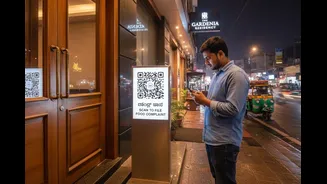








Karnataka will introduce QR codes outside hotels and pharmacies allowing the public to scan and file food safety complaints directly, Health Minister UT Khader said, describing it as the first such initiative
in the country.
The announcement comes as the state’s Food Safety and Drug Administration (FDA) Department continues a wide-ranging crackdown on hygiene and quality violations across hotels, resorts and public food facilities.
What Did Khader Announce?
Khader said the QR code system would let members of the public scan a code outside hotels and pharmacies and submit complaints about problems or concerns on the spot, calling Karnataka the first state to roll out such a mechanism.
He also announced plans for an International All India Food Safety Conclave, aimed at addressing what he described as inconsistencies in the quality and taste of products such as soft drinks sold in different countries.
Central food safety regulations, he said, need to be strengthened so that standards in India match those followed elsewhere.
What Warning Did He Issue To PG And Hostel Operators?
Khader warned PG and hostel operators that they must maintain proper food standards, adding that there would be no leniency for establishments found serving poor-quality food.
He said inspections would be extended beyond hotels to private hostels, bus stops, wedding halls, railway canteens and food served on flights.
A dedicated watch team will be set up to strengthen food safety enforcement across these categories, he said.
What Action Has Already Been Taken Against Hotels?
On enforcement so far, Khader said notices had been issued to 60 hotels, of which 15 had responded. He added that the government would convene a meeting with hotel operators to discuss food safety concerns going forward.
How Does This Fit Into Karnataka’s Wider Food Safety Crackdown?
Khader’s announcement follows weeks of intensified inspections by the Karnataka FDA, which has reported seizing more than 1,000 kg of unsafe food items in recent operations statewide.
In Mysuru, officials seized 9 kg of expired chicken from Rio Meridian Hotel, 68 kg of meat from Grand Mercure Hotel, and 4 kg of mushrooms from Q Star Hotel, while inspections in Mysuru and Nanjangud taluks covered three resorts and led to three notices, five food samples collected, and roughly 16 kg of expired food discarded.
In Mangaluru, a surprise inspection at a KFC outlet on KS Rao Road followed a consumer complaint that a Chicken Peri Peri Leg ordered online tasted stale; officials checked the outlet’s kitchen, cold rooms, freezers and cooked food stocks as part of the probe.
Inspections of three-star and five-star hotels in Bengaluru, Mysuru and Mangaluru have separately turned up expired products, rotten vegetables, fungal contamination and improper meat storage.
The scrutiny has extended to government premises as well — food outlets within Vidhana Soudha, Vikasa Soudha and Arogya Soudha were found violating safety norms, with officials citing unhygienic handling, weak pest control and expired ingredients.
Quick-commerce storage centres and some Indira Canteens have also faced notices and closure orders over sanitation lapses.
In Bengaluru Urban district, FDA teams have inspected 60 three-star and five-star hotels and collected 77 food samples for lab testing.
Officials said the enforcement drive is meant to ensure compliance with the Food Safety and Standards Act, 2006, with operators directed to maintain proper temperature control, sanitation and waste disposal systems.
Khader’s QR code and conclave announcements signal the government intends to keep the pressure on beyond this round of inspections.