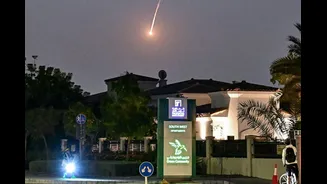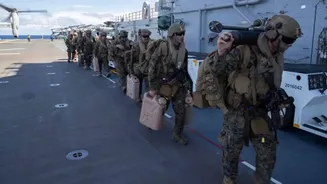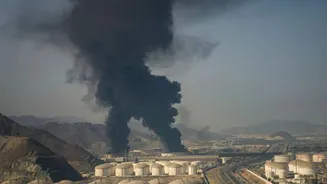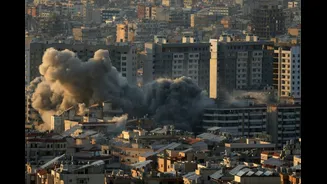







The ongoing conflict involving Iran threatens to inflict significant economic damage on several Gulf economies if hostilities persist, with countries heavily dependent on energy exports facing the greatest
risk.
According to a Bloomberg report citing Goldman Sachs economist Farouk Soussa, Qatar and Kuwait could see their gross domestic product (GDP) contract by as much as 14% this year if the conflict continues until April and results in a two-month disruption to traffic through the Strait of Hormuz.
Such a downturn would mark the worst economic slump for the two countries since the early 1990s, when Iraq’s invasion of Kuwait triggered the Gulf War and caused turmoil in global oil markets.
Saudi Arabia and the United Arab Emirates are expected to fare relatively better because they have the ability to reroute some oil exports through alternative routes that bypass the Strait of Hormuz. However, even these economies could face a sharp slowdown. Economists estimate Saudi Arabia’s GDP could decline by around 3%, while the UAE’s economy could shrink by about 5%, representing their biggest economic hit since the COVID-19 pandemic in 2020.
“For many Gulf economies, the war could have a bigger near-term impact than Covid-19,” Soussa, Goldman Sachs’ economist for the Middle East and North Africa, told Bloomberg. “When the dust settles, they will rebuild and they will recover, but the scars this conflict leaves on confidence remain to be seen.”
The conflict has created a challenging scenario for Gulf economies, which risk being hit simultaneously in both oil and non-oil sectors. While disruptions to energy exports threaten government revenues, sectors such as tourism, real estate and investment may also suffer due to heightened geopolitical uncertainty.
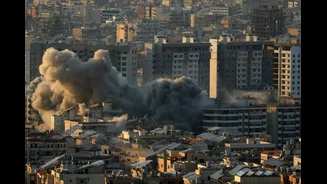
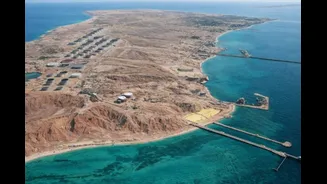
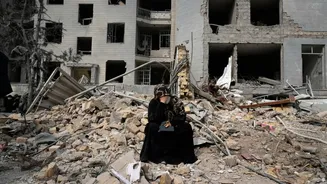
The war entered its third week with little sign of easing, as Iran continued to strike neighbouring countries in response to US and Israeli attacks on its territory. Over the weekend, the United States targeted military installations linked to Iran’s crude export hub on Kharg Island and warned that energy infrastructure could be attacked if Tehran continues disrupting shipping in the Strait of Hormuz.
The waterway is one of the world’s most critical oil transit routes, handling roughly one-fifth of global oil exports. Supply disruptions have already pushed global crude prices higher, with Brent crude rising above $103 per barrel on March 13 amid shipping disruptions and output cuts in countries such as Saudi Arabia and the UAE.
Global gas markets have also been affected, with Qatar’s liquefied natural gas (LNG) exports declining sharply due to the shipping halt. Bahrain has also begun cutting output at the world’s largest aluminium smelter, partly due to supply disruptions linked to the Hormuz situation.
According to economists, Qatar, Kuwait and Bahrain could suffer the most if disruptions persist, given their reliance on energy exports moving through the Strait of Hormuz.
By contrast, Saudi Arabia and the UAE may benefit partially from higher oil prices and their ability to export crude through alternative pipelines and routes, economists including Mohamed Abu Basha of EFG Hermes and Justin Alexander of Khalij Economics told Bloomberg.
Saudi Arabia may emerge as the most resilient economy if the conflict drags on, several economists said, as the kingdom has managed to intercept most incoming Iranian attacks while maintaining largely normal economic activity, with airspace and businesses continuing to operate.
However, the war could still widen the country’s fiscal deficit in the short term due to revenue volatility. Analysts at Abu Dhabi Commercial Bank and Oxford Economics expect Saudi Arabia to face a deeper fiscal shortfall in the first quarter of the year.
Despite that, some economists believe the kingdom’s fiscal position could improve over the full year if oil prices remain elevated. Tim Callen, a visiting scholar at the Arab Gulf States Institute in Washington, told Bloomberg that Saudi Arabia’s budget deficit could narrow by about 1% if oil production averages around 7.5 million barrels per day and Brent crude remains near $90 per barrel.
Saudi Arabia had earlier projected a fiscal deficit of 3.3% of GDP for 2026.
Elsewhere in the region, the UAE is still expected to record a budget surplus this year, while Qatar’s fiscal deficit could widen if disruptions persist, according to EFG Hermes.
Economists also said Gulf countries may increasingly rely on debt markets to manage fiscal pressure. However, bond investors have so far shown limited concern about the war’s potential impact on the region’s finances.
“It’d be a concern if the conflict simmers on for a prolonged period, which is not what is currently priced into the market,” Fady Gendy, a portfolio manager at Arqaam Capital, told Bloomberg.