







The Supreme Court on Wednesday clarified that the Election Commission of India’s (ECI) determination during the Special Intensive Revision (SIR) of electoral rolls is confined only to the electoral process
and cannot attain finality on the question of citizenship, while upholding the constitutional validity of the exercise.
A bench headed by Chief Justice Surya Kant, along with Justices Joymala Bagchi and Vipul M Pancholi, delivered the verdict on a batch of petitions challenging the SIR exercise undertaken in Bihar and several other states.
The court held that the poll panel was empowered to undertake the revision exercise and that the process was linked directly to the constitutional objective of ensuring free and fair elections.
The top court, however, drew a clear distinction between electoral scrutiny and citizenship adjudication.
“ECI’s determination is confined to electoral rolls, not the decision of citizenship,” the court said, adding, “ECI’s determination cannot assume finality on the question of citizenship.”
The bench further observed that the Election Commission could undertake a “legitimate inquiry into citizenship” only for the limited purpose of inclusion or exclusion from electoral rolls and such action would remain “confined to electoral rolls alone and the right to participate in elections.”
COURT UPHOLDS SIR EXERCISE
The observation came while the court upheld the constitutional validity of the SIR process and rejected the contention that the Election Commission had exceeded its statutory authority.
“It can’t be said ECI acted outside the statutory powers by exercising SIR. It can’t be said ultra vires because the exercise is different from what is ordinarily conducted,” the court said.
The bench further remarked that the SIR process “breathes life into the Representation of the People Act” and held that the exercise advanced the constitutional imperative of free and fair elections.
“We are equally satisfied that the object sought to be achieved by the SIR bears a direct nexus to the constitutional goal of free and fair elections,” the court observed.
“We hold that the electoral SIR advances the constitutional imperative of free and fair elections,” it added.
The court also ruled that the exercise satisfied the test of proportionality and contained sufficient procedural safeguards.
“The measures adopted bear a reasonable nexus to the objectives sought to be achieved, are not manifestly excessive and are accompanied by sufficient procedural safeguards to prevent arbitrary exclusion,” the bench said.
The bench clarified that even where the Commission was dissatisfied with the material produced by an individual, deletion from electoral rolls would not amount to stripping that person of Indian citizenship.
“Where the material furnished by an individual does not inspire confidence or gives rise to doubt, the Commission would be within its authority to decline enrolment or to initiate action for deletion strictly in accordance with law,” the court observed.
As the court underlined that such action “does not amount to citizenship exercise”, it directed that where the Commission was not satisfied about a person’s eligibility for inclusion in electoral rolls, the matter would have to be referred to the competent authority of the Union government for adjudication.
“Any deletion effected on this ground shall therefore remain subject to the outcome of adjudication by the competent authority,” the court said.
If the person is ultimately found to be a citizen, the individual’s name must be restored to the electoral rolls.
PETITIONERS HAD TERMED EXERCISE ‘NRC-LIKE’
The petitions challenging the SIR exercise had argued that the Election Commission lacked powers under Article 326 of the Constitution, the Representation of the People Act, 1950, and related rules to undertake such a large-scale revision.
According to the petitioners, the exercise resembled an “NRC-like process” in which the poll body was effectively verifying citizenship, a power vested with the central government.
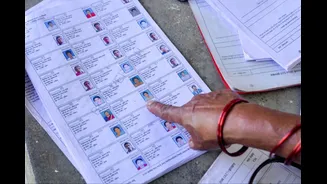
Senior advocate Prashant Bhushan, appearing for NGO Association for Democratic Reforms (ADR), had questioned the timeline of the exercise and the exclusion of nearly 65 lakh voters who were classified as dead, migrated, or registered in other constituencies.
The Election Commission, however, defended the process and argued that Aadhaar cards and voter identity cards could not be treated as conclusive proof of citizenship.
According to the SIR notification, voters whose names did not appear in the 2002 or 2003 electoral rolls were required to establish ancestral linkage with individuals whose names were present in those rolls.