






Within hours of announcing a ceasefire early on April 8, US officials were already calling it a “historic victory” less than a day after US President Donald Trump warned that “a whole civilization will
die tonight.” But even as that claim was made, the reality on the ground was already far more complicated.
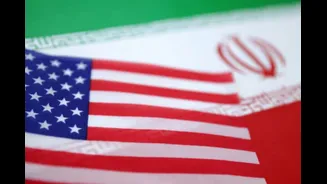
A two-week, 15-point ceasefire between the United States and Iran technically held in its opening hours. Trump said Tehran had “already agreed” to many of its terms, while Vice President JD Vance acknowledged it is, in his words, “a fragile truce.”
Within hours, that fragility began to show, not in one place, but across multiple theatres linked to the conflict.
Strait Of Hormuz Closed Again
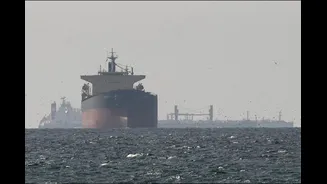
The Strait of Hormuz, the world’s most critical oil chokepoint, was expected to return to normal operations under the ceasefire. Instead, it has emerged as its first major stress point.
Iranian Foreign Minister Abbas Araghchi initially signalled that “safe passage through the Strait of Hormuz will be possible via coordination with Iran’s armed forces,” and some oil tankers managed to pass through overnight. But within hours, movement again slowed sharply.
Iran closed the Strait of Hormuz again on Wednesday in response to Israeli attacks against Hezbollah in Lebanon. The White House denied the reports, calling them false and claiming there had been an uptick in traffic through the strait.
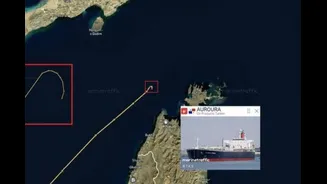
However, ship-tracking data from trade analytics platform Kpler showed that only four vessels with active Automatic Identification System trackers passed through the Strait of Hormuz on Wednesday, the first day of the ceasefire.
The impact has been immediate. Oil prices rose again, climbing above $97 a barrel, while Asian markets slipped amid doubts over whether the ceasefire can hold.
The Lebanon Confusion
Confusion over whether Lebanon is part of the ceasefire has emerged as one of the biggest fault lines in the agreement.
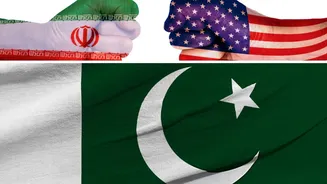
Pakistan Prime Minister Shehbaz Sharif publicly declared that the ceasefire covered all theatres of conflict, including Lebanon. But the United States and Israel have rejected that interpretation outright.
Trump described Israel’s ongoing campaign against Hezbollah as “a separate skirmish,” effectively signalling that operations in Lebanon fall outside the ceasefire framework. On the ground, that divergence was immediate.
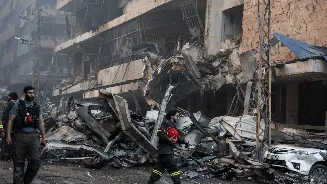
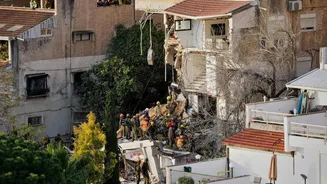
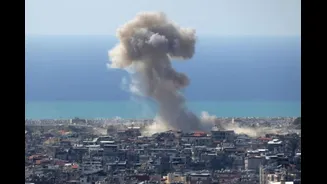
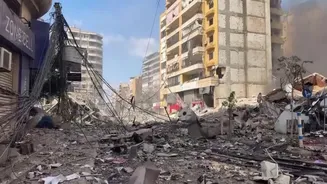
Israeli strikes on Lebanon intensified even after the ceasefire announcement. According to the Israeli military, around 50 fighter jets dropped nearly 160 bombs on about 100 targets within just 10 minutes. The strikes spanned Beirut, the Beqaa Valley and southern Lebanon, in what the Israel Defense Forces (IDF) described as a major coordinated operation.
The IDF said it targeted Hezbollah command centres, intelligence headquarters and infrastructure linked to its rocket, naval and aerial units, including assets of the elite Radwan Force. “This is the largest attack carried out against Hezbollah’s infrastructures since the start of Operation Roaring Lion,” it said.
The scale of the strikes drew rare and strong criticism from UN Secretary General António Guterres, who “unequivocally” condemned the attacks, according to a statement issued by his office.
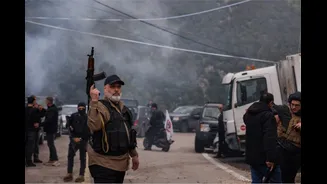
Hezbollah responded with rocket fire into northern Israel, triggering sirens and underscoring that hostilities in Lebanon are far from paused. The group said its attacks were in response to what it described as Israeli ceasefire violations.
The back-and-forth has reinforced a central problem with the deal — different parties appear to be operating under different definitions of what the ceasefire actually covers.
Attacks Continuing Despite Ceasefire
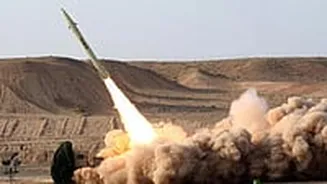
Iran said its Lavan oil refinery was attacked around 10 am local time, hours after the ceasefire took effect, even as several Gulf Arab countries reported intercepting Iranian drones and missiles.
Israel’s military denied carrying out the refinery strike.
Kuwait said drone attacks caused significant damage to oil facilities, power stations and water desalination plants, while in Bahrain and the United Arab Emirates, falling debris injured people and triggered fires — including at a major gas complex in the UAE.
Separately, reports by the Financial Times and Reuters said Saudi Arabia’s critical east-west oil pipeline was also targeted.
In Iraq, Iranian-backed militias continued drone attacks near the Baghdad Diplomatic Support Center and Baghdad International Airport on Wednesday, according to the US Embassy.
Israel Not Fully On Board With Ceasefire?
Israeli opposition leader Yair Lapid sharply criticised the ceasefire, calling it “a political disaster” and accusing Prime Minister Benjamin Netanyahu of failing to achieve any of his stated objectives. He also took issue with Israel not being directly party to the agreement.
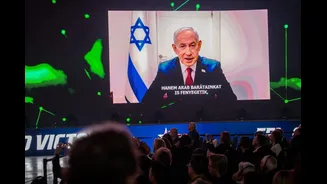
Netanyahu, however, defended the deal in a televised address on Wednesday, saying Israel had emerged stronger while Iran had been significantly weakened. He had also spoken to US President Donald Trump before the ceasefire was announced.
On the nuclear front, Netanyahu said Iran’s stockpile of highly enriched uranium would be removed, either through negotiations or by force. A senior Israeli official told NPR the US has assured Israel that it will insist on the removal of enriched uranium from Iran, an end to further enrichment and “the elimination of the ballistic missile threat” during negotiations.
Is This Ceasefire Already At Risk Of Collapse?
Early indicators suggest the agreement is holding, but only narrowly.
A New York-based think tank has warned that the ceasefire “hovers on the verge of collapse”. The Soufan Center said the Israeli strikes on Lebanon risked the deal falling apart. “Even if Lebanon was formally outside the deal, the scale of Israel’s strikes was likely to be viewed as escalatory, nonetheless,” it wrote in an analysis published Thursday.
“Israel’s strikes can be understood both as an effort to drive a wedge between Iran and its proxies and as a response to being allegedly sidelined in the original ceasefire discussions.”
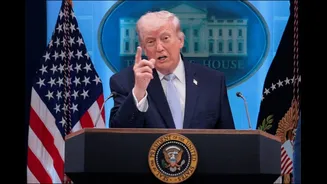
Meanwhile, rhetoric from Washington signals that the pause may be conditional. Trump issued an online statement Thursday insisting that his surge of warships and troops will remain around Iran “until such time as the REAL AGREEMENT reached is fully complied with.”
Trump’s comments on his Truth Social platform appear to be a way to pressure Iran as uncertainty hangs over the tentative two-week ceasefire now holding in the war. “If for any reason it is not, which is highly unlikely, then the ‘Shootin’ Starts,’ bigger, and better, and stronger than anyone has ever seen before,” Trump wrote.
At the same time, US forces remain in position around Iran, with the Pentagon stressing readiness to resume operations “at a moment’s notice.”
What Happens Next?
The ceasefire was meant to open a pathway to negotiations, with talks expected in Islamabad. But even before those discussions begin, the agreement is being tested across multiple fronts.
Control of the Strait of Hormuz remains contested. The scope of the deal remains disputed. Proxy conflicts continue to escalate. And key actors are operating with different interpretations of the same agreement.
For now, the ceasefire holds, but only just.