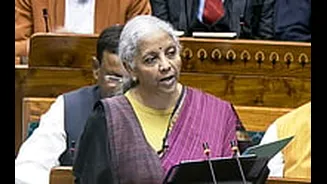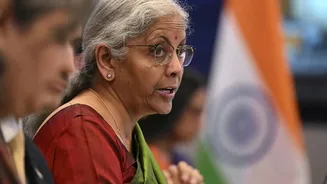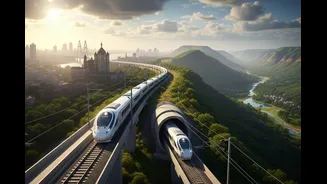









Finance Minister Nirmala Sitharaman, while presenting the Budget on Sunday, announced a Mumbai–Pune high-speed rail corridor as part of the seven new corridors across India aimed at drastically reducing
inter-city rail travel time and modernising connectivity. While the details are still to be out, the infrastructure between the two cities has seen a major boostover the past few years, making the travel easier. A look at the road, rail, Metro projects either completed or in the works.
BIG ANNOUNCEMENT BY FM NIRMALA SITHARAMAN
FM announces 7 high-speed rail infra corridors:
1. Mumbai-Pune
2. Pune–Hyderabad
3. Hyderabad–Bengaluru
4. Hyderabad–Chennai
5. Chennai–Bengaluru
6. Delhi–Varanasi
7. Varanasi–Siliguri#BudgetWithNews18 pic.twitter.com/4J2BJrqi6X— News18 (@CNNnews18) February 1, 2026
ROAD PROJECTS
“Missing Link” Project: The nearly complete 13.3-km bypass between Khopoli and Kusgaon will eliminate the notorious Khandala-Lonavala ghat section. It will reduce the travel time by 20–30 minutes. It Features two tunnels (one is 8.9 km long and 23m wide) and a 180-metre-high cable-stayed bridge over Tiger Valley.
Second Mumbai-Pune Expressway (Proposed): NHAI is planning a new 8-lane, 130-km high-capacity corridor connecting Mumbai’s Atal Setu to the Pune Ring Road. It aims to slash total travel time to 90 minutes.
10-Lane Expansion: Plans are underway to widen the existing expressway from 6 to 10 lanes to handle increasing volume, with a targeted completion by 2030.
Authorities are planning a new parallel expressway (130 km) from Atal Setu near JNPA to Pune’s Shivare, which could cut travel time to around 1.5 hours once fully implemented.
A 173-km ring road project around Pune aims to better link major highways, easing inward and outward traffic movement — important for fast ingress/egress especially around Mumbai–Pune traffic routes.
Other elevated road projects such as the Mumbai–Bengaluru bypass and city bypass links are planned to divert through-traffic away from city centres, reducing bottlenecks on routes used for travel between Mumbai and Pune.
अत्यंत आव्हानात्मक असा प्रकल्प एमएसआरडीसीने आपल्या हाती घेतला असून त्याचे ९४ टक्के काम पूर्ण झाले आहे. विशेष म्हणजे ८५ किलोमीटर प्रति तास वेगाने वारे वाहत असताना १८५ मीटर उंचीचे खांब उभे करून त्यावर केबल स्टडेड ब्रिज तयार करण्याचे काम आता अंतिम टप्प्यात आले आहे. तसेच लोणावळा… https://t.co/jLaXF1zT30 pic.twitter.com/csco2i9Qe0
— Eknath Shinde – एकनाथ शिंदे (@mieknathshinde) July 12, 2025
RAILWAY AND METRO CONNECTIVITY
Metro Line 8: The state government recently approved this game-changing line designed specifically to boost connectivity with Navi Mumbai. The project linking Chhatrapati Shivaji Maharaj International Airport (CSMIA) with Navi Mumbai International Airport (NMIA) via new metro corridors can ease regional travel load — benefitting long-distance travel patterns including those between Mumbai and Pune by offloading some traffic to air routes.
Talegaon-Chakan-Shikrapur Corridor: A unique four-tier transport project including a metro line on the top level, ground-level roads, and two flyover layers is also in the pipeline.
New trains like Vande Bharat and Amrit Bharat and safety systems are being added across the network, aiding reliability and speeds on routes connecting Mumbai and Pune.
Projects like the Panvel–Karjat suburban rail corridor, which enhance connectivity in the MMR, help ease pressure on road travel by improving commuter rail access and reducing urban traffic snarls.
Pune is advancing metro projects and elevated roads (e.g., Ramwadi–Wagholi) that will help commuter flows within the city and reduce peak load on roads leading towards Mumbai.