






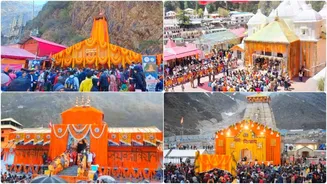

With the Chardham Yatra 2026 approaching, the Uttarakhand government and Indian Railways have announced important updates for pilgrims. Online registration for the Yatra has already begun, while offline
registration is scheduled to start from April 17.
The Uttarakhand government has made registration compulsory for all pilgrims before undertaking the sacred journey.
Thousands of devotees from across the country are expected to take part in the annual pilgrimage to the four revered shrines: Yamunotri, Gangotri, Kedarnath, and Badrinath.
Rail Connectivity Project To Transform Chardham Travel
In a major development for pilgrims, Indian Railways is preparing to provide a significant boost to the Chardham Yatra by improving rail connectivity in the region. Work is progressing rapidly on the ambitious plan to connect the Chardham circuit by rail. The most crucial component of this initiative is the Rishikesh-Karnaprayag railway line, which spans approximately 125 kilometres.
This railway project is expected to make the pilgrimage safer, faster, and more convenient, particularly for elderly travellers who often face difficulties travelling through the mountainous terrain by road.
Rapid Progress On Tunnel Construction
According to the Ministry of Railways, major progress has been made in the construction of tunnels along the route. Out of the 38 tunnels planned for the project, breakthroughs have already been completed in 28 tunnels.
One of the most significant milestones is the completion of Tunnel T-8, which is the longest railway tunnel in India. This tunnel forms a crucial part of the project and highlights the engineering challenges involved in constructing railway infrastructure in the Himalayan region.
Project Cost And Work Progress
The Rishikesh-Karnaprayag rail project has an estimated total cost of around Rs 26,841 crore. According to official figures, between 60 and 76% of the project budget has already been spent as construction work progresses at a rapid pace.
Apart from tunnel excavation, construction activities are also underway for bridges, track cuttings, and railway stations along the route. Authorities say that work across various sections of the project is advancing steadily.
Partial Train Services May Begin Soon
Officials from the Railway Ministry have indicated that partial train services on the Rishikesh-Karnaprayag line may begin in the near future. Once the entire project is completed, the full railway line is expected to become operational by December 2027 or sometime in 2028.
When completed, the railway line will significantly reduce travel time and improve safety for pilgrims travelling to the Himalayan shrines.
A Challenging Yet Historic Himalayan Railway Project
The Rishikesh-Karnaprayag railway line is considered one of the most challenging railway projects ever undertaken in India’s mountainous regions. Despite the complex terrain and difficult geological conditions, the project has now entered its final stages. Once operational, travellers will be able to reach important points along the Chardham route by train, making the pilgrimage more accessible to a wider number of devotees.
The railway line connecting Rishikesh to Karnaprayag is one of Prime Minister Narendra Modi’s dream infrastructure projects. Authorities expect the project to be completed within the scheduled timeline, with major sections likely to be finished by next year.
The railway network will not only benefit Chardham pilgrims but will also strengthen connectivity for several towns and cities across Uttarakhand, supporting tourism and local economic development.
Supporting Infrastructure Completed
In addition to railway construction, motor bridges connecting railway stations in Srinagar Garhwal, Gochar, and Kaleshwar have already been completed. These bridges will help improve access to the railway stations and ensure smoother movement of passengers and goods once the rail line becomes operational.
Massive Tunnel Network In The Project
One of the most remarkable aspects of the project is the extensive tunnel network. Out of the 125-kilometre railway route, nearly 105 kilometres will pass through 16 main tunnels.
In addition to these primary tunnels, the project also includes 12 exit tunnels and cross passages, taking the total tunnel length to approximately 213 kilometres. So far, tunnel excavation has been completed for about 160 kilometres, marking a major milestone in the construction process.
According to the Railway Ministry, once the tunnelling work is fully completed, railway tracks will soon be laid inside the tunnels. These tracks will be constructed using technology similar to metro rail tracks, ensuring a smoother and more comfortable travel experience for passengers.