
A couple of years back, the BCCI announced that the centrally contracted India players should play in domestic tournaments when not engaged with the national team. The diktat was made to address the practice
of India players giving up domestic cricket after becoming a regular part of the Indian team.
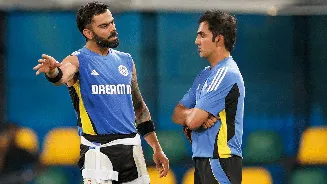
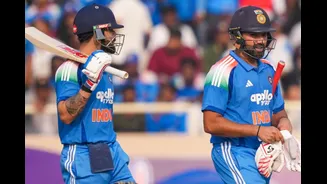
The change in policy not only gave a chance to domestic players to rub shoulders with established stars but also piqued interest among the fans. A prime example of it came last year when Virat Kohli‘s appearance in a Ranji Trophy match drew a massive crowd at Delhi’s Arun Jaitley Stadium.
As if to prove it wasn’t a one-off affair, during the recent Vijay Hazare Trophy matches in Jaipur, fans thronged the venue where Mumbai was playing thanks to a certain Rohit Sharma‘s presence in the playing XI. Kohli also played a few matches for Delhi in Bengaluru, generating significant interest as well.
However, BCCI also faced the heat from the fans, especially on social media, as those who couldn’t make it to the venues where Rohit and Kohli were playing domestic cricket, were also deprived of a chance to witness them play elsewhere, i.e., there was no live broadcast of the matches.
Additionally, Delhi’s VHT matches in Bengaluru were played behind closed doors, which further irritated the cricket-loving public.
The BCCI took note of the complaints and is expected to bring about a significant change in its broadcast policy. Devajit Saikia, the current BCCI secretary, admits that the presence of international cricketers in various domestic tournaments has led to demands for televising their matches.
“That’s the biggest change that we have seen, that international cricketers are regularly playing domestic cricket. Earlier, I never got calls saying, ‘Why is this match not shown live?’ or, ‘Which matches will be televised live?’ Such questions wouldn’t come earlier, but now we are flooded with such queries from not only the media, but from the public,” Saikia was quoted as saying by Sportstar.
Saikia revealed that the BCCI has a contract of televising 100 domestic matches, which will now be revised from the next season.
“Our system was that 100 domestic matches will be televised live,” Saikia said. “That was what we were following. But after the change of the policy, when the best players are playing domestic cricket, the cricket lovers want to watch domestic matches.”
“So, we are going to change that policy. From 100, we are definitely going to increase the number, and for that, we are working closely with our telecasting partners. We are definitely going to increase the number of matches in the upcoming seasons,” he added.
Saikia felt that sharing the dressing room with top international stars will help in the development of the youngsters.
“The biggest advantage of having the top players play domestic cricket is that it adds a lot of value to domestic cricket,” Saikia said. “The young boys get the opportunity to play with the best in the country or at the international level. They get to share the same dressing room. That will boost their confidence and give them more opportunities to learn the game in a harder way. At the same time, the players who are at the national level or who are the marquee players of our country are also making the most of their time when they are free.”