







With temperatures soaring well past 40°C and extreme heat disrupting daily life across cities, an emerging space-tech start-up is using satellite data to help people tackle the dangerous heat this summer.
Satleo Labs has developed one such platform, recently launched in Ahmedabad, which has been hit by severe heat this season. It uses satellite-based thermal technology and AI analytics to map urban heat hotspots and deliver three-day forecasts with accuracy of around 2-3℃.
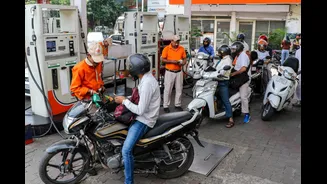
In collaboration with Ahmedabad Municipal Corporation (AMC), the platform provides citizens with location-specific heat advisories through QR code scans. The application has found particular use among outdoor gig workers, delivery personnel, and cab drivers who are among the most exposed to extreme heat due to prolonged time outdoors.
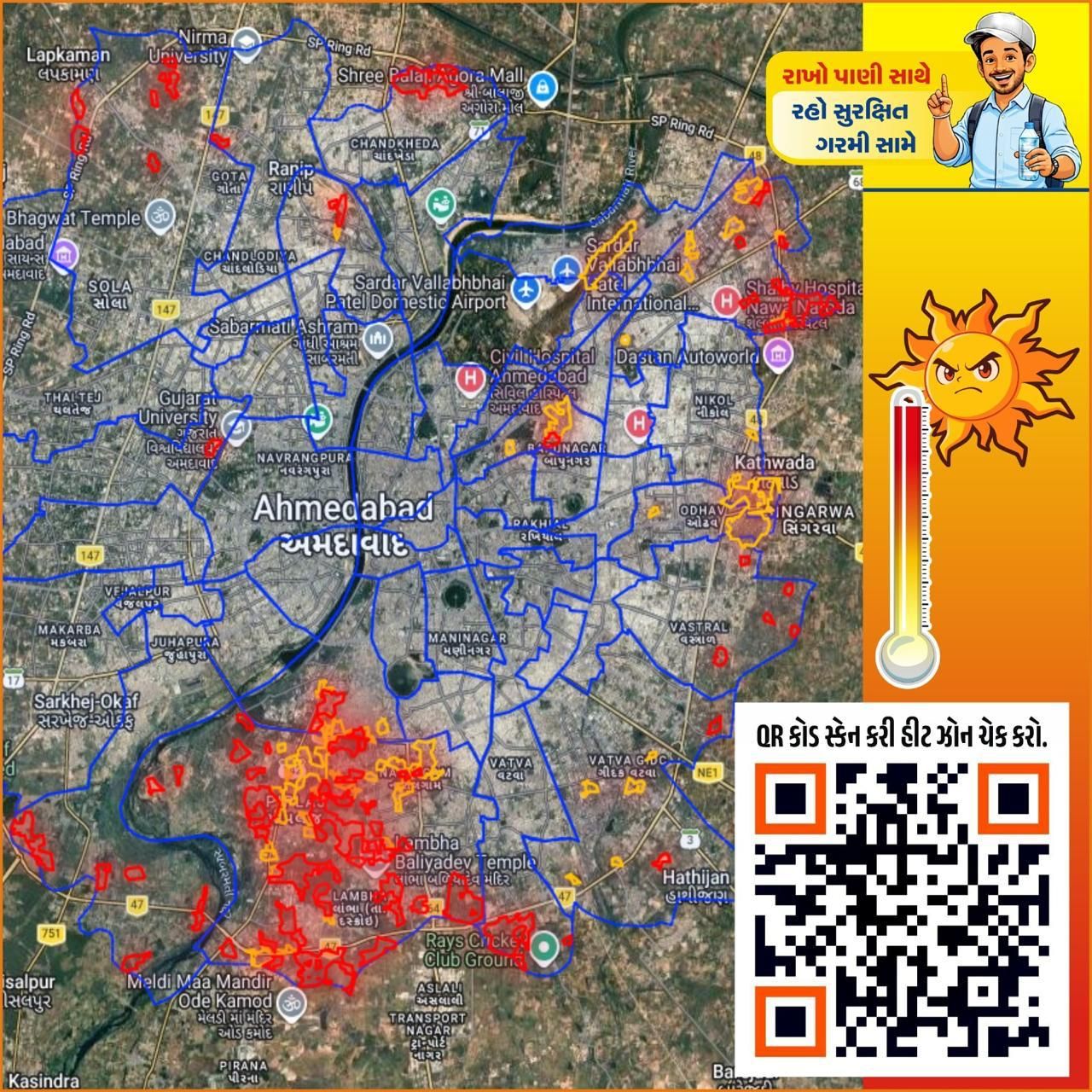
“We wanted to combine space technology with climate resilience planning to improve our response to such extreme heat. Temperatures are rising, and cities are changing rapidly. Unfortunately, we still lack high-resolution, hyperlocal climate data. The weather department issues colour-coded heat alerts for entire regions based on maximum and minimum temperatures. But these are average values, and we know that temperatures vary drastically even within a city, depending on the green area, construction, and population density,” says Shravan Bhati, co-founder and CEO, SatLeo Labs.
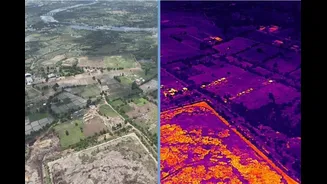
The team bridged this gap through satellite-based thermal intelligence from low-earth orbit to identify dangerous heat hotspots so people can take adequate precautions beforehand. The platform uses open-source thermal datasets from global Earth observation satellites, including MODIS and Landsat.
While these satellites provide valuable thermal imagery, their spatial resolution is relatively coarse for precise city-level and hyperlocal applications. To address this limitation, they developed proprietary AI-driven enhancement algorithms to upgrade this low-resolution thermal imagery into highly detailed thermal intelligence layers.
“By combining historical satellite datasets collected over the last 5-10 years with continuously updated real-time satellite observations, this platform has built predictive thermal intelligence models that can forecast heat hotspot locations and hyperlocal temperature patterns for the next 3-4 days. We have done it for Ahmedabad, and Tumkur (Karnataka) and plan to expand to other cities,” explains Bhati. “We will also be launching our own satellite soon.”
The platform’s heat-risk insights are shared with government clinics and frontline health workers to better prepare for heat-related illnesses. If certain areas are expected to face extreme heat, officials can set up temporary clinics, deploy additional medical staff, and prepare for a possible rise in heatstroke cases.
India is experiencing extreme heat yet again this summer, with large parts swept by intense heatwaves. Western states like Gujarat and Rajasthan are among the worst-hit, with temperatures settling way above 45°C for days and peaking at 48.3°C in Barmer. The nights are unusually warmer, with the weather department warning of above-normal minimum temperatures in May. Scientists are certain that ongoing climate change has already made the heatwaves more intense, frequent, and longer, which is taking a toll on the people and economy.
With accurate temperature intelligence becoming increasingly important for a range of sectors, space-tech start-ups are stepping in with new solutions. India has seen a dramatic rise in the number of space start-ups since the government opened the space sector for private participation in 2020.
With plans to launch its own thermal satellite soon, Satleo Labs aims to position itself as a key player in this domain.
“Cities currently rely on expensive IoT devices and drone surveys for localised temperature monitoring, which can cost several lakh rupees. But a satellite-based platform like this can provide a more scalable alternative by identifying urban heat islands, tracking greenhouse gas emission hotspots, and helping municipal authorities respond to hazardous heat conditions more effectively,” remarks the co-founder.