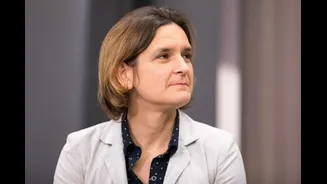









With rapid advancements in artificial intelligence, Nobel Prize-winning economist Esther Duflo on Friday advocated for a fundamental overhaul of college education. She suggested that universities should
emphasise less on vocational training and more on equipping students to navigate an increasingly dynamic world.
Speaking at the 19th Jaipur Literature Festival, Duflo highlighted that higher education should not solely aim to produce job-ready graduates but also provide a robust foundation in the humanities—an essential component even for those in technical fields, reported PTI.
“The entire landscape is evolving so fast that the specific skill you are teaching someone will become obsolete by the time they finish their education, and certainly by the time they enter the job market.We have to think about college education as a way to equip students to conduct themselves in the world.
“… What this implies, in my opinion – and this may sound somewhat self-serving — is that college education needs to involve a strong humanities background: the ability to write, the ability to think, and the ability to make decisions for yourself,” said Duflo, who is out with a new expanded edition of her bestselling book “Poor Economics: Rethinking poverty & the ways to end it”, co-written with her husband and fellow Nobel laureate Abhijit Banerjee.
Using GPS as a metaphor to illustrate higher education, the 53-year-old economist explained that while specific skills may quickly become outdated, the capacity to learn, adapt, and make sound decisions will remain invaluable.
She also emphasised that abilities such as clear writing, critical thinking, and independent judgment should be at the core of college education. She further noted that disciplines like philosophy, ethics, and social sciences are essential in cultivating these skills.
“Rather than learning to write lines of code, you need to learn fundamental probability and statistics because this is what is under the hood of these things that are going to help you moving forward,” she explained.
Reflecting on the rapid advancements in technology, Duflo proposed that progress might paradoxically necessitate a return to basic educational principles. She suggested that as technology advances, we might need to revisit—or elevate—our understanding of what education entails, including fundamental life skills such as brushing your teeth and making your bed. She emphasized that many students enter college lacking these skills, having spent their school years solely focused on exams, the PTI report added.
The five-day literary festival features over 350 renowned authors and scholars, including Booker Prize winner Banu Mushtaq, chess legend Viswanathan Anand, British actor and author Stephen Fry, Sahitya Akademi Award winner Anuradha Roy, veteran film critic Bhawana Somaaya, and authors Manu Joseph, Ruchir Joshi, and KR Meera. The festival will conclude on January 19.