







Balochistan witnessed a sharp escalation in violence as reports of Pakistani military air operations that allegedly caused significant civilian casualties were followed by a wave of coordinated attacks
claimed by Baloch separatist militants across several districts of the province.
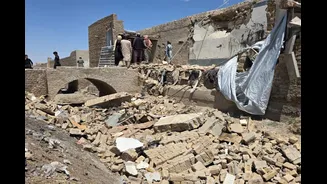
According to top intelligence sources, at least 21 civilians, including women and children, were reportedly killed in airstrikes carried out in or around Sorab and Gwadar. Independent verification of the casualty figures remains difficult because internet and telecommunication services in parts of the affected areas were reportedly disrupted soon after the strikes.
The reported air operations were described by local residents and activists as having struck populated zones rather than isolated militant hideouts. Pakistani authorities had not released a detailed public account of the operation at the time of writing.
The incident has triggered protests in Sorab and Gwadar, where residents gathered to condemn the military action and demand accountability. Activists say repeated security operations, allegations of enforced disappearances and restrictions on political expression have deepened resentment in Balochistan, Pakistan’s largest but most sparsely populated province.
Even as anger over the reported civilian deaths spread, the security situation deteriorated further with a series of coordinated militant attacks attributed to the Baloch Liberation Army (BLA).
In Chagai district, a police station was reportedly destroyed in a midnight bombing, and three security personnel were said to have been killed. In Yakmach, armed assailants allegedly ambushed commercial vehicles and hijacked a truck, highlighting the militants’ ability to target both security and civilian infrastructure.
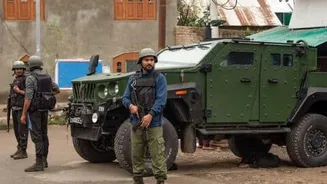
Another major attack was reported on the Khuzdar RCD Highway, where a security convoy and an armoured vehicle were allegedly assaulted. In nearby Wadh, multiple casualties were reported after military vehicles came under an armed ambush.
The violence also reached Manguchar Bazaar, where explosions and intense gunfire were reported during an attack on a security checkpoint, causing panic among local residents and forcing businesses to shut down temporarily. In Jhao, militants allegedly launched a nighttime assault on a Pakistan military camp, indicating a broad geographic spread of the attacks.
The sequence of events suggests a rapidly intensifying cycle in which military operations and insurgent retaliation are feeding into each other. Balochistan has for decades remained the centre of a separatist insurgency driven by grievances over political representation, resource control and alleged human-rights abuses. The Pakistani state maintains that militant groups are backed by hostile external actors and pose a serious threat to national security.
Intelligence sources indicate that heavy-handed security measures without a parallel political process risk widening the gap between the state and sections of the local population.
As protests continue and reports of fresh attacks emerge from multiple districts, Balochistan appears to be entering another volatile phase where the lines between counter-insurgency operations, civilian suffering and insurgent escalation are becoming increasingly blurred.