






India is often called the land of rivers, with hundreds of waterways supporting livelihoods, agriculture, and centuries-old cultures. While many rivers are celebrated for their length or volume, one stands
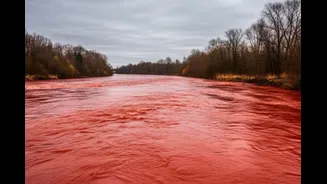
out for a different reason: its colour. During the monsoon, this river transforms into a striking reddish-brown, earning it the nickname India’s ‘Red River’.
Do you know which river we’re talking about? It’s the Brahmaputra. Famous for its vast width and mighty flow, the river turns a striking reddish-brown during the monsoon as it carries heavy silt and soil, making it a unique and iconic symbol of Northeast India.
Origin And Course Of The Brahmaputra
The Brahmaputra originates near Lake Mansarovar in Tibet, emerging from the Chemayungdung Glacier, where it is known as the Yarlung Tsangpo. It flows eastward across Tibet before making a dramatic bend and entering India through Arunachal Pradesh, where it is called the Siang.
The river then travels through the fertile plains of Assam as the Brahmaputra, before entering Bangladesh as the Jamuna. There, it merges with the Ganges and eventually empties into the Bay of Bengal.
Why Does The Brahmaputra Turn Red?
The reddish colour of the Brahmaputra is mainly due to the iron-rich soil along its banks, particularly in Assam and surrounding regions.
During the monsoon, intense rainfall washes large amounts of this soil into the river, giving the water its distinctive reddish-brown appearance. This natural phenomenon is why the Brahmaputra is popularly known as India’s Red River.
Interesting Facts About The Brahmaputra
- The Brahmaputra is one of the few rivers in India with a masculine name; the word means ‘son of Brahma’.
- It is known by different names across regions: Yarlung Tsangpo in Tibet, Siang in Arunachal Pradesh, Brahmaputra in Assam, and Jamuna in Bangladesh.
- Majuli, located within the river, is considered the world’s largest river island and is renowned for its Vaishnavite culture and scenic beauty.
- In parts of Assam, the river can be as wide as 20 kilometres, making the opposite bank difficult to see.
- It is among the world’s highest water-carrying rivers and is prone to severe flooding each year.
- The Brahmaputra originates at an altitude of over 5,000 metres in the Himalayas, placing it among the highest rivers on Earth.
- In Tibet, it flows through the Yarlung Tsangpo Grand Canyon, which is deeper and longer than the Grand Canyon in the United States.
- Near the Kamakhya Temple in Assam, the river is believed to turn red every June during the Ambubachi festival, a phenomenon linked to religious faith.
- The Brahmaputra is home to the endangered Ganges river dolphin and supports rich biodiversity across its course.
This mighty river remains one of India’s most remarkable natural wonders, both for its scale and its striking seasonal transformation.