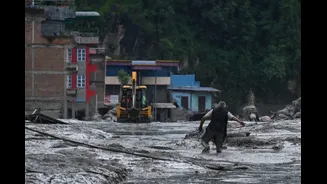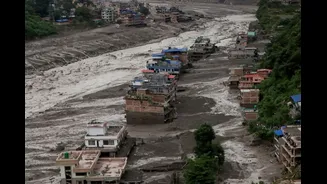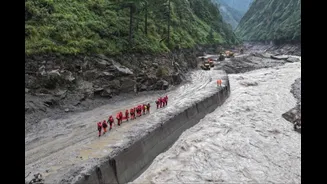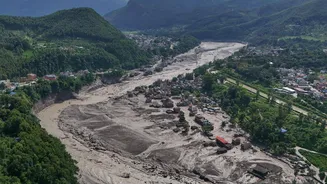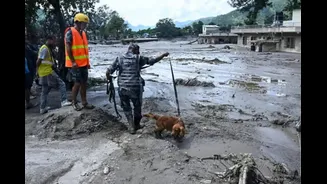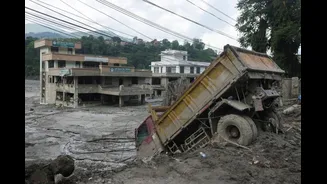





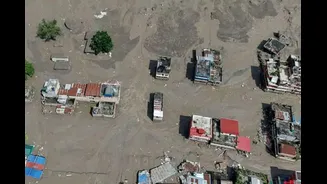
Nepal has opened the door to international assistance as the country begins assessing the massive infrastructure damage caused by devastating flash floods and landslides that swept through towns and villages
in three districts.
Nepal’s Minister for Science, Technology and Innovation Mahabir Pun said the government needs foreign assistance to rebuild infrastructure destroyed in the disaster.
In an exclusive interview with CNN-News18, Pun said the government remained fully engaged in rescue and relief operations, while its focus was gradually shifting towards reconstruction.
“We are open to taking foreign aid. We need help to build the infrastructure,” Pun said, adding that more than 20 helicopters had been deployed for rescue operations.
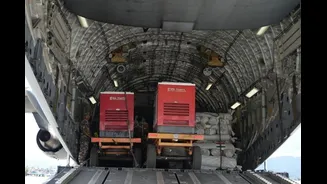
Finance Secretary Ghanshyam Upadhyaya said several countries and international organisations had already expressed interest in providing assistance. He said India, China and the World Bank had also begun coordinating financial and other support for rescue and reconstruction, The Kathmandu Post reported.
World Bank Country Director David Sislen informed Nepal’s Finance Ministry that up to Rs 25 billion (local currency) could potentially be mobilised as emergency assistance from various sources, according to the report.
The Nepal Prime Minister’s Office has also appealed for domestic and international funds to support recovery efforts following the disaster.
Nepal’s Foreign Ministry spokesperson Lok Bahadur Chhetri told AFP that several countries and international organisations had pledged financial assistance.
“Several friendly countries and international organisations have pledged help and assistance, and it is in process,” he said, adding, “We have felt tremendous goodwill for Nepal.”
The scale of the humanitarian crisis is also becoming clearer. According to estimates by the Red Cross, around 93,000 people may have been affected by the disaster.
David Fisher, head of delegation for Nepal at the International Federation of Red Cross and Red Crescent Societies (IFRC), said access to some of the worst-hit areas remained difficult because roads and bridges had been destroyed, while power and mobile connectivity had also been disrupted.
“Due to roads and bridges having been washed out and both cell coverage and electricity cuts, we have not yet been able to access some of the hardest-hit areas,” Fisher said.
“The trauma of this event is enormous. Thousands of homes have been destroyed or suffered significant damage. We believe that at least 93,000 people have been affected and in great need. The death toll is very high and unfortunately likely to continue to rise,” he added.
The Nepal Red Cross has begun providing emergency assistance to people who have lost their homes, including food, water, hygiene kits, mattresses and blankets.
The flash floods and landslides that struck Nepal and China’s autonomous Tibet region on Wednesday sent a tsunami-like wall of water and mud through affected areas, burying homes, destroying bridges and sweeping away vehicles.
The IFRC launched an emergency appeal for $31 million on Thursday to support the response to the devastating floods and landslides along the Nepal-Tibet border.
The Switzerland-based organisation said the appeal, equivalent to 25 million Swiss francs, was launched after it released one million Swiss francs for the immediate life-saving response.
The funds will support the emergency disaster response as well as medium- and long-term recovery efforts over the next two years.