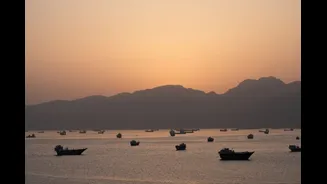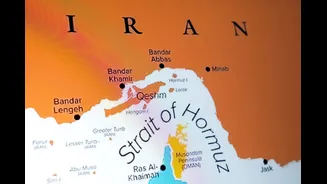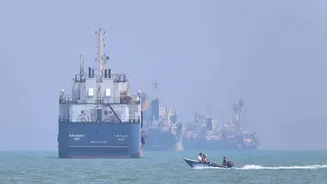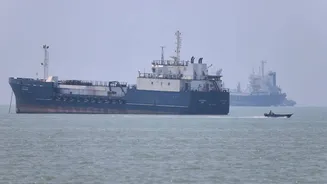







Nine fully loaded Indian-linked tankers carrying crude oil and liquefied petroleum gas (LPG) remain stranded near the Strait of Hormuz as maritime traffic through the strategic chokepoint has slowed to
its lowest level since the US-Iran memorandum of understanding (MoU) was signed last month.
According to a Bloomberg report, India is exploring diplomatic options, including possible engagement with Iran, to secure safe passage for the vessels, which have 198 Indian seafarers on board. The Ministry of External Affairs (MEA) is expected to raise the issue of the crew’s safety with Iranian authorities as New Delhi closely monitors the evolving security situation.
India on Wednesday voiced deep concern over the fresh targeting of commercial shipping in Hormuz and called upon all parties to exercise restraint.
“India is deeply concerned over the recent attacks and escalation of tensions in West Asia, which have followed fresh targeting of commercial shipping transiting international waterways in the region,” the MEA said.
It said the developments risk undermining regional peace, security and stability. “India calls upon all parties to exercise restraint, de-escalate tensions, and ensure protection of civilians as well as the uninterrupted flow of energy supplies and commerce,” the ministry said.
“We urge the parties to return to dialogue and diplomacy to achieve a peaceful and lasting solution to the conflict,” it added.
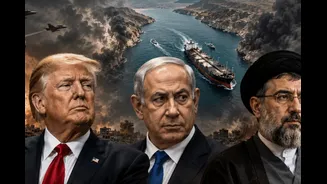
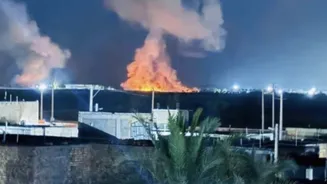
The development comes as tensions between Washington and Tehran have flared again after US strikes on Iran continued for the second day on Thursday, prompting fresh uncertainty over navigation through one of the world’s busiest energy corridors.
Iran Says Strait Will Open Only Under ‘Iranian Arrangements’
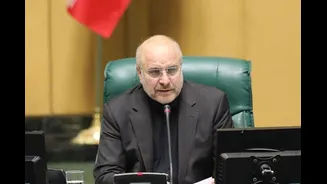
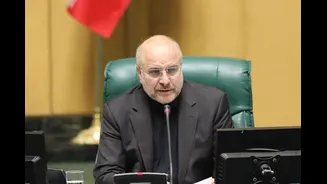
On Thursday, Iran signalled that it would retain control over access to the waterway. “The United States still has not learned that bullying and breaking its promises no longer come without consequences,” Iran’s chief negotiator, Mohammad Bagher Ghalibaf, wrote on X.
“Let me be clear: If you strike, you will be struck.”
He added that the Strait of Hormuz would be opened only under “Iranian arrangements”.
Traffic Through Strait Of Hormuz Slows To Near Halt
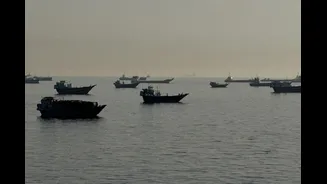
Meanwhile, Bloomberg reported that commercial traffic through the strait has “ground to a near halt”. Ship-tracking data showed that only 14 cargo ships transited the waterway in both directions on Wednesday, the lowest daily figure since the US-Iran MoU came into effect on June 16.
By comparison, an average of 34 ships had crossed the strait each day over the previous three weeks.
Why Strait Of Hormuz Matters For India
The nine stranded vessels are carrying crude oil and LPG, commodities critical to India’s energy security. Before the conflict disrupted shipping, the Strait of Hormuz handled nearly 40 per cent of India’s crude oil imports, around 60 per cent of its liquefied natural gas (LNG) cargoes and close to 90 per cent of its LPG supplies.
According to Bloomberg, around 50 India-bound vessels have managed to cross the Strait of Hormuz since hostilities erupted in late February. However, import volumes remain well below normal as Indian buyers have not fully resumed purchases of crude oil, LPG and LNG from West Asian producers.
Indian authorities are also closely tracking the safety of seafarers following the deaths of at least three Indian crew members during US strikes on commercial vessels in the Gulf of Oman in June, the report said.
What Triggered The Latest Escalation?
The latest disruption follows a sharp escalation in the US-Iran conflict. On Wednesday, the US military said it had struck more than 80 Iranian targets in response to attacks on three commercial vessels transiting the Strait of Hormuz a day earlier.
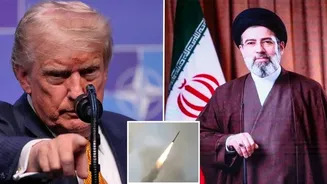
Iran later retaliated with strikes on US military sites in Bahrain and Kuwait, while US President Donald Trump declared that the memorandum of understanding with Tehran was “over”, even as he said negotiations between the two countries would continue.