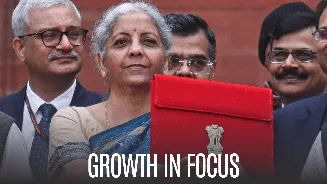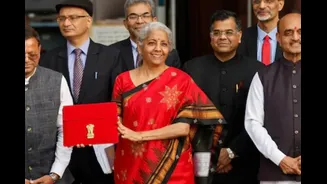

As the Union Budget 2026 draws close, attention is not only on policies and numbers but also on a familiar visual symbol – the red file or pouch carried by the Finance Minister. Over the years, this red bundle
has come to represent tradition, change, cultural identity and India’s evolving way of presenting its financial plans.
For many Indians, the sight of the red Budget pouch outside Parliament signals that the country’s most important financial blueprint is about to be unveiled.
The practice of linking the Budget with a red cover goes back to British parliamentary tradition. In the United Kingdom, financial papers were kept in red cases to show authority and importance. The word “Budget” itself comes from the French word bougette, meaning leather bag.
India’s early finance ministers followed this tradition and carried leather briefcases on Budget Day for decades.
Bahi Khata to tablet
In 2019, Finance Minister Nirmala Sitharaman replaced the briefcase with a traditional Indian bahi khata, a red cloth ledger used by traders to maintain accounts.
Explaining her choice, she had said, “Why did I not use a leather bag to carry budget documents? I thought it was high time we moved on from the British hangover to do something on our own. And well, easier for me to carry too.”
This shift symbolised a move towards Indian cultural roots.
From 2021 onwards, the Budget became paperless. Sitharaman began carrying a made-in-India tablet wrapped in the red pouch, keeping the symbolic colour while adopting modern technology.
Red in Indian tradition symbolises strength, prosperity and auspicious beginnings, making it a meaningful colour for Budget Day.
How has the budget presentation changed over the years?
India’s first Finance Minister RK Shankmukham Chetty carried Budget papers in a briefcase modelled on the British “Gladstone Box”. This continued for years.
In 2019, Sitharaman introduced the bahi khata. In 2021, she shifted to a tablet, marking a paperless era.
Budget 2026
Nirmala Sitharaman will present her ninth straight budget on February 1, for the fiscal year April 2026 to March 2027, on a Sunday, a first in independent India’s history. The budget is expected to focus on sustaining growth, fiscal discipline and reforms to shield the economy from global trade frictions, including US tariffs.