






Even as India and the United States move closer to finalising an interim trade agreement, Kansas Senator Roger Marshall has said significant challenges remain in the negotiations, pointing to trade imbalances
and barriers faced by American goods in the Indian market.
Speaking in Washington, Marshall said there was still work to be done before a trade agreement could be concluded, though he expressed optimism about the prospects of expanding bilateral commerce.
“There are some challenges when it comes to the trade agreement. There’s a $50 billion imbalance between the two countries. There’s some work to be done,” Marshall said.
The senator highlighted what he described as longstanding tariff and market-access concerns for American exporters, arguing that trade between the two countries should be more reciprocal.
“For years, India has built up walls and tariffs for American goods coming in there. So if you want us to buy the products you’re making, frankly, then we hope that you will return that trade to us as well,” he said.
Marshall also pointed to opportunities for increased exports from the United States, particularly in the ethanol sector, saying he remained optimistic despite the outstanding issues.
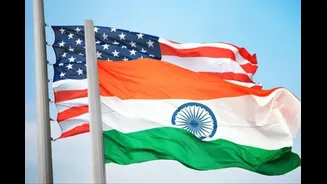
His remarks come at a time when senior officials from both countries are engaged in intensive negotiations aimed at finalising an interim trade pact as part of a broader Bilateral Trade Agreement framework.
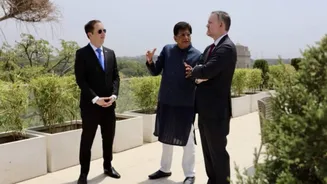
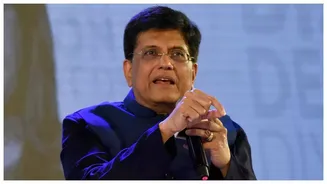
US Trade Representative Jamieson Greer met Commerce and Industry Minister Piyush Goyal in New Delhi on Tuesday to advance negotiations on the Interim Agreement, which was originally launched by US President Donald Trump and Prime Minister Narendra Modi.
The discussions focused on both the interim pact and the broader bilateral trade agreement.
The US Embassy in India said the United States remains focused on securing a “fair, reciprocal trade deal” that opens markets for American exporters while delivering benefits to both countries.
US Ambassador to India Sergio Gor, who accompanied Greer during the visit, said ongoing discussions were aimed at finalising the trade agreement and deepening economic ties between the two nations.
Finance Minister Nirmala Sitharaman also held discussions with Greer and his delegation in New Delhi, with both sides exchanging views on strengthening bilateral trade and economic cooperation and exploring new growth opportunities.
Meanwhile, US Deputy Assistant Secretary in the Bureau of South and Central Asian Affairs Bethany Poulos Morrison said Washington was “very, very close” to concluding what she described as a historic trade agreement with India.
“Looking at trade, in February 2026, we announced the intention to finally conclude the historic trade deal. We are very, very close,” Morrison said at an event.
She said the proposed agreement would open India’s market of 1.4 billion people to American goods on “reciprocal and mutually beneficial” terms and help advance the two countries’ goal of achieving $500 billion in bilateral trade by 2030 under the “Mission 500” initiative.
Morrison noted that bilateral goods trade reached $149 billion in 2025 and said US exports to India rose by 9.8 per cent during the year.
She also highlighted growing Indian investment in the United States, underscoring the momentum behind efforts to deepen economic engagement.
The latest round of negotiations follows comments by Foreign Secretary Vikram Misri last week that India and the United States had already made “significant progress” toward concluding an interim bilateral trade agreement, with Greer’s visit expected to further advance the deliberations.