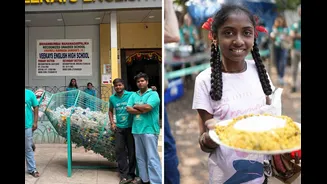









In the heart of Mumbai’s slums, 27-year-old Shakti Yadav is transforming waste into nourishment. Driven by a personal mission to clean his community, Yadav founded ‘Buy Food with Plastic’, an initiative
where residents receive hot, nutritious meals in exchange for plastic bottles.
Growing up in a slum, Yadav’s experience of the seasons was shaped by hardship. While others looked forward to the rains, he dreaded them.
“During the monsoons, sewage water would flood the streets. People had to wade through it because discarded plastic choked the drains,” Yadav recalls.
“This led to outbreaks of diseases like dengue and malaria. My goal is to eradicate both plastic waste and hunger — two persistent problems in our city’s slums,” he adds.
Inspired by a similar programme in the United States, Yadav reached out to its founder. Despite their different backgrounds, they bonded over a shared curiosity and a desire to solve environmental challenges.
An MBA graduate and the first in his family to pursue higher education, Yadav initially balanced the initiative with a corporate job in 2020. Eventually, he quit his job to devote himself to the project full-time.
The model is simple yet effective. Residents provide 20 plastic bottles in exchange for a hot meal. The collected plastic is then sent to a recycling facility, which also employs people from the same communities who bring in the waste. The plastic is repurposed into products such as flowerpots and tea coasters, which are sold to corporations, including international companies.
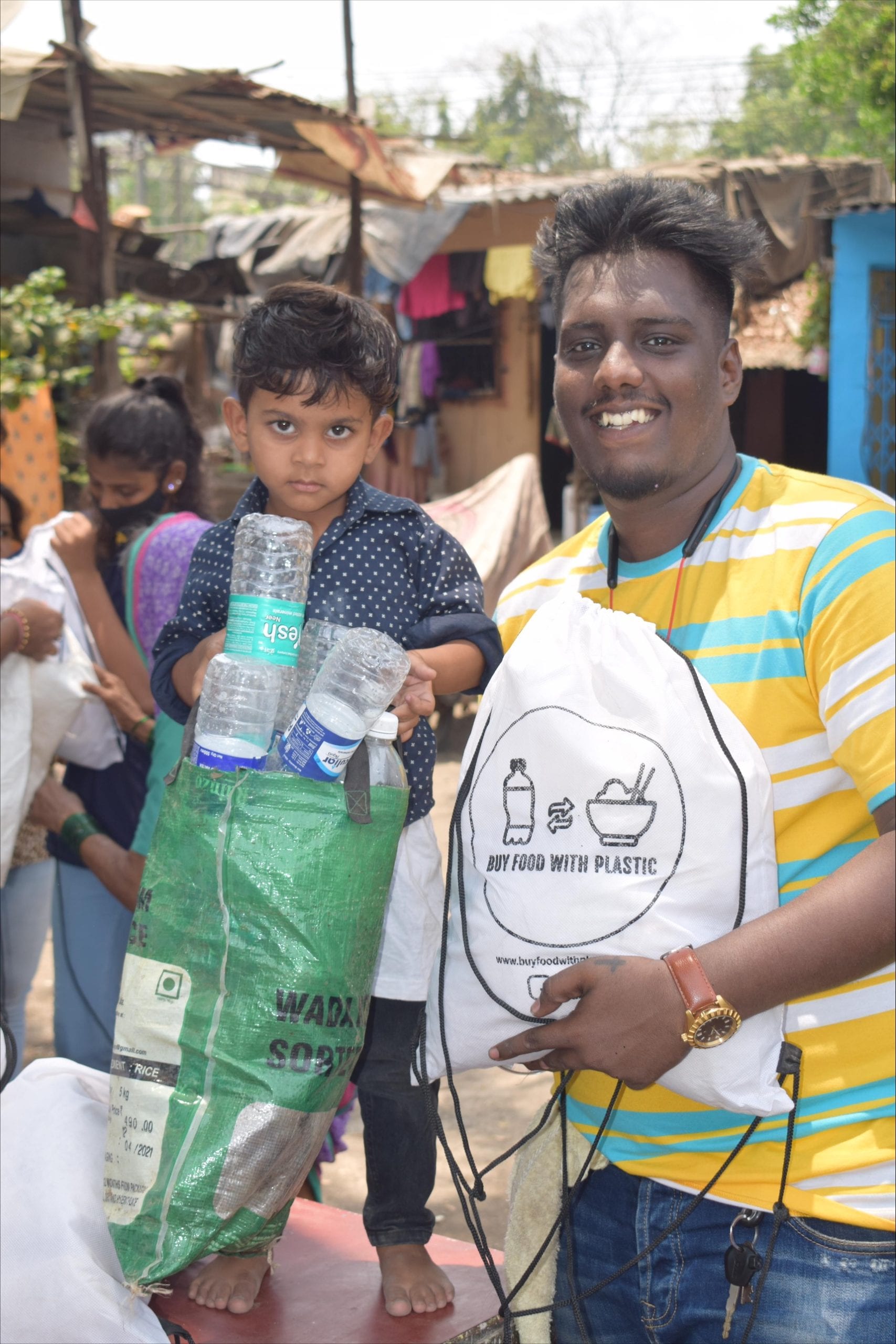
Breaking the mould was not easy. Yadav’s mother was initially sceptical, believing that non-profit work was only for the wealthy. He eventually convinced her by showing how a single initiative could address two major issues — reducing plastic waste that contributes to flooding and providing essential nutrition to those in need.
For many families living in slums, access to nutritious food remains difficult. Through this initiative, Yadav hopes to tackle hunger while also encouraging people to collect and recycle waste that would otherwise be discarded carelessly.
Yadav is also focused on spreading awareness among the younger generation. He regularly visits schools and residential societies to speak about sustainability.
“Previously, nobody told me that throwing plastic away was harmful,” he says.
Today, his team conducts awareness drives and teaches children about sustainability and the environmental impact of waste.
So far, the ‘Buy Food with Plastic’ initiative has delivered more than 42,000 meals, supported 4,500 people, and educated over 1,000 students.
Yadav’s work has also earned international recognition. He represented India in Germany for research on sustainability and climate change and was awarded the 2023 Cross-Cultural Program Fellowship.
While the project currently operates in select slums, Yadav’s vision is to expand the initiative to every corner of Mumbai.