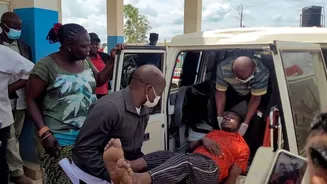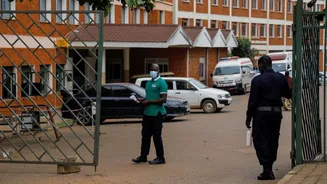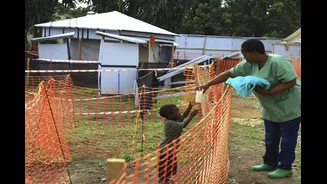







As more cases of Ebola continue to be reported, a World Health Organization (WHO) official has warned it may be spreading faster than originally thought.
BBC quoted Dr Anne Ancia that the more the agency
investigates, the clearer it becomes that cases have spread to other areas.
According to officials, over 513 cases were suspected in DR Congo as of Tuesday, and one person died in neighbouring Uganda.
The outbreak, caused by the Bundibugyo strain of the Ebola virus, has been reported in parts of the Democratic Republic of Congo and Uganda. While there is no vaccine for this strain of the Ebola virus, WHO is reportedly studying whether other drugs may provide protection.
“The more we are investigating this outbreak, the more we realise that it has already disseminated at least a little bit across borders and also in other provinces,” Ancia told BBC World Service Newsday, adding that DR Congo’s Ituri province, the epicentre of the outbreak, is a “very unsecured area with lots of movement of population”, hence making it difficult for the agency to investigate and help control the disease.
She further said that the outbreak has spread to the province of South Kivu, where the population is already suffering a humanitarian crisis for many years.
BBC cited a report by the London-based MRC Centre for Global Infectious Disease Analysis released on Monday suggesting there had been “substantial” under-detection, and that it could not rule out there had already been more than 1,000 cases.
WHO chief Tedros Adhanom Ghebreyesus, who declared the outbreak an international emergency last week, has also said he was “deeply concerned about the scale and speed of the epidemic”.
Associated Press quoted Dr Celine Gounder, an infectious disease specialist and epidemiologist who treated patients in West Africa during the 2014-2016 Ebola epidemic, saying, “There’s nothing even close to ready for clinical trials. And so that means responders, healthcare workers and other aid workers are really back to the basics.”
To control the spread of the virus, several neighbouring countries such as Rwanda have shut their borders with DR Congo. Besides, the US Centers for Disease Control and Prevention (CDC) is working to evacuate six Americans who were exposed to a US citizen who developed the symptoms.
Meanwhile, a senior official at the Ministry of Health and Family Welfare told News18 that the Indian government is closely monitoring an Ebola outbreak in Central Africa after the World Health Organization (WHO) declared it a Public Health Emergency of International Concern.
Key measures include a review of standard operating procedures for screening, surveillance, quarantine, and case management. Also, the National Institute of Virology in Pune has been designated as the nodal laboratory for Ebola testing, with additional laboratories to be onboarded in phases.