







Project Maven, the Pentagon’s flagship artificial intelligence programme, was launched in 2017 as a focused effort to address a growing operational challenge: the overwhelming volume of surveillance data
generated in modern conflicts.
At the time, military analysts were inundated with drone footage from conflict zones. They had to manually scan hours of video, often frame by frame, to identify objects of interest that might appear only briefly before disappearing. This made the process slow and difficult, with the risk that critical intelligence could be missed.
Maven was designed to solve this problem by using machine learning to detect objects and patterns within this vast stream of imagery. Its initial goal was to help analysts process data more efficiently and identify potential threats faster.
Over the years, however, the programme has evolved significantly. What began as a narrow experiment has developed into an AI-assisted targeting and battlefield management system that now plays a much broader role in military operations.
How Does Project Maven Work On The Battlefield?
Project Maven operates by integrating multiple streams of data into a single system that supports both analysis and decision-making.
Experts describe it as an “overlay” that fuses information from satellite imagery, drone feeds, sensor inputs, enemy troop intelligence, and data on troop deployment. By combining these inputs, the system is able to rapidly scan and interpret large volumes of information in real time.
In practical terms, Maven can analyse satellite feeds to detect troop movements or identify potential targets. At the same time, it takes what Aalok Mehta, director of the Wadhwani AI Center at the Center for Strategic and International Studies (CSIS), described to AFP as a “snapshot of the operational theatre”, allowing commanders to understand the situation on the ground and assess possible responses.
Once a potential threat is identified, the system converts that detection into a targeting workflow. It evaluates available military assets, weighs different operational options, and presents commanders with possible courses of action.
How Is AI Changing The ‘Kill Chain’ In Warfare?
One of Project Maven’s most significant contributions is its impact on the “kill chain”, the sequence from identifying a target to carrying out a strike. Traditionally, this process involved multiple layers of human analysis and coordination, which could take hours. Maven has accelerated this process dramatically.
By automating detection and integrating decision-support functions, the system compresses the kill chain from hours to seconds. This allows for much faster identification of targets and quicker operational responses.
This shift is widely seen as a major transformation in how warfare is conducted, as it enables militaries to act at a pace that was previously not possible.
Who Is Behind Project Maven? From Google To Palantir
Project Maven’s development has involved several major technology companies, reflecting both collaboration and friction between the tech sector and defence agencies.
In its early years, Google served as the programme’s primary AI contractor. However, the partnership became controversial in 2018, when more than 3,000 employees signed an open letter protesting the company’s involvement. Several engineers resigned, and Google ultimately chose not to renew the contract.
Following this, the company published AI principles that ruled out participation in weapons systems. More recently, however, it has signalled a shift in approach and is now among the firms being considered for future involvement in Maven.
In 2024, Palantir Technologies took on a more prominent role. The company, which has long worked in government intelligence and data analytics, is now understood to provide key technology supporting Maven’s operations, with its systems forming a central part of the programme’s backbone.
What Role Has Project Maven Played In Recent US Operations?
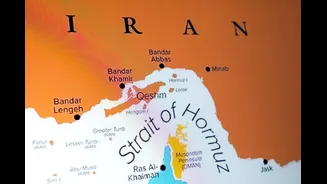
The use of Project Maven has come into sharper focus in the context of recent US military operations linked to tensions involving Iran.
AFP reported that the Pentagon and Palantir have declined to comment on Maven’s performance in the current conflict. However, US strikes have been carried out at a sustained pace, and it can be assumed that Maven’s ability to speed up the targeting and firing process has played a central role.
According to the Center for Strategic and International Studies, after three weeks the US strike campaign settled into a tempo of between 300 and 500 targets per day.
In the first 24 hours of Operation Epic Fury, US forces struck more than 1,000 targets, according to AFP. One reported strike hit a school housed in a building previously used as a military complex, with Iran saying the attack killed 168 children aged seven to 12 and wounded many others.
What Role Do Advanced AI Models Play In Maven?
Another important development in Maven’s evolution is the integration of advanced AI models that allow users to interact with the system in new ways.
The emergence of systems like ChatGPT has expanded how such technology can be used, enabling interaction through natural language rather than only technical interfaces.
At present, this capability has been provided by Anthropic’s Claude. However, this arrangement has faced challenges, particularly over restrictions on how the model can be used. The Pentagon objected to limitations that would prevent its use in fully automated strikes or in tracking US citizens.
As a result, other companies, including Google, xAI, and OpenAI, are being considered as potential alternatives.
Why Project Maven Has Sparked Ethical Debate
Project Maven has also become a focal point in debates over the use of artificial intelligence in warfare.
Critics argue that increasing reliance on AI raises concerns about accountability, particularly in situations involving life-and-death decisions. Questions have also been raised about the role of private companies in developing military technologies.
What Does Project Maven Mean For The Future Of Warfare?
Project Maven reflects a broader shift towards data-driven warfare, where speed, information, and rapid decision-making play a central role.
By enabling faster analysis and more efficient targeting, systems like Maven are reshaping how military operations are conducted. Strategic experts believe that such technologies provide a significant advantage, particularly in high-intensity conflicts.
At the same time, they are also driving a global race to develop similar capabilities, as countries seek to maintain strategic parity.
As tensions continue to evolve in West Asia, the growing use of AI-driven systems like Project Maven suggests that the future of warfare will increasingly be defined by the ability to process information quickly and act on it effectively.