


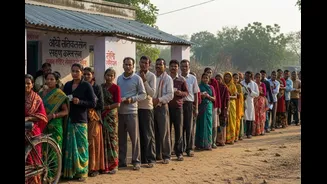
2026 Tamil Nadu Elections: As Tamil Nadu gears up for the 2026 Assembly elections on April 23, the major political alliances have taken the poll position. Both the ruling DMK-led Secular Progressive Alliance
(SPA) and the AIADMK-led National Democratic Alliance (NDA) have finalised their seat-sharing formulae for the polls, results for which will be announced on May 4. News18 explains all you need to know.
SPA (DMK-LED ALLIANCE): THE RULING ALLIANCE IN TAMIL NADU
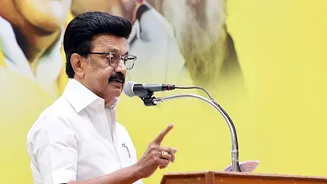
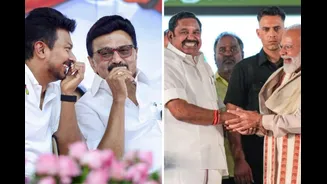
The Dravida Munnetra Kazhagam (DMK), led by Chief Minister MK Stalin, will contest 164 seats as part of its 26-party alliance for the Tamil Nadu elections. To maintain a strong presence, a total of 175 candidates across the alliance will run under the DMK’s ‘Rising Sun’ symbol.
| Party | Seats Allotted |
| DMK | 164 |
| Indian National Congress | 28 |
| DMDK | 10 |
| VCK | 8 |
| CPI | 5 |
| CPI(M) | 5 |
| MDMK | 4 |
| IUML | 2 |
| MMK | 2 |
| KMDK | 2 |
| MJK | 1 |
| SDPI | 1 |
| Mukkulathor Puli Padai | 1 |
| Tamilar Desiya Katchi | 1 |
The key highlights
- The DMK has reserved key constituencies such as Kanyakumari, Radhapuram, Palayamkottai, and Aruppukottai for its candidates. The party has fielded CM MK Stalin as the candidate for the Kolathur constituency and announced Deputy Chief Minister Udhayanidhi Stalin from Chepauk-Thiruvallikeni. Other prominent DMK candidates include Mahesh for Kanyakumari, Appavu for Radhapuram, Vahab for Palayamkottai, Kalaikathiravan for Tenkasi, and KKSSR Ramachandran for Aruppukottai. In addition, O Panneerselvam will contest from Bodinayakkanur, and R.S. Kirthiga Devi has been fielded from Tambaram. Further, Velu has been named as the candidate for Mylapore, while Ma. Subramanian will contest from Saidapet. The list also includes figures such as RD Sekar for Perumbur, Nazar for Avadi, and Subair Khan for Royapuram.
- The DMK has introduced over 60 new, younger faces among its 164 candidates, including a high number of professionals like lawyers, doctors, and engineers. The Congress secured 28 seats, an increase of three compared to the 2021 elections.
The Desiya Murpokku Dravida Kazhagam (DMDK), led by Premallatha Vijayakant, joined the alliance recently and was allocated 10 seats. - Kamal Haasan’s Makkal Needhi Maiam (MNM) has extended full support to the SPA but has opted not to contest in this election.
- The Tamilaga Vazhvurimai Katchi (TVK), led by T. Velmurugan, exited the alliance due to dissatisfaction with seat-sharing delays and will contest independently.
- As part of the agreement, the Indian National Congress has also been allotted one Rajya Sabha berth.
- The seat-sharing arrangement would ensure a strong representation across all regions, with a broad spectrum of professionals, including 125 degree holders, 18 women candidates, 15 doctors, and 29 advocates, underlining the party’s focus on education and professional qualifications for its representatives.
What is in DMK’s manifesto?
Tamil Nadu Chief Minister and Dravida Munnetra Kazhagam (DMK) supremo MK Stalin on Sunday unveiled the party’s manifesto for the state assembly elections, announcing key welfare measures including the expansion of the breakfast scheme and enhancement of the Kalaignar Magalir Urimai Thittam, under which financial assistance will be increased to Rs 2,000 for women.
Addressing a press conference in Chennai, Stalin said Tamil Nadu has emerged as a leading state under the Dravidian model of governance, highlighting the success of various welfare schemes and expressing confidence that the DMK will return to power for a seventh time with continued public support.
Referring to the Kalaignar Magalir Urimai Thogai Scheme, Stalin alleged that the BJP attempted to obstruct its implementation during the election period, adding that despite challenges, the scheme has benefited around 1.3 crore families, with financial assistance of Rs 5,000 provided to beneficiaries so far. He reiterated that the DMK government remains committed to continuing and expanding welfare initiatives aimed at improving the lives of the people. The manifesto also includes expansion of the breakfast scheme to cover 15 lakh students up to Class 8, an increase in financial assistance under the Kalaignar Magalir Urimai Thittam from Rs 1,000 to Rs 2,000 per woman, free pump sets for farmers without meters, an enhancement of aid under the Puthumai Penn and Tamil Pudhalvan schemes from Rs 1,000 to Rs 1,500 per student, an increase in old-age pension to Rs 2,000, and a pension for persons with disabilities to Rs 2,500.
NDA (AIADMK-LED ALLIANCE): THE OPPOSITION ALLIANCE IN TAMIL NADU
The All India Anna Dravida Munnetra Kazhagam (AIADMK), headed by Edappadi K Palaniswami, has officially finalised its pact with the BJP and other allies. The AIADMK will contest 169 seats under its own symbol, leaving 65 seats for its seven alliance partners.
| Party | Seats Allotted |
| AIADMK | 169 |
| Bharatiya Janata Party (BJP) | 27 |
| Pattali Makkal Katchi (PMK) | 18 |
| Amma Makkal Munnetra Kazhagam (AMMK) | 11 |
| Tamil Maanila Congress (TMC) | 5 |
| Indhiya Jananayaka Katchi (IJK) | 2 |
| Tamilaga Makkal Munnetra Kazhagam (TMMK) | 1 |
| Puratchi Bharatham | 1 |
The key highlights
- By contesting 169 seats, the AIADMK is ensuring it can reach the simple majority mark (118) on its own, reducing its dependence on allies post-election.
- The BJP’s allocation of 27 seats includes a mix of urban, delta, and southern districts.
- The AIADMK aims to lead a “unified front” against the ruling DMK.
- The 27 seats given to the BJP are concentrated in the Western (Kongu) belt, Chennai, and Southern districts (like Kanyakumari), where the party has a growing footprint.
- The inclusion of the PMK (Vanniyar support) and AMMK (Thevar support) is a strategic move to consolidate key vote banks in the northern and southern regions of the state.
- Several smaller allies have agreed to contest under the AIADMK symbol of two leaves to maximise brand recognition among rural voters.
What is in AIADMK’s manifesto?
AIADMK General Secretary Edappadi K Palaniswami (EPS) released the party’s 297-point manifesto for the assembly electionson March 24. The AIADMK’s 2026 manifesto is a welfare-heavy document designed to directly challenge the DMK’s “Dravidian Model” by offering substantial household relief.
The center-piece of their campaignis a promise to provide free refrigerators and three free LPG cylinders annually to all 2.2 crore rice ration card holders. To combat inflation, the party has pledged a one-time ₹10,000 cash grant to every family, alongside doubling the monthly assistance for women to ₹2,000. Strategic shifts in infrastructure include the promise of an international cricket stadium in Coimbatore and the extension of free bus travel to men. On the policy front, the manifesto seeks to win over specific voting blocs by promising the return of the Old Pension Scheme (OPS) for government employees and a total waiver of student educational loans.
OTHER KEY CONTENDERS
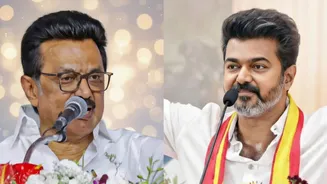
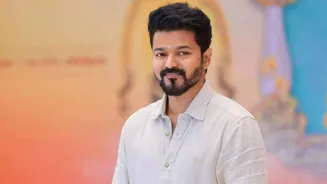
Thamizhaga Vettri Kazhagam (TVK): Led by actor-turned-politician Vijay, the TVK is expected to play a “spoiler” role or emerge as a significant third force in what is becoming a multipolar contest.
Naam Tamilar Katchi (NTK): Led by Seeman, the party continues its strategy of contesting all 234 seats independently, without entering into any alliance.
KEY FAQs
How are seats divided in the DMK-led SPA?
The alliance led by Dravida Munnetra Kazhagam gives around 160+ seats to DMK, with the rest shared among allies like Indian National Congress and Left/regional parties in smaller, targeted numbers.
How does the AIADMK-led NDA differ?
In the NDA led by All India Anna Dravida Munnetra Kazhagam, AIADMK is contesting 169 seats, while allies like Bharatiya Janata Party, PMK, and others get a relatively larger combined share compared to SPA allies.
What’s the key difference between the two formulae?
The SPA model is more centralised (DMK-heavy), while the NDA model is more distributed among allies— reflecting coalition balancing vs strong single-party control.
With ANI, agency inputs