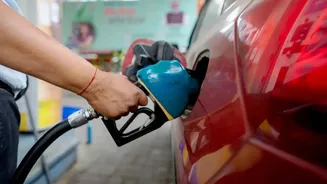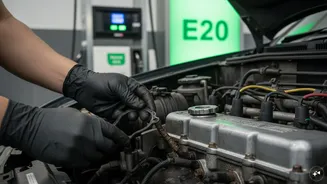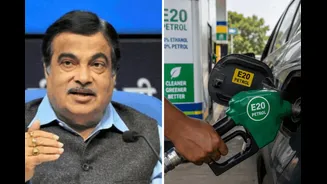







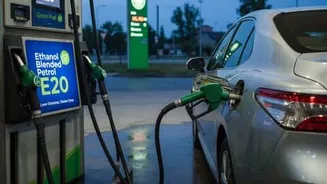
Amid an ongoing debate over the impact of E20 petrol on vehicle performance and longevity, the Centre on Thursday said extensive studies and real-world data have found no evidence that the fuel causes
corrosion, abnormal wear or a reduction in vehicle life, including in older vehicles that were not originally certified for E20 use.
In a written reply in the Lok Sabha, Minister of State for Petroleum and Natural Gas Suresh Gopi said comprehensive laboratory studies and field trials conducted by the Automotive Research Association of India (ARAI), the Society of Indian Automobile Manufacturers (SIAM), Indian Oil Corporation Ltd (IOCL), Indian Institute of Petroleum (IIP) and automobile manufacturers have confirmed that E20 fuel is safe when used as per prescribed standards.
The studies assessed multiple parameters, including engine durability, drivability, startability, corrosion resistance, material compatibility, emissions and fuel efficiency.
“These extensive laboratory studies, field validation and real-world operating experience have not established any widespread adverse impact on vehicle performance due to E20 fuel,” Gopi said.
No Significant Impact On Legacy Vehicles
The minister said research conducted by industry bodies and testing agencies also found that legacy vehicles—those not originally designed or certified for E20 fuel—did not show any significant variation in performance or abnormal wear and tear.
According to the government, automobile manufacturers’ service records further support these findings.
Gopi cited data from a leading automobile manufacturer that serviced 2.84 crore vehicles during FY 2025-26, including around 1.5 crore vehicles that were not originally certified as E20-compatible. The company reportedly found no instances of E20-related corrosion, abnormal wear or reduction in component life.
A major two-wheeler manufacturer reported similar findings, while another leading original equipment manufacturer (OEM) said data from 1.4 crore vehicles running on E20 over an extended period showed no evidence of ethanol-induced corrosion.
The minister added that ARAI has reaffirmed that vehicles undergo rigorous testing and validation based on international standards before being made available to consumers.
Extensive Consultation Before Rollout
Gopi said the introduction of higher ethanol-blended fuels was preceded by extensive consultations involving automobile manufacturers, SIAM, ARAI, component makers, testing agencies and oil marketing companies.
He noted that E20 fuel was rolled out only after successful validation of fuel systems, engine durability, material compatibility, drivability and emissions performance.
E20 May Improve Performance, Says Govt
According to SIAM and ARAI, E20 fuel may offer certain performance benefits, including improved acceleration and ride quality, while helping reduce carbon emissions.
The minister said ethanol’s higher octane rating supports modern high-compression engines, while its higher heat of vaporisation can contribute to more efficient combustion.
The government’s remarks come amid concerns from some vehicle owners and consumer groups over the long-term impact of higher ethanol blends on engines and fuel systems. The Centre, however, maintains that scientific studies, field trials and industry data do not indicate any widespread adverse effects from the use of E20 petrol.