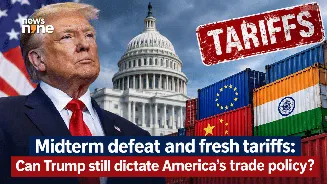






The prospect of a trade agreement with the United States offering to cap tariffs on Indian goods at 17 per cent, instead of the proposed 25 per cent, may appear to be a diplomatic and economic breakthrough
for New Delhi. But for Indian exporters hoping for meaningful relief from US President Donald Trump’s tariff offensive, the proposed reduction may not change the ground reality as much as it promises.
The problem is that a lower headline tariff does not necessarily translate into better market access. Some of India’s biggest export categories to the US are either exempt from the proposed additional duties or face separate, sector-specific tariffs that a broad trade agreement may not automatically address. For other sectors, the difference between a 25 per cent and a 17 per cent duty may still leave Indian businesses at a competitive disadvantage against rival exporting countries.
Read More: 25% Tariff Threat: Can India Make Trump Pay? 5 Retaliation Options With New Delhi
The concerns come amid Trump’s latest proposal to impose additional duties of up to 25 per cent on Indian imports over allegations of structural excess capacity. India has pushed back against the charge, maintaining that it does not have structural excess capacity and that trade-related concerns should be addressed through ongoing bilateral negotiations.
US Trade Representative Jamieson Greer has indicated that the proposed rate could be capped at 17 per cent if India concludes a reciprocal trade agreement with Washington. However, the crucial question is whether such a deal would actually address the specific vulnerabilities of Indian exporters or simply offer a lower number on paper.
Pharma, Smartphones: India’s Biggest Exports May Not Benefit
One of the biggest limitations of the proposed tariff reduction is that some of India’s most important export categories to the US are already outside the ambit of the proposed additional duties. India has emerged as a major supplier of smartphones to the American market, particularly as global manufacturers diversify production beyond China. Pharmaceuticals, especially generic medicines, are another important component of India’s export relationship with the US.
The US proposal itself lists smartphones among the products exempted from the proposed additional Section 301 duties. It also excludes patented pharmaceutical articles and certain other specified products. This means that exporters in these categories may not gain much from a reduction in the proposed tariff rate from 25 per cent to 17 per cent, since they are not the primary targets of this particular additional levy in the first place.
A lower tariff is useful only when a product is actually subject to that tariff. For exporters whose products already enjoy exemptions, the proposed trade deal may offer little immediate improvement in their cost competitiveness.
There are also limits to how broadly the pharmaceutical exemption can be interpreted. Different categories of medicines can face different tariff treatment, and the applicable product-specific provisions will matter.
Steel And Aluminium: Can Trade Deal Solve The Problem?
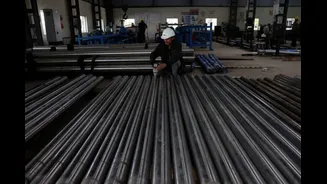
These sectors are already facing steep duties under a separate US trade instrument, Section 232 of the Trade Expansion Act of 1962, which allows Washington to impose tariffs on imports on national security grounds. In June 2025, the Trump administration increased tariffs on steel and aluminium imports from 25 per cent to 50 per cent. These duties apply independently of the proposed Section 301 action.
The latest USTR proposal specifically excludes products already covered under Section 232 from the proposed additional duties. This is not necessarily a concession to India. It means that these products will continue to be governed by the existing sector-specific tariff framework.
Consequently, even if India negotiates a trade agreement that brings the proposed additional tariff down to 17 per cent, steel and aluminium exporters may continue to face the existing 50 per cent duty.
For India, a trade agreement that does not address Section 232 tariffs would leave a significant part of the problem unresolved. The experience of other countries also suggests that negotiating a broader trade arrangement does not automatically guarantee relief in these sectors.
What Happens After February?
According to a report in The Economic Times, exporters said summer orders already booked until February are unlikely to be affected by the latest tariff uncertainty. This is relevant for India’s textile and apparel industry, where orders are generally negotiated and finalised well before the actual shipment. Businesses work with overseas buyers months in advance, factoring in production schedules, prices, shipping timelines and delivery commitments.
A sudden increase in tariffs can therefore disrupt the next order cycle more than shipments already committed to buyers. The February window gives exporters some time to honour existing contracts and plan their next moves. It also provides India with an opportunity to continue negotiations with the US before uncertainty starts affecting fresh orders.
However, this breathing space should not be mistaken for a long-term solution. Once exporters begin negotiating orders beyond February, the uncertainty surrounding the eventual tariff rate could become a major concern.
Frequent changes in tariff policies make it difficult for exporters and overseas buyers to plan commercial arrangements. For an industry operating on thin margins, even a few percentage points can influence whether an American buyer chooses an Indian supplier or shifts to another country.
Lessons From The EU, Japan, South Korea
The strongest reason for India to be cautious is that other major US trading partners have discovered that a trade agreement does not necessarily mean an end to sector-specific tariffs or protectionist measures.
Consider the European Union. Under its 2025 trade framework with Washington, the US agreed to a 15 per cent tariff ceiling for most European goods, subject to specified conditions and exemptions. Certain products, including generic pharmaceuticals and their ingredients, also received preferential treatment. Yet the agreement did not eliminate the separate Section 232 tariffs on steel and aluminium. The US subsequently expanded the list of products covered by these duties.
Japan’s experience offers another important lesson. Its trade framework with the US provided for a 15 per cent tariff on most Japanese goods, including automobiles, with specific provisions on how existing duties would be treated. However, the 50 per cent Section 232 tariffs on Japanese steel and aluminium continued.
South Korea, too, negotiated a strategic trade and investment agreement with the Trump administration in November 2025. The arrangement reduced certain sectoral tariffs, including those on automobiles and pharmaceuticals, to 15 per cent. But steel and aluminium continued to attract 50 per cent duties.
This means that the US can offer concessions in one category while retaining its protectionist measures in another. India must therefore avoid looking at the proposed 17 per cent tariff as an all-encompassing solution. What matters is the fine print, including product-specific exemptions, sectoral duties, implementation timelines and provisions that could allow the US to introduce further restrictions.
There is also the question of competitiveness. Even at 17 per cent, India may not necessarily emerge as the preferred sourcing destination for American businesses.
Why India Should Appeal, Negotiate And Buy Time
For India, the priority should be to prevent the proposed tariff action from becoming a fait accompli. The USTR has opened the proposal to public comments, with January 5, 2027, as the deadline for written submissions. Public hearings are scheduled for January 25, 2027. This gives India an important opportunity to challenge Washington’s findings and present evidence against the allegations of structural excess capacity.
India has already rejected the US argument, maintaining that its manufacturing expansion is driven by domestic demand and market requirements rather than artificially created excess capacity. It should now use the consultation process to make a detailed, sector-wise case, particularly for industries where additional tariffs could hurt American consumers, manufacturers and supply chains as well as Indian exporters.
There is also a case for seeking product-specific exemptions and clarity on how existing duties will interact with any new tariff arrangement. For sectors such as steel and aluminium, India needs to pursue relief under the separate Section 232 framework rather than assume that a reciprocal trade agreement will automatically resolve the issue.
At the same time, bilateral negotiations should continue. An agreement could still offer meaningful benefits to labour-intensive sectors such as textiles, garments, leather, gems and jewellery, and engineering goods, provided it delivers predictable market access.
The Indian government must also keep the option of a calibrated response open. As Indian traders have urged Prime Minister Narendra Modi to consider reciprocal tariffs, the government has to balance the need to protect domestic industry with the risk of escalating a trade confrontation that could hurt exporters on both sides.