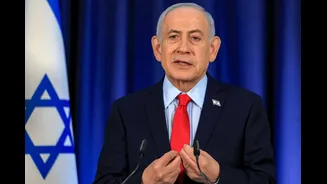







For decades, Israel and Lebanon have remained locked in a state of hostility, engaging only through indirect channels even during moments of crisis. Now, Israeli Prime Minister Benjamin Netanyahu has said
he has instructed his cabinet to begin direct talks with Lebanon , a significant shift shaped less by sudden diplomatic optimism and more by battlefield pressure, regional geopolitics, and sustained US intervention.
The announcement comes after a month of intense fighting between Israel and Iran-backed Hezbollah, a conflict that has unfolded alongside a broader US-Iran confrontation. With a fragile ceasefire in place between Washington and Tehran, attention has shifted to whether the Israel-Lebanon front can be stabilised, or whether it risks unravelling the wider truce.
From Airstrikes To Ground Offensive: What Is Happening In Lebanon?
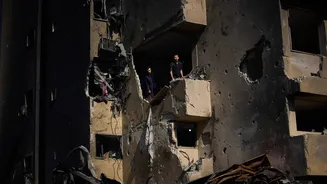
Israel sharply escalated its airstrikes across Lebanon, particularly targeting Beirut’s southern suburbs and other densely populated areas. The campaign expanded beyond air power, with Israeli forces widening a ground invasion into southern Lebanon and ordering hundreds of thousands of civilians to flee villages it considers Hezbollah strongholds.
Lebanese officials described the scale of destruction as unprecedented. Authorities declared a day of mourning after a wave of strikes that caused mass casualties, while hospitals, especially in the capital, struggled to cope with the influx of victims. Outside Rafik Hariri University Hospital, ambulances arrived continuously carrying remains recovered from strike sites.
According to Lebanon’s Health Ministry, at least 1,888 people have been killed since early March, with more than 6,000 wounded. On the Israeli side, at least two people have been killed by Hezbollah rocket fire.
The escalation began after Hezbollah fired missiles into Israel on March 2, prompting Israel to intensify its campaign targeting the group’s positions and infrastructure. Hezbollah has continued its operations, reporting at least 20 attacks in a single day, including strikes on Israeli vehicles inside Lebanese territory and rocket fire into northern Israel.
Israel has also said it eliminated senior Hezbollah-linked figures during its operations, including Ali Yusuf Harshi, described as a top aide to leader Naim Qassem.
Why Did Israel Earlier Reject Talks, And What Changed Now?
The most striking element of the current moment is that talks are happening at all.
Early in the conflict, Lebanon’s President Joseph Aoun had expressed willingness to begin direct negotiations and even signalled openness to normalising relations. Israel rejected that offer, viewing it as impractical given Lebanon’s internal constraints, particularly the government’s inability to act decisively against Hezbollah without risking a civil conflict.
At that stage, Israel’s approach prioritised military pressure over diplomacy.
That position shifted only after a broader geopolitical development—the US-Iran ceasefire.
Following an agreement between Washington and Tehran to halt their own hostilities for two weeks, Iran made it clear that Israeli operations in Lebanon would have to ease as part of parallel diplomatic efforts.
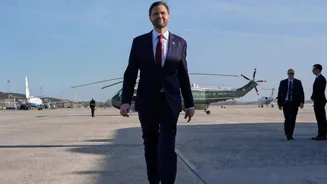
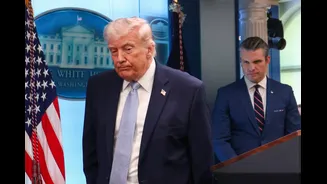
At the same time, US President Donald Trump directly intervened, urging Netanyahu to scale back attacks and open a diplomatic channel. US officials also indicated that Washington had pushed Israel to reduce the intensity of its operations and move toward talks to prevent further escalation.
Trump himself highlighted this effort in a statement, telling NBC News, “I spoke with Bibi, and he’s going to calm it down a bit. I think we need to act a little more calmly.”
With both regional and American pressure converging, Netanyahu announced that Israel would begin direct negotiations with Lebanon.
Talks Without A Ceasefire: What Is Israel’s Position?
Despite agreeing to talks, Israel has not committed to halting its military campaign.
Netanyahu has made clear that operations against Hezbollah will continue even as negotiations are prepared. Israeli officials have indicated that while attacks may be scaled down ahead of talks, there is no agreement to stop them entirely, and Israel has refused to discuss a ceasefire with Hezbollah at this stage.
Instead, Israel is framing the talks as the beginning of a broader political process. Its embassy in Washington described the upcoming meeting as the start of “formal peace negotiations.”
Netanyahu has outlined two central objectives: “disarming Hezbollah and establishing peaceful relations between Israel and Lebanon.”
Beyond these goals, Israeli discussions have included proposals such as creating a buffer zone along the northern border to limit Hezbollah’s presence. Some officials have also indicated that Israel may push Lebanon to remove Hezbollah-linked ministers from its government as part of broader negotiations.
At the same time, Israeli leadership has not clarified whether it would scale back ground operations or withdraw forces if talks progress.
What Does Lebanon Want? Ceasefire First, Then Talks
Lebanon’s position diverges sharply from Israel’s approach.
President Joseph Aoun has expressed support for direct negotiations but insists that a cessation of hostilities must come first. In a statement, he said the “only solution” is a ceasefire followed by “direct negotiations.”
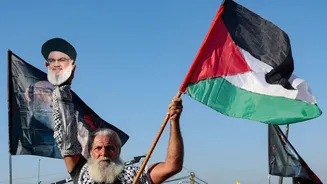
Hezbollah has rejected the prospect of direct negotiations with Israel. Lawmaker Ali Fayyad on Thursday said the group opposes such talks and maintains and that the Lebanese government should demand a ceasefire as a precondition before any further steps are taken.
How Are The Talks Being Structured? The US Role
The United States is central to the current diplomatic effort.
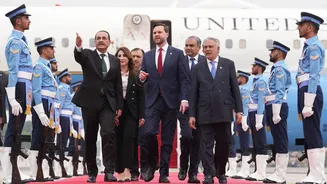
Israeli and Lebanese envoys are expected to meet in Washington on Tuesday. Lebanon’s presidency said the two held a phone call on Friday and agreed to meet at the US State Department to discuss announcing a ceasefire and setting a start date for bilateral talks under US mediation.
Israel is likely to be represented by its ambassador to the US, Yechiel Leiter, while Lebanon’s delegation is expected to include envoy Nada Hamadeh Moawad.
However, the structure of future negotiations is already taking shape beyond this initial meeting. Netanyahu has tapped close confidant Ron Dermer to lead any eventual talks, while Lebanon has selected former ambassador Simon Karam to head its broader negotiating team, though neither is expected to attend the first round.
Washington’s involvement reflects a broader objective: preventing the Israel-Lebanon conflict from undermining the fragile US-Iran ceasefire.
What Are The Biggest Challenges Ahead?
Even with talks scheduled, major obstacles remain.
The most immediate challenge is the absence of a ceasefire. Lebanon views it as a prerequisite for meaningful negotiations, while Israel insists on maintaining military pressure.
Hezbollah’s position presents another critical hurdle. Its rejection of talks and continued military activity could undermine any agreement reached by the Lebanese government.
There are also longstanding territorial disputes along the border, including disagreements over the Blue Line and contested areas such as the Shebaa Farms, which remain unresolved.
More fundamentally, Israel and Lebanon have no formal diplomatic relations and have technically been in a state of war since 1948. Decades of conflict—including Israel’s occupation of southern Lebanon from 1982 to 2000—continue to shape deep mutual distrust.
What Is Israel Ultimately Trying To Achieve?
Israel’s decision to pursue direct talks reflects a broader strategic calculation.
By engaging with the Lebanese state, it is seeking to push forward long-standing objectives—chief among them Hezbollah’s disarmament and a more stable security arrangement along its northern border.
At the same time, Netanyahu’s reference to “peaceful relations” signals a potential ambition to move beyond conflict management toward a more formal political settlement, though such an outcome remains uncertain.