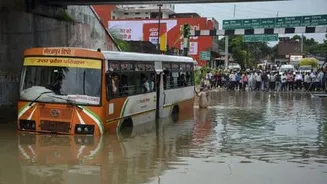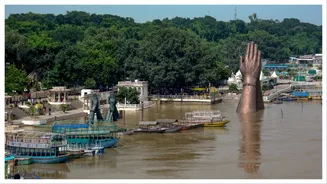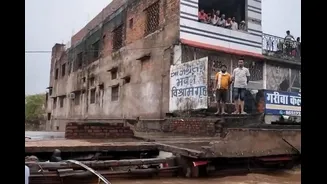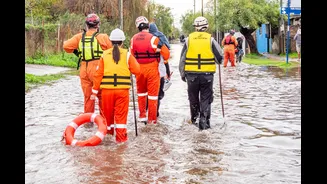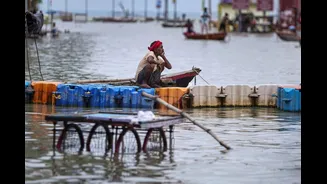






As flood conditions continued in parts of Uttar Pradesh, 16,784 people had been evacuated to safer locations so far, including 3,042 people rescued on Wednesday, officials said. Of the 35 districts affected
by the floods so far, 23 remained impacted.
Three people have died in rain-related incidents. The deceased include 18-month-old Priyansh from Pratapgarh and Shera, 32, and Suresh, 55, from Gajraula in Amroha.
1,499 Boats, 1,067 Medical Teams Deployed
According to the government, 1,499 boats and motorboats have been deployed for rescue and relief operations, while 1,067 medical teams are assisting.
The 23 affected districts are Ayodhya, Azamgarh, Ballia, Barabanki, Badaun, Chandauli, Farrukhabad, Ghazipur, Gorakhpur, Hardoi, Kasganj, Lakhimpur Kheri, Mirzapur, Moradabad, Pilibhit, Prayagraj, Raebareli, Sant Kabir Nagar, Shahjahanpur, Sitapur, Sonbhadra, Unnao and Varanasi, the government said in the evening.
A total of 1,311 flood shelters have been established across the state, with 201 currently operational. Relief agencies have assisted in 442 cases related to damaged houses, while 36,287 livestock have been affected.
In Chitrakoot, motorboats operated by the 42nd Battalion PAC (Provincial Armed Constabulary) were used to rescue nearly 150 people stranded in Chaura village along the Mandakini River. The rescued residents were also provided food, relief material and medical assistance.
Flooding in Ballia has affected nearly 20,500 people following a rise in the levels of the Ganga and Saryu rivers. Authorities have deployed 83 boats in the district and distributed 6,500 ration kits, 33,843 medicine kits and 83,092 cooked-food packets.
Vaccination has been administered to 16,629 livestock, while 965 quintals of fodder have been supplied. Flood posts, along with teams from the National Disaster Response Force (NDRF) and PAC, have also been deployed.
Officials said relief shelters and community kitchens have been established at Gopalnagar Tadi and Bhojpurwa.
Rivers Rise In Pilibhit, 18 Villages Cut Off
In Pilibhit, water levels in the Sharda, Deoha and Khakra rivers were on the rise. More than two lakh cusecs of water were released from Banbasa into the Sharda, while over 30,000 cusecs were released from Nanak Sagar into the Deoha.
Schools for Classes 1 to 8 were shut in the district. The Khakra bridge was submerged, cutting off connectivity to around 18 villages.
People living in low-lying areas were advised to shift to safer places. At the 200-bed medical college, the main electricity supply remained disrupted for over 34 hours after rainwater entered an underground cable box, forcing the facility to rely on generators.
In Lakhimpur Kheri, District Magistrate Anjani Kumar Singh visited the Girija barrage afflux bund and inspected erosion-affected areas along the Mohana river. Round-the-clock work was being carried out, while around a dozen houses in the submerged area were being relocated.
Sharda River Stays Above Danger Mark
The Sharda River at Palia stood 35 cm above the danger mark of 154.59 metres and remained steady, officials said. While agricultural fields and village approach roads were inundated, no village was reported to be completely submerged.
Relief efforts have also been expanded, with 68,953 foodgrain packets and more than 3.36 lakh lunch packets distributed. Authorities have also supplied over 5.02 lakh chlorine tablets and more than 1.77 lakh ORS packets to help prevent water-borne diseases.
Earlier, the government had reported the distribution of 1,640 foodgrain packets, 16,190 lunch packets, more than 18,000 chlorine packets and over 7,000 ORS packets.
The administration has urged residents of vulnerable areas to stay alert and comply with instructions issued by local authorities.
In Ghaziabad, a yellow alert remains in force until September 4. Residents have been advised to exercise caution during heavy rainfall and stay away from waterlogged areas.
(With inputs from PTI)