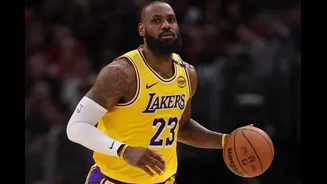









NBA legend LeBron James’ 21-year streak of starting in the NBA All-Star Game ended as the Los Angeles Lakers star was not included among the 10 starters for next month’s mid-season showpiece.
The 41-year-old
NBA icon, who has been an All-Star starter every season since 2005, was the most notable omission from this year’s event, set to take place at the Los Angeles Clippers’ Intuit Dome on February 15.
The 10 starters announced on Tuesday, five from the Western Conference and five from the Eastern Conference, will be joined by 14 players selected by the All-Star Game coaches.
The Western Conference starters include James’ Lakers teammate Luka Doncic and Oklahoma City Thunder’s reigning NBA Most Valuable Player Shai Gilgeous-Alexander. Golden State’s Stephen Curry, the Denver Nuggets’ Nikola Jokic, and the San Antonio Spurs’ French prodigy Victor Wembanyama complete the West’s starters, selected through votes from fans, players, and media.
Milwaukee Bucks forward Giannis Antetokounmpo led the voting for the Eastern Conference starters. He is joined by the New York Knicks’ Jalen Brunson, Detroit Pistons ace Cade Cunningham, Philadelphia 76ers guard Tyrese Maxey, and Boston Celtics forward Jaylen Brown.
Although James is highly likely to be included in the additional pool of All-Star players, his absence from the starting 10 in his 23rd season signifies the end of an era.
James missed the opening 14 games of the season due to sciatica. Since his return, he has averaged 22.6 points per game, with 5.9 rebounds and 6.9 assists.
While the NBA has adhered to its traditional conference-based selection procedure, this year’s All-Star Game will be revamped to boost interest. The highlight of the weekend will be a three-team round robin tournament featuring two teams of United States players and a World squad of global talent.
The tournament will comprise four 12-minute contests, with each team having a minimum of eight players. Two teams will play the first game, with the third team facing the winner of the opener, then the loser of the opener. The championship game will feature the top two teams based on records or point differential.