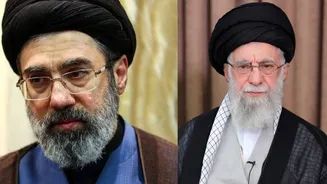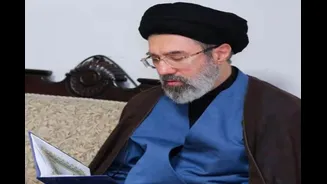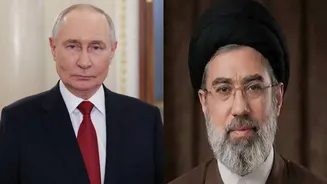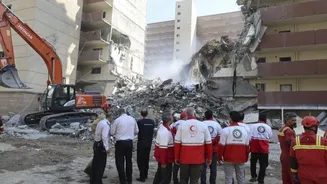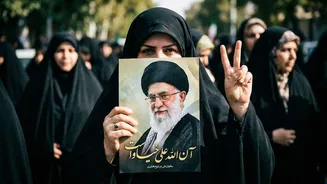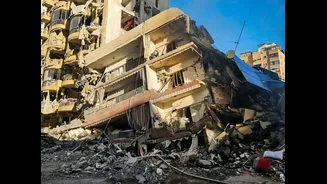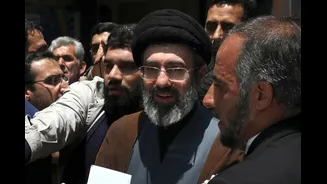







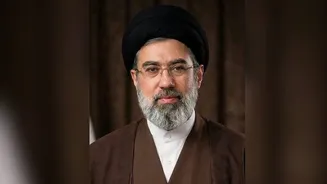

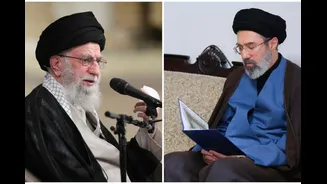
Days after Iran Supreme Leader Ayatollah Ali Khamenei was killed in US-Israel joint strikes, his son, Mojtaba Hosseini Khamenei, has been appointed as his successor by the Assembly of Experts. Ayatollah Ali Khamenei was killed in the joint strikes on February
28. US-Israel-Iran War LIVE
The rise of Mojtaba Khamenei as Iran’s new Supreme Leader marks one of the most consequential transitions in the Islamic Republic since the death of its founding leader in 1989. For decades, Mojtaba remained a largely unseen figure in Iranian politics, rarely appearing in public and holding no formal government position. Yet behind the scenes, he quietly accumulated influence within the country’s most powerful institutions.
His selection to succeed his father, Ali Khamenei, therefore, did not emerge suddenly. For many observers of Iranian politics, it represents the culmination of years of quiet power-building within the regime’s inner circle.
Born Into the System
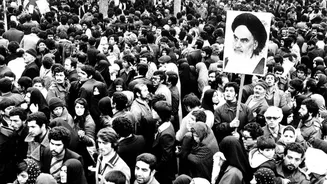
Mojtaba Khamenei was born in 1969 in the northeastern Iranian city of Mashhad into a prominent clerical family. His father was already deeply involved in the revolutionary movement that eventually overthrew the monarchy in the Iranian Revolution. After the revolution, Ali Khamenei rose steadily through the ranks of the new Islamic Republic, becoming president in the 1980s and then Supreme Leader in 1989.
Growing up within the political elite of the Islamic Republic shaped Mojtaba’s trajectory from an early age. Like many young Iranian men of his generation, he served during the Iran-Iraq War in units linked to the Islamic Revolutionary Guard Corps (IRGC). Those wartime connections later proved crucial, helping him build relationships with officers who would go on to occupy senior roles within Iran’s security establishment.
Although Mojtaba later pursued religious studies in seminaries in Qom, he never developed the prominent clerical stature associated with leading ayatollahs. Instead, his influence grew through political networks rather than religious authority.
The ‘Shadow Power’ in Tehran
For much of his adult life, Mojtaba Khamenei operated inside the office of the Supreme Leader, acting as an intermediary between his father and key figures in the regime. Analysts often describe him as a gatekeeper who controlled access to the elder Khamenei and helped shape political decisions behind closed doors.
Over time, this role expanded into something far more significant. The Supreme Leader’s office itself evolved into a central hub overseeing Iran’s political, security and economic structures. According to analysts, Mojtaba played an important part in strengthening that apparatus and connecting it with Iran’s military and intelligence networks.
His strongest relationships were with the IRGC and its affiliated paramilitary organisation, the Basij. These forces are responsible not only for defending the country but also for maintaining internal security and protecting the political system. By cultivating ties with commanders and intelligence officials within these institutions, Mojtaba built a loyal network inside the regime’s most powerful security structures.
In effect, while other political figures operated in the public sphere, Mojtaba developed influence within the machinery that ultimately protects and sustains the Islamic Republic.
Controversy and the 2009 Protests
Mojtaba’s name entered public debate most prominently during the disputed presidential election of 2009, when protests erupted across Iran in what became known as the Green Movement.
Opposition figures accused elements within the leadership of engineering the election outcome and orchestrating the subsequent crackdown on demonstrations. Mojtaba was frequently mentioned in those accusations because of his close ties with the security forces and his perceived influence inside the leadership structure.
Although the Iranian authorities denied those claims, the episode significantly raised Mojtaba’s profile both domestically and internationally. Protesters even chanted slogans against him during demonstrations, reflecting growing suspicions about his role within the system.
The controversy reinforced his image as a powerful but opaque figure — someone whose influence was widely discussed but rarely visible.
A Network Years in the Making
In the years that followed, Mojtaba continued to strengthen his position within the regime’s inner circles. Analysts believe he cultivated relationships not only with security officials but also with clerics, political factions and media institutions.
His influence extended into various aspects of the state apparatus, from shaping political alliances to supporting conservative factions within Iran’s political landscape. Some observers argue that he also played a role in promoting a new generation of officials aligned with the ideological outlook of the current leadership.
Despite this influence, Mojtaba rarely appeared in public speeches or diplomatic engagements. Unlike many prominent Iranian figures, he remained largely absent from formal political posts. That deliberate distance from the spotlight helped preserve the perception that he was working behind the scenes rather than seeking direct authority.
Why Mojtaba Was Ultimately Chosen
Several factors appear to have contributed to Mojtaba Khamenei’s selection as Supreme Leader.
First, he possessed decades of experience within the inner workings of Iran’s leadership structure. Having worked closely with his father for years, he understood the complex relationships between clerical authorities, political institutions and the security establishment.
Second, his deep connections with the IRGC and other security bodies made him a figure capable of maintaining stability within the system. In a country where the military and intelligence services play a central role in preserving the political order, their support is often crucial in leadership transitions.
Mojtaba’s appointment signalled that the Islamic Republic’s leadership intends to preserve the core political and ideological framework established during Ali Khamenei’s decades in power.
Mojtaba Khamenei’s rise illustrates how power in Iran is often shaped less by formal titles and more by networks of influence built within the state’s institutions. For years he operated quietly inside those networks, forging alliances and strengthening ties with key actors across the system.
Now, having moved from the shadows into the highest office in the country, Mojtaba faces the challenge of transforming that behind-the-scenes authority into visible leadership. He has to do this in the middle of a raging war as US-Israel continue joint strikes in Iran and Iran retaliates.