
As artificial intelligence reshapes classrooms, careers and cyber threats alike, engineering institutions are being forced to rethink how they teach, assess and prepare students for an uncertain future.
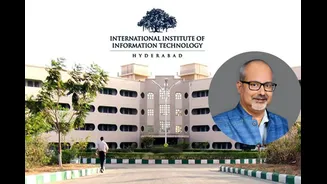
In an exclusive interaction with News18, Prof. Sandeep K. Shukla, Director of International Institute of Information Technology Hyderabad, shares his perspective on how AI is transforming engineering education, why traditional assessment models are under pressure, and how institutes must adapt to remain relevant.
Prof. Shukla also speaks about IIIT Hyderabad’s growing role in national cybersecurity through the newly launched Vyuha Labs, the institute’s research-driven academic structure, the skills students must develop to survive rapid technological change, and the importance of deep industry partnerships in shaping curriculum and innovation.
Here are the edite excerpts from the interview:
Q. How should Indian engineering colleges rethink curriculum, skills and assessment in the AI era?
Prof Shukla: Technology, especially Generative AI and agentic AI tools, has transformed how students learn and produce work. Today, writing code, essays or even structured answers is easily supported by AI. The real challenge for educators is no longer correctness, but understanding whether a student has truly internalised concepts and can apply them to real-world problems.
This has forced a rethink of curriculum design and assessment globally, not just in India. Some institutions are experimenting with allowing AI use in exams and assignments, but require students to submit prompts, ensuring that questions demand conceptual understanding and creative application rather than copy-paste answers. This significantly raises the bar for instructors.
There is no single solution yet. However, the direction is clear: moving away from rote learning towards conceptual, experiential and hands-on education, supported by AI. Teaching methods may become more personalised through AI tutors, and assessments may also become adaptive. This is an evolving process, and curricula will need to continuously change as AI capabilities advance.
Q. With the launch of Vyuha Labs on campus, IIIT-H has stepped deeper into national cybersecurity. How will this centre help law enforcement and the country tackle rising cybercrime and digital fraud?
Prof Shukla: Cybercrime, particularly low-tech fraud driven by social engineering, phishing, fear and greed, is a serious and growing issue in India. While high-end targeted attacks exist, everyday fraud affects common citizens the most.
Vyuha Labs focuses on understanding the tactics, techniques and procedures used by cybercriminals. A key initiative is the Cybercrime Navigator, developed by researchers at the lab, which helps investigators map perpetrators’ methods based on victim narratives and build structured investigation plans.
The lab also works on identifying crime trends and hotspots using data analytics, helping authorities design timely awareness campaigns. Another important initiative involves transcribing 1930 cybercrime helpline calls using multilingual speech-to-text technologies developed at IIIT-H, along with converting digital evidence such as WhatsApp messages and documents into analysable text.
Additionally, Vyuha Labs plans to conduct training programmes for law enforcement in digital forensics and explore developing indigenous, affordable investigative tools tailored to their needs.
Q. How do you balance cutting-edge research with teaching and student outcomes at an institute like IIIT-H?
Prof Shukla: IIIT-H is organised around research labs rather than traditional academic departments. Faculty members are active researchers, and they integrate their research directly into teaching. From the second year onwards, all students are associated with a research or translational research centre.
These include core research labs like Language Technology, Computer Vision and VLSI, as well as applied centres focused on smart cities, cybersecurity and digital health. This structure ensures early exposure to research, tool development and real-world problem-solving.
As a result, a significant proportion of undergraduate students graduate with research publications, making them highly competitive for global postgraduate programmes. While earlier research focused mainly on academic publications, the institute is now increasingly emphasising innovation, IP creation and technology transfer through translational research.
ALSO READ: University Of York Mumbai Campus: COO Shares Details On Scholarships, Courses And More
Q. What skills do you believe today’s students must develop to succeed in a rapidly changing technology landscape?
Prof Shukla: Specific technical skills have limited shelf life in today’s rapidly evolving environment. What matters most is the ability to continuously learn, reskill and reinvent oneself every few years.
Students must develop resilience to change, the ability to adapt without anxiety, and the mindset to stay ahead of emerging trends. For leadership roles in industry, academia or government, strong communication skills, patience, teamwork and listening abilities are crucial.
While technical skills remain necessary for short-term employability, it is these transferable human skills that endure and enable long-term success.
Q. How important are industry partnerships in shaping curriculum, research and student opportunities at IIIT Hyderabad?
Prof Shukla: Industry engagement is critical, especially in engineering education. Curriculum design must be informed by current and near-future industry needs to ensure graduates are employable today, even if they must reskill later.
In research, collaboration helps ensure that problems being solved are relevant to industry and government needs rather than purely academic exercises. While some exploratory research is essential, most research must address real-world challenges across short-, medium- and long-term horizons.
Strong industry connections help identify meaningful problems, enabling research that leads to practical innovation and impactful technology development.