







The most recent National Family Health Survey-5 (NFHS-5, 2019-21) reports that 32.1% of Indian children under five are underweight. While the national average has recorded a modest improvement, there is
an uneven distribution at the district level. This means a set of “high-risk” districts disproportionately carries the burden of undernutrition.
A 2022 analysis of district-level malnutrition data identified over 100 districts as “critical” or “very serious” for under-5-year-old undernutrition. In some districts, the share of underweight children goes well over the national mean, pointing to clusters where underweight prevalence might as well be 20-40% higher than the national average.
Dr Vimal Pahuja, MD, Associate Director, Internal Medicine & Metabolic Physician, Dr LH Hiranandani Hospital, Mumbai, says, “From the viewpoint of endocrinology and metabolic development, this burden reflects more than just a lack of sufficient calories: it indicates the cellular and hormonal adaptation to chronic nutritional stress.”
The reasons for this can be pointed towards poor maternal nutrition, repeated infections, micronutrient deficiency, and low dietary diversity – all of which affect high-risk districts. Chronic undernutrition in utero and early infancy dysregulates hormonal axes, reduces lean mass accrual, and impairs immune resilience.
Rather than being uniformly distributed, undernutrition in select districts puts entire generations at risk, especially those suffering from poorer physical growth, poorer cognitive development, and later-life metabolic disease.
It is important to understand these patterns at the district level, as blanket national averages mask persistent pockets of severe undernutrition. Therefore, policy actions should be aimed at “high-risk” districts identified through data, with context-specific nutritional interventions.
Effective strategies need to look beyond calories to maternal nutrition during pregnancy, micronutrient-fortified foods, protein-rich local foods, balanced macro- and micronutrient nutrition at school age, periodic growth screening (anaemia, vitamin D, micronutrient deficiencies), along with sanitation and infection control measures. Only through such targeted efforts can we avoid the risk of leaving whole districts, and possibly a generation, metabolically fragile, stunted, underweight, and with compromised long-term health and productivity.
“The facts show that children in the at-risk districts are 25% more likely to be underweight,” says Dr Rahul Verma, Director of Paediatrics & Neonatology, Sir H. N. Reliance Foundation Hospital, adding, “but this is more than a mere figure; it is a commentary on our failure to safeguard the most susceptible. As a paediatrician, I don’t see ‘percentages’; I see the rib cages of toddlers who have lost the ‘race’ before they were even born. It’s all being driven by a ‘triple threat’ that has been screaming at us through the NFHS-5 data.”
What Is The Triple Threat?
Inherited Hunger: The Aspirational Distressed Districts begin their narrative “in the womb”. The NFHS-5 figures indicate that more than 50% of the population suffers from anaemia during pregnancy. We are dealing with children being born “with low fuel reserves” because “mothers are left depleted. ” It’s nothing short of devastating to deal with a child at birth who has been literally losing a war even before birth, having been lost to a life of malnutrition even at conception.
The Leaking Gut: In these areas of high vulnerability, it is not just about empty plates. No, it is about dangerous environments. And because children are constantly being exposed to poor sanitation environments, they get something called environmental enteropathy. Essentially, it is where your gut becomes irritated while you’re a child, and you just aren’t able to absorb your nutrients. It is like pouring water into a broken bucket. We put food into these children, but the environment is taking it back.
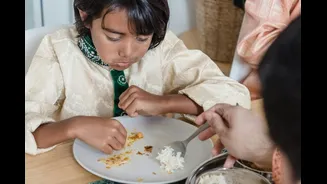
Hidden Hunger: The diet reaching these families may be carbohydrates like staples. It satisfies the empty potbelly but provides nothing for the growing brain and body. The child may not appear as if it is starving to a layman if it is just consuming rice or rotis. It may be hollow in a medical perspective.