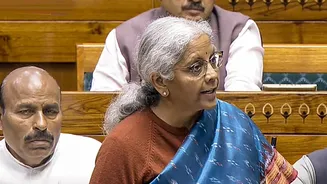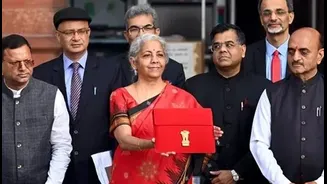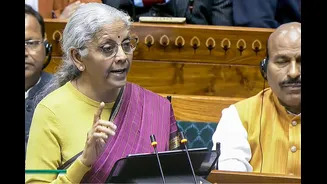

The Union Budget 2026, presented by Finance Minister Nirmala Sitharaman on Sunday, has introduced a comprehensive suite of tax proposals specifically classified to enhance the ease of living for citizens.
The reforms represent a shift towards simplifying the direct tax regime, with the proposals broadly categorised into areas such as rationalising penalties, supporting the IT sector as a growth engine, and attracting global investment. By focusing on these, the Centre aims to create a more taxpayer-friendly environment while reducing the complexities historically linked with the Indian tax system.
A central feature of this year’s Budget is the introduction of significant relief measures, including a new provision to exempt any interest income awarded under the Motor Vehicles Act, 1988, to an individual or their legal heir. To further aid small taxpayers, the Foreign Assets of Small Taxpayers – Disclosure Scheme 2026 (FAST-DS) has been launched, offering a one-time opportunity to disclose foreign income and assets with immunity from prosecution under the Black Money Act. Not only that, the Budget takes a bold step towards partial decriminalisation of tax offences, reducing the maximum punishment for most crimes from seven years to two years and introducing a grading system where defaults involving less than Rs 10 lakh are punishable only by fines.
The central government has rationalised corporate tax structures to maintain India’s competitive edge, notably by reducing the minimum alternate tax (MAT) rate from 15 percent to 14 percent for companies remaining in the old tax regime. In a significant policy shift, consideration received from the buyback of shares will now be taxed as “capital gains” rather than dividends, allowing for the deduction of the cost of acquisition.
To attract global business, specific tax exemptions have been introduced for foreign companies procuring data centre services in India and for non-resident experts rendering services under notified schemes, whose global income will now be protected from Indian taxation for five consecutive years. These measures are complemented by administrative overhauls, such as extending the income tax returns (ITR) filing deadline for non-audit cases to August 31 and automating the issuance of TDS certificates through electronic applications. The changes are aimed at reducing the compliance burden on both individual taxpayers and corporate entities.
Here are some FAQs related to the Union Budget 2026:
What are the categories under which the proposals of the Budget 2026-27 are
classified?
The budget proposals are classified under the following categories:
- Ease of living
- Rationalising penalty and prosecution
- Cooperatives
- Supporting IT sector as India’s growth engine
- Attracting global business and investment
- Rationalisation of corporate tax regime
- Rationalisation of other direct tax provisions
EASE OF LIVING, MOTOR VEHICLE COMPENSATION
What is the new amendment regarding interest awarded under the Motor Vehicles Act?
A new provision has been inserted to exempt any income in the nature of interest awarded under the Motor Vehicles Act, 1988, to an individual or his legal heir.
Are there changes to TDS on this interest?
Yes, it is proposed that no tax shall be deducted at source (TDS) on any interest amount awarded by the Motor Accidents Claims Tribunal (MACT) if paid to an individual.
FOREIGN ASSETS DISCLOSURE (FAST-DS)
What is the Foreign Assets of Small Taxpayers – Disclosure Scheme, 2026?
It is a one-time opportunity for residents to disclose specified foreign income and assets that were not reported, upon payment of tax or fee, providing immunity from penalty and prosecution under the Black Money Act.
What are the monetary limits for this scheme?
For undisclosed assets or income, the aggregate value must not exceed Rs 1 crore as of March 31, 2026. For foreign assets that were taxed but merely not reported, the threshold is Rs 5 crore.
DECRIMINALISATION & PENALTIES
What is the broad philosophy behind the decriminalisation of tax offences?
The focus is on making punishments proportionate to the crimes, changing rigorous imprisonment to simple imprisonment, and limiting maximum punishment to two years for most offences.
How does the new grading system for tax evasion work?
If the tax amount involved exceeds Rs 50 lakh, the punishment is up to two years; between Rs 10 lakh and Rs 50 lakh, it is up to six months; and if it is below Rs 10 lakh, only a fine is proposed.
CORPORATE TAX, MAT REFORMS
What are the proposed changes to minimum alternate tax (MAT)?
The MAT rate has been reduced from 15% to 14% for companies in the old regime. It, however, becomes a final tax, and no new MAT credit will be generated from April 1, 2026.
Can domestic companies still use accumulated MAT credit?
Domestic companies moving to the new tax regime from the tax year 2026-2027 can set off existing MAT credit, capped at one-fourth (25%) of the total tax liability for that year.
GLOBAL INVESTMENT, DATA CENTRES
What is the new exemption for data centre services?
Notified foreign companies are exempt from tax on income arising in India from procuring services from a “specified data centre”, provided they do not own the physical infrastructure and sell to Indian users via an Indian reseller. This exemption is available until March 31, 2047.
ADMINISTRATIVE CHANGES, DEADLINES
Have the due dates for filing income tax returns (ITR) changed?
For non-audit business cases and trusts, the due date is extended from July 31 to August 31. For salaried individuals filing ITR-1 and ITR-2, the date remains July 31.
How is the process for lower TDS certificates being simplified?
Small taxpayers can now apply for lower or nil TDS deduction certificates electronically to a prescribed authority, who will process and issue the certificate digitally.