





In a historic validation of India’s rich, street-side culinary heritage, Masala Chai has officially been crowned the best tea in the world. The definitive declaration comes from the highly anticipated
May edition of the “Top 100 Teas in the World” list compiled by the prestigious global food and beverage guide, TasteAtlas. Beating out incredibly stiff competition from premium, single-estate leaves across East Asia and Europe, India’s quintessential spiced milk tea secured the absolute number-one position, cementing its status as a global beverage powerhouse.
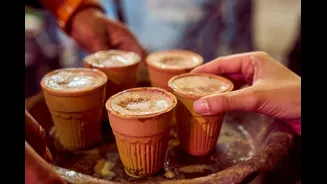
The top ranking marks a major cultural shift in how international food critics perceive tea. For centuries, the global beverage elite has prioritised minimalistic, unblended green and black tea varieties. However, the rise of Masala Chai to the apex of international gastronomy reflects a growing global appreciation for robust, multi-layered flavour profiles. By blending CTC tea leaves with fresh milk, sugar, and an aromatic bouquet of spices, the everyday staple of the Indian masses has officially outpaced Japan’s celebrated green teas and China’s revered fermented varieties on the international stage.
Outranking the Elite: How the Leaderboard Shaped Up
The competition at the top of the TasteAtlas index reveals the monumental scale of India’s victory. Masala Chai managed to edge out Japan’s highly acclaimed Hojicha—a roasted green tea known for its earthy, nutty undertones—which took the second position. Sri Lanka’s robust Ceylon Black Tea secured the third spot, while Japan appeared again in fourth place with its classic Sencha green tea. Rounding out the elite top five was China’s legendary, aged Pu-erh tea, a staple of luxury beverage collections worldwide.
What sets India’s victory apart is the sheer depth of its presence across the broader list. Far from being a one-hit wonder, the Indian subcontinent thoroughly dominated the top tier of the rankings. West Bengal’s delicate and aromatic Darjeeling tea secured a phenomenal sixth place globally, while the bold, full-bodied Assam Chai claimed the thirteenth spot. Further down the list, regional specialities like Kerala’s citrus-infused Sulaimani Chai, Himachal Pradesh’s crisp Kangra Tea, and Jammu and Kashmir’s iconic, pink-hued Noon Chai all found places within the top fifty, proving the country’s vast and diverse brewing mastery.
The Rigorous Methodology Behind the Brew
The crowning of Masala Chai is particularly significant given the stringent filtering mechanisms employed by TasteAtlas. Rather than relying on a simple public poll that could easily be swayed by nationalistic mass-voting or automated bots, the platform uses a highly sophisticated algorithmic framework. The system actively tracks down and discounts suspicious user behaviour, instead giving substantial weight to the evaluations of verified, well-travelled food and beverage enthusiasts. This ensures that Masala Chai’s victory is grounded in genuine, objective culinary merit.
Beyond the liquid brews, the global guide also extended special heritage recognition to individual production hubs that have preserved the integrity of global tea culture. Among the elite institutions highlighted were the historic Makaibari Tea Estate in West Bengal, celebrated as one of the world’s oldest operational factories, and Assam’s prestigious Halmari Tea Estate, renowned for its exceptional clonal varieties. With everyday street-side chai now validated by international critics, India’s tea culture has officially transitioned from a domestic daily ritual into the ultimate benchmark of global beverage excellence.