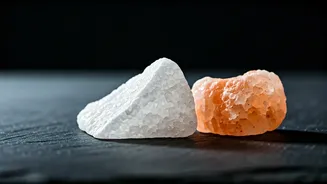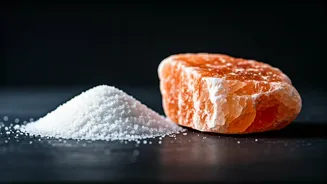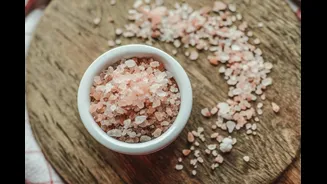






India is an increasingly fitter and health-conscious country, where people are even revisiting their regular table salt and preferring the supposedly healthier and more nutritious pink salt. According
to a Bengaluru-based fitness coach, Ralston D’Souza, however, this is a widespread misconception.
D’Souza spoke of the ongoing trend of people choosing the pink salt for its mineral content and claimed it’s a perception that may prove to be costly in the long run. In a video shared on Instagram, the fitness coach highlighted why replacing the iodised salt with non-iodised varieties could be a decision individuals may regret in the near future.
Dense With Mineral, or Is It?
While a growing percentage of Indians are choosing the pink salt for its perceived mineral content, fitness coach D’Souza said the switch is a sign of being misguided. He emphasised that the trace minerals found in a spoon of pink salt can be present in near-negligible amounts. For a high consumption of desired minerals from pink salt, one would have to take it in very large quantities, which is obviously impractical and unhealthy.
D’Souza believes people are falling for a marketing gimmick, which is distant from the scientific and nutrient reality of pink salt. The fitness coach said when people replace their regular white salt with its pink and supposedly healthier variant, they not only pay extra for their daily salt consumption but also run the risk of missing out on an essential component: iodine.
View this post on Instagram
Lack Of Iodine
“Regular table salt is iodised to prevent iodine deficiency disorders,” D’Souza said. “In the 1960s, iodine deficiency was a serious public health problem. It caused thyroid dysfunction, pregnancy complications and impaired brain development in children.”
Amidst the trend of people replacing table salt with pink salt, iodine deficiency has suddenly reemerged as a threat. In India, the mandate leading to the iodisation of regular salt back in time acted as a shield for citizens against various health challenges. Among various conditions, iodine deficiency is linked with thyroid, where the sufficiency of the essential component helps individuals reduce the risk of thyroid disorders.
Excess consumption of table salt is never good for health. But if consumed in a balanced quantity, it remains an affordable, easily accessible and nutritionally reliable alternative to its pink version.